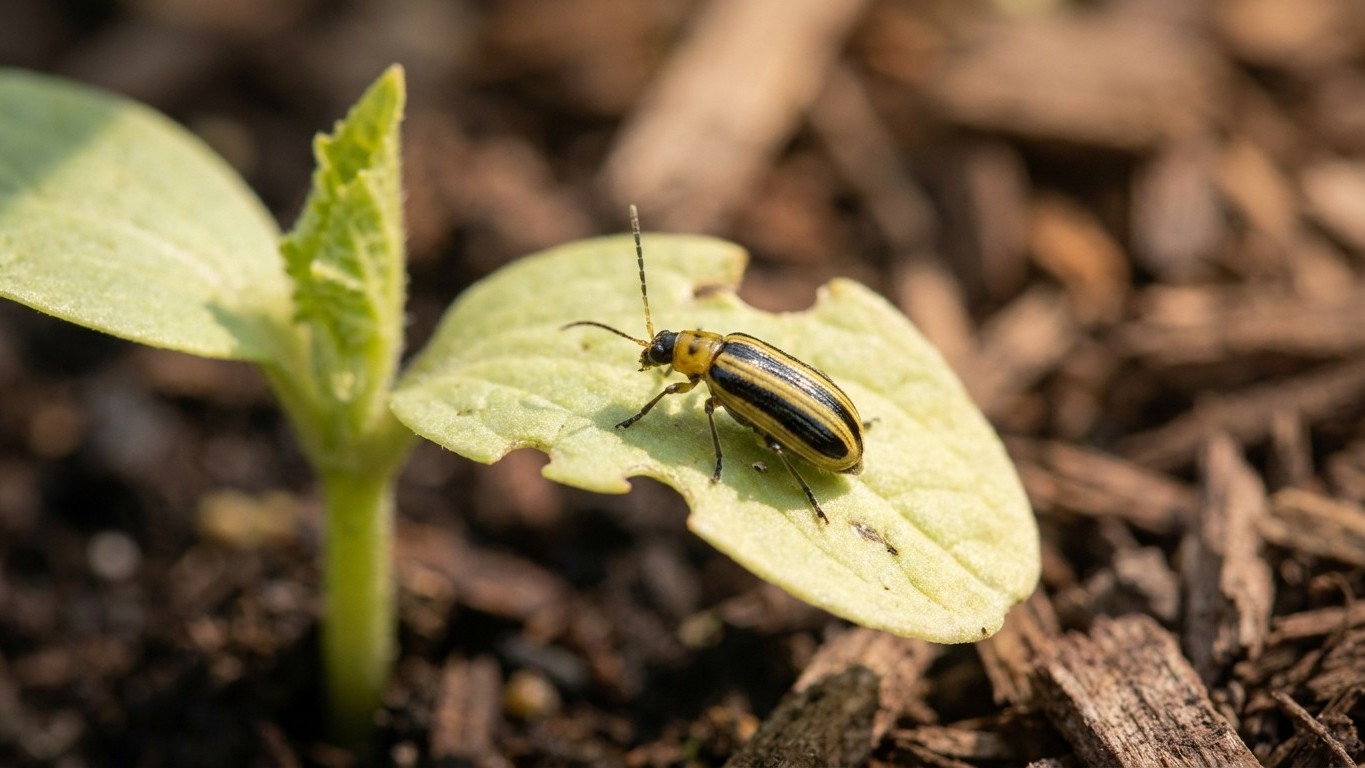

Striped cucumber beetles show up in Michigan gardens the moment soil temperatures climb past 55°F, which typically lands somewhere between mid-May in the southern tier of the state and early-to-mid June up north. They head straight for young cucumber, squash, melon, and pumpkin seedlings, and the real threat isn’t just the chewing. It’s the bacterial wilt they carry in their gut and spread through every bite.
When Striped Cucumber Beetles Arrive in Michigan

These beetles don’t migrate in from somewhere else each spring. They overwinter right here, as adults, tucked into leaf litter, garden debris, and the loose soil at field edges. Once temperatures warm consistently, they crawl out and start hunting for the first cucurbit plants poking through the ground. In Grand Rapids or Kalamazoo, that often means late May. In the Upper Peninsula or along Lake Superior’s shoreline, growers might not see the first wave until mid-June.
A second generation frequently follows in late July or August, feeding on the same plants that survived the spring assault. Michigan’s variable spring weather makes exact timing hard to pin down year to year. A warm April can push emergence a full two weeks earlier than average. Gardeners who track soil temperature with a simple probe thermometer, rather than just watching the calendar, catch the beetles before they’ve settled in.
Why Timing Matters More Than Almost Anything Else
Young seedlings with just one or two true leaves take the worst damage. A handful of beetles can strip a cotyledon overnight and kill a plant before it ever produces a vine. That’s the window where prevention pays off, because once beetles establish themselves on mature plants, control gets a lot harder and the crop has already absorbed some damage.
What the Damage Actually Looks Like
The beetle itself is easy to spot: about a quarter inch long, bright yellow-orange body, three bold black stripes running down its wing covers. Adults chew ragged holes in leaves, scar the surface of young fruit, and gnaw at stems near the soil line. Larvae, which most gardeners never see, tunnel into roots and the base of stems underground, weakening the plant from below while adults attack from above.
The bigger problem is bacterial wilt, caused by the bacterium Erwinia tracheiphila. Beetles pick it up from infected plant sap and pass it along every time they feed on a new plant. Once a cucumber or squash vine gets infected, there’s no cure. Leaves wilt starting on one section of the vine, then the whole plant collapses within a week or two, even with adequate water. A quick field test: cut a wilted stem and press the two cut ends together, then slowly pull them apart. If you see a thin, sticky thread of sap stretching between them, that’s bacterial wilt, not drought stress.
Cucumbers and muskmelons are far more susceptible to the wilt than squash and pumpkins, which is one reason experienced Michigan growers plant cucumbers with extra caution and sometimes skip them entirely in years with heavy beetle pressure.
What Actually Stops Them
No single tactic wipes out striped cucumber beetles for good. Combining a few methods, timed to the Michigan calendar, works far better than relying on one product or trick.
Row Covers Timed to the Plant’s Needs
Floating row covers, installed right after planting or transplanting, physically block beetles from reaching seedlings during that vulnerable early stage. The catch: cucurbits need pollinators once flowering starts, so covers have to come off when the first blossoms appear, usually four to six weeks after planting in most of Michigan. Leaving covers on too long trades one problem for another, since bees can’t reach the flowers and fruit set drops off.
Trap Crops and Timing Tricks
Blue Hubbard squash is famously attractive to striped cucumber beetles, more so than the crop you’re actually trying to protect. Planting a small border of it around the main cucurbit patch draws beetles away from cucumbers and melons, concentrating the pest population somewhere growers can treat it directly without spraying the whole garden. Delaying the main planting by a week or two past the earliest safe date also helps some years, letting the first wave of hungry overwintered beetles die off or move on before the tastiest seedlings show up.
Physical and Cultural Controls
A few low-tech habits make a real difference over a season:
- Clean up crop debris and old vines in the fall, since leftover plant material is exactly where adults overwinter.
- Rotate cucurbits to a different section of the garden each year rather than replanting the same bed.
- Use yellow sticky traps near seedlings to monitor beetle numbers and catch an early infestation before it explodes.
- Hand-pick beetles in the cool early morning, when they’re sluggish and easy to knock into a jar of soapy water.
Kaolin Clay and Targeted Insecticides
Kaolin clay products, applied as a fine white coating on leaves and stems, make plants unappealing to feed on without killing beneficial insects. It needs reapplication after rain, but it’s one of the more effective organic options for home gardens. When beetle numbers spike past what hand-picking or clay can manage, spinosad-based insecticides applied in the early evening (after bees have finished foraging for the day) target the beetles while limiting harm to pollinators. Broad-spectrum products like carbaryl work too, but they knock out beneficial insects along with the pest, which can create secondary problems with aphids or spider mites later in the season.
Resistant Varieties Worth Considering
Certain cucumber and squash varieties tolerate beetle feeding and bacterial wilt better than others, largely because they produce less of the compound (cucurbitacin) that makes cucurbit leaves attractive to the beetles in the first place. Seed catalogs and university trial reports often flag wilt-tolerant varieties specifically for regions with heavy cucumber beetle pressure, which describes most of Michigan’s cucurbit-growing counties.
A Michigan-Specific Note on Larvae
Adult beetles get most of the attention, but the root-feeding larvae cause damage that’s easy to miss until a plant suddenly wilts for no obvious reason. Beneficial nematodes applied to the soil around the base of cucurbit plants in early summer target these larvae before they mature into the next generation of adults. This step matters more in years with a strong second generation, which Michigan tends to see when July and August run warm and dry.
Growers who track both generations, spring adults and the late-summer brood, and pair row covers with a trap crop and fall cleanup usually keep damage to a manageable level without leaning heavily on insecticides. The beetle isn’t going away. But a Michigan garden that plans around its arrival window loses a lot less to it than one caught off guard in late May.
Related guides
- Striped cucumber beetle in Ohio: When It Shows Up and What Stops It
- Striped cucumber beetle in Indiana: When It Shows Up and What Stops It
- Striped cucumber beetle in Minnesota: When It Shows Up and What Stops It
- Striped cucumber beetle in New Brunswick: When It Shows Up and What Stops It
- Striped cucumber beetle in Massachusetts: When It Shows Up and What Stops It
- Striped cucumber beetle in Ontario: When It Shows Up and What Stops It