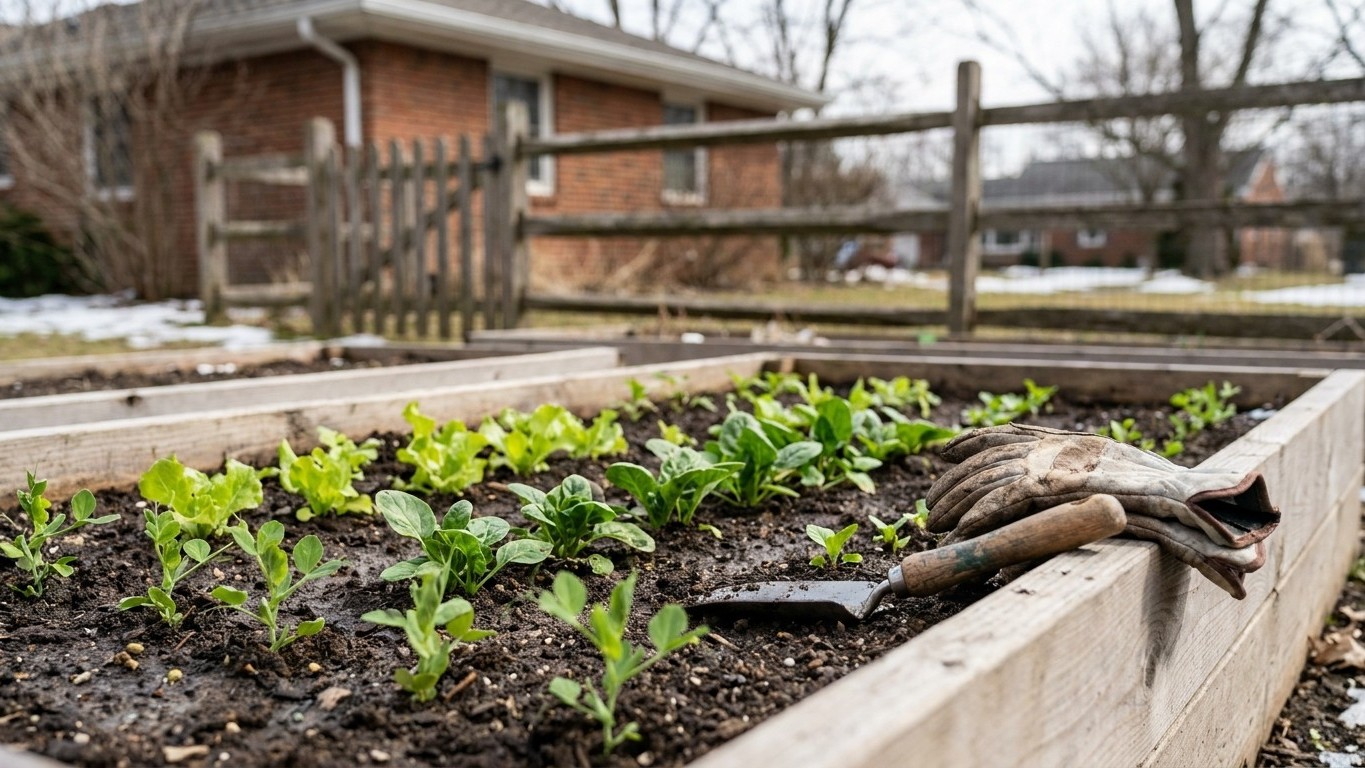

In Saskatchewan, March is not a planting month for open ground. Frozen soil and an average last-spring-frost date of May 18 push nearly all outdoor sowing two months out. What actually happens this month is indoor starting, dormant pruning, seed ordering and getting cold frames ready, so beds are prepared the moment the ground thaws.
What goes in the ground in March

The honest answer for most of Saskatchewan is nothing goes into open, unprotected ground this month. Soil under snow or recently thawed sits far too cold for germination, and the province’s average last spring frost of May 18 (measured at the Saskatoon SRC station, Environment and Climate Change Canada Climate Normals 1981-2010) is a midpoint, not a safe date. In roughly half of all years, frost lands later than that average, so anyone treating May 18 as a green light is already gambling with a young crop.
What decides whether something can go outside is never the page of a calendar. It is soil temperature, and in a province sitting in Canadian hardiness zone 3a (again measured at the reference weather station used for these normals, and not comparable to a USDA zone), that threshold is reached slowly. Garlic and shallots are the one exception worth mentioning, but only if they were planted the previous fall: they do not go into the ground fresh in March, they simply continue their dormant sit under whatever snow cover remains, doing nothing visible until the thaw.
What still moves forward under protection
Cold frames and low tunnels are the actual playing field this month. A cold frame set over previously worked soil can warm several degrees above ambient air on a sunny afternoon, enough to let a gardener start hardening early brassica or lettuce transplants weeks before open beds are usable. Bare-root fruit trees, canes and roses, if they arrive from a nursery order this early, can be heeled into a trench of loose soil or damp sawdust in an unheated garage until the ground opens up. Forcing is the other real option: rhubarb crowns lifted or covered to exclude light, and Belgian endive or chicory roots forced in a dark, cool basement, both produce something edible from stored energy while the outdoor garden is still asleep.
What to start under cover
Everything sown this month happens indoors, under grow lights or on a warm windowsill, and the timing is counted backward from that average May 18 frost date rather than from any fixed date on the wall. Onions and leeks, which need the longest runway, go in roughly 10 to 12 weeks before their outdoor transplant date, which lands the sowing window in the second half of February through mid-March depending on how much margin a gardener wants past the frost average. Peppers, notoriously slow to size up, want 8 to 10 weeks of indoor growth before they go out, which puts their start squarely in March for most of the province.
Tomatoes are the crop that trips people up. They only need 6 to 8 weeks indoors, which means starting them too early in March produces a plant that is rootbound and leggy by the time it is safe to transplant near or after May 18. The safer arithmetic for tomatoes points to late March or even early April as the real start window, not the beginning of the month. That gap between what a gardener wants to do (start everything at once) and what the math allows is where most indoor-seed-starting failures come from: either the seedlings run out of pot space and light before the ground is ready, or they get rushed outside into soil that has not caught up, and a late frost erases weeks of work in one night.
What is ready to pick
Outdoors, there is little to nothing to harvest in Saskatchewan in March. Snow cover or frozen ground rules out fresh picking from open beds, and even hardy overwintered greens like kale or leeks, where they survived under a deep snowpack, are usually too damaged by repeated freeze-thaw cycles to be worth much by this point in the season. The real harvest this month happens indoors and under cover.
Cold frames that were seeded with spinach or hardy lettuce in late winter can start yielding small cuttings once daytime warmth builds inside the frame, even while the air outside is still well below freezing. Sprouts and microgreens grown on a countertop are the most reliable fresh green available this month, ready in one to two weeks from seed with no outdoor exposure at all. The other job worth doing now is checking the root cellar or basement stash: winter squash, potatoes and onions stored since fall should get a hands-on inspection, because a single soft or moldy squash left in a bin will spread rot to its neighbors within days. Pull anything with a soft spot, a sprout pushing through an onion, or a sweet fermenting smell from a potato bag, and use or discard it before it takes the rest of the batch down.
The jobs that matter this month

This is where March earns its keep, even with almost nothing going into the ground. Dormant pruning of apple, plum and other fruit trees, along with raspberry and currant canes, should happen before buds swell and while the plant’s structure is easy to see without leaves in the way. Cutting now, while the wood is still fully dormant, reduces stress on the plant and lets wounds start sealing before sap flow picks up.
Seed ordering belongs on this month’s list too, and not as an afterthought. Popular varieties, especially short-season ones bred for a province with a frost-free window running roughly from May 18 to September 18, sell out at seed companies well before planting season, and a gardener who waits until April is often choosing from what is left rather than what they actually wanted. Soil testing is worth doing as soon as a patch of ground thaws enough to pull a sample, since results take time to come back and amendments like lime or compost need weeks to work into the soil before anything is sown.
The rest of the list is unglamorous but has real deadlines behind it: turning a compost pile that has gone dormant over winter to get microbial activity started again, sharpening and oiling pruners and spades so they are ready the moment beds open, and walking the garden to check fencing and raised bed frames for winter damage before they are needed. None of this shows up as a green shoot, but skipping it costs time in April and May that a short growing season cannot spare.
What not to do in March
The most common mistake this month is starting warm-season crops indoors far too early because a gardener is eager to see growth, then ending up with tomato or pepper seedlings that are stretched, weak-stemmed and rootbound weeks before it is safe to plant them outside. The fix is patience: count backward from the May 18 average frost date using each crop’s actual indoor timeline, and resist starting heat-loving plants before that math says to.
A second mistake is reacting to a warm stretch by pulling mulch or row cover off perennial beds too soon. A few mild days in March do not mean winter is finished, and Saskatchewan’s frost record shows that in half of all years the last frost lands after the average date, sometimes well after. Exposed crowns and emerging shoots caught by a cold snap can lose an entire season’s growth. The safer move is to leave protective mulch in place until there is a real, sustained trend toward warmth, not just a single sunny weekend.
The third trap is feeding nitrogen too early, either to fruit trees before dormancy has actually broken or to garden beds before anything is growing to use it. Nitrogen applied to still-dormant plants or bare, cold soil mostly washes away or volatilizes before roots are active enough to take it up, wasting the input and sometimes pushing soft, frost-vulnerable growth right before a cold snap.
Checking this against your own county
A province-wide month is a starting point, not an instruction. Saskatchewan spans a wide range of elevation and latitude, and the frost dates cited here come from a single station near Saskatoon; districts farther north, at higher elevation, or away from any lake moderation can run weeks behind that average, while some southern pockets may edge slightly ahead of it. Before committing seed or labor to a date, cross-check it against local conditions and against the province’s own resources, starting with the Saskatchewan agriculture and agribusiness extension service, which tracks conditions closer to the ground than any provincial average can.
Common questions
Can I direct-sow anything outdoors in Saskatchewan in March?
Generally no. Frozen or recently thawed soil across most of the province rules out direct sowing this month. The one near-exception is garlic or shallots planted the previous fall, which simply continue their dormancy under the snow rather than being newly sown now.
When is the last frost in Saskatchewan?
The average last spring frost, measured at the Saskatoon SRC station, is May 18. That figure is a mean date from Environment and Climate Change Canada’s 1981-2010 Climate Normals, not a guarantee: in about half of all years, frost occurs later than that date.
What hardiness zone is Saskatchewan for gardening?
The reference station used for these normals sits in Canadian hardiness zone 3a, a system built on seven climate variables by Natural Resources Canada. It does not convert directly to a USDA zone, since the two systems are calculated differently and a single Canadian zone can overlap several USDA zones.
Can I start tomato seeds indoors in March in Saskatchewan?
Late March works for most of the province, since tomatoes need only 6 to 8 weeks indoors before transplanting near the May 18 average frost date. Starting them earlier in the month risks leggy, rootbound seedlings well before it is safe to move them outside.
Gardeners who plant by the Moon can check the March 2027 moon planting calendar, a tradition rather than a proven method.