
Miller moths show up in Saskatchewan twice a year, once in late May through June and again in September, and the fastest way to stop them is sealing gaps around windows, doors, and vents while cutting back on outdoor lighting that draws them toward your house. These moths don’t bite, don’t breed indoors, and won’t chew through your pantry boxes, but they can show up by the dozens on a warm evening and leave a greasy dust on curtains and walls if you swat them.
What Miller Moths Actually Are

“Miller moth” isn’t a species name. It’s the common nickname for the adult stage of the army cutworm (Euxoa auxiliaris), a moth found across the Canadian Prairies and the Great Plains states. The name comes from the fine, powdery scales on their wings, which resemble the flour dust that used to cover old-fashioned grain millers.
In Saskatchewan, the larval stage (the cutworm itself) feeds on winter wheat, alfalfa, and pasture grasses through late fall and early spring. Once the worms pupate, the adult moths emerge and start looking for two things: nectar sources and, eventually, cooler ground to survive summer heat. That search is what brings them into contact with houses, garages, and grain sheds across the province.
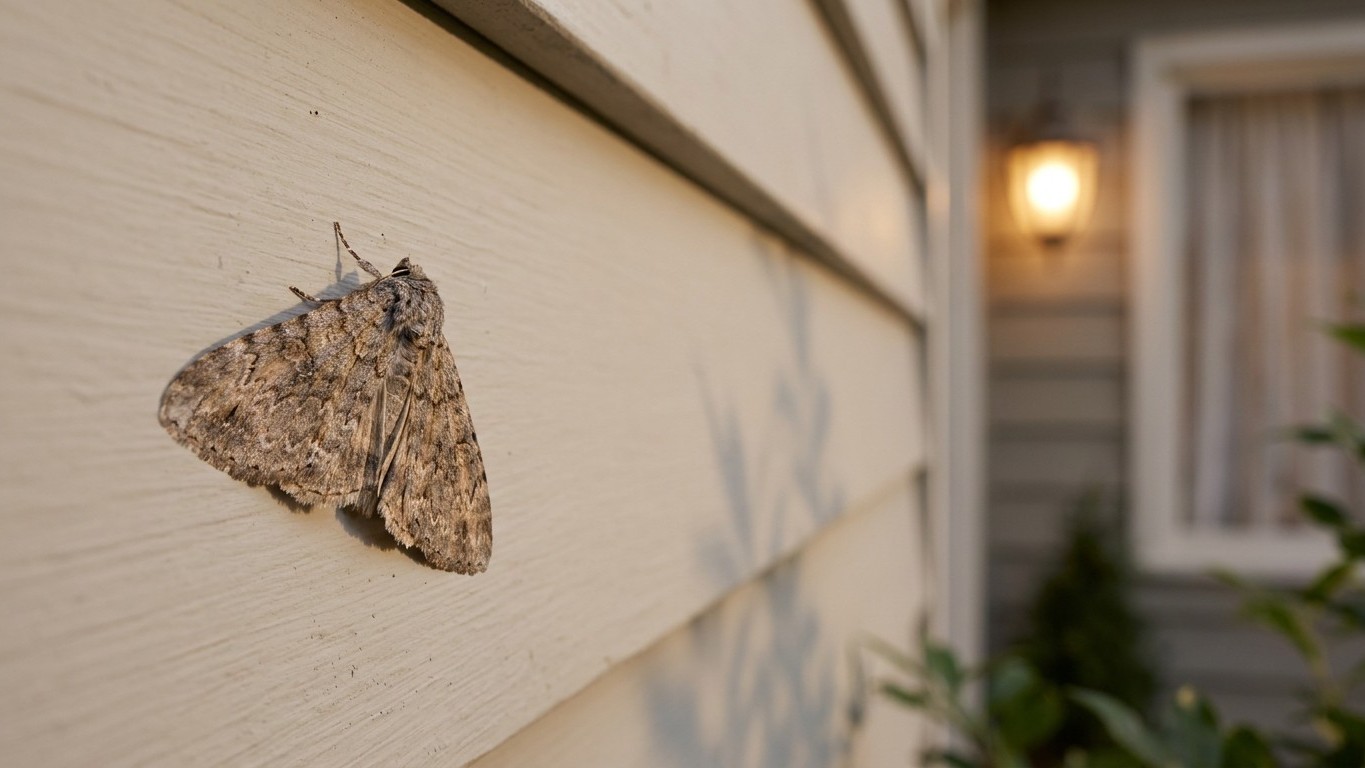
They’re gray to brown, roughly 1.5 inches across the wingspan, with a wavy, mottled pattern that helps them blend into tree bark or siding. If you’ve seen a moth resting flat against a wall near a porch light, motionless until you get close, that’s almost certainly a miller moth.
When Miller Moths Show Up in Saskatchewan
Timing follows a fairly predictable pattern tied to temperature and the insect’s migration route toward the Rocky Mountains.
Spring Emergence: Late May to Late June
This is the bigger of the two waves. As overwintering larvae finish feeding and pupate in cropland and grassland soil, adults emerge over a few weeks and immediately start moving. Saskatchewan sits along a migration corridor these moths use to reach higher elevations in Alberta, Montana, and the Rockies, where cooler summer temperatures let them survive until fall. Regina, Saskatoon, and smaller prairie towns often see a noticeable uptick in moth sightings right around the last week of May, peaking through mid-June.
Fall Return: Late August to Late September
A second, usually smaller wave happens when the same generation heads back down from the mountains to lay eggs in prairie soil before winter. This return trip tends to be shorter and less dramatic than the spring push, but it’s still enough to bring moths to porch lights and window screens on mild evenings.
Weather plays a real role in how bad either wave gets. A warm, dry spring with an early thaw tends to produce a bigger emergence, since the larvae develop faster and more survive to adulthood. A cold, wet stretch in May can delay or thin out the migration substantially. Agricultural extension offices in the Prairie provinces have tracked this pattern for decades, since army cutworm larvae are also a crop pest of concern for canola and cereal growers, not just a nuisance moth for homeowners.
Why They Invade Homes and Garages
Miller moths are strongly attracted to light, which is the main reason they end up indoors. Porch lights, garage door openers, and even the glow from a television through a window can pull moths toward a structure. Once near a building, they look for dark, cool crevices to rest during the day, gaps around window frames, behind shutters, inside soffit vents, or garage door tracks are all common hiding spots.
They’re not looking for food inside your house. Adult miller moths feed on flower nectar outdoors, which means they have no interest in your pantry, your closet, or stored grain the way pantry moths or clothes moths do. Any moth found chewing fabric or contaminating flour is a different pest entirely, most likely an Indian meal moth or a webbing clothes moth, and needs a different approach.
The other draw is simple shelter. During the day, miller moths tuck themselves into dark gaps to avoid predators and heat. A loose weatherstrip, a torn screen, or a gap under a garage door is often all it takes for one moth to slip inside, and where one gets in, others usually follow the same path over the following nights.
How to Stop Miller Moths From Getting In
Prevention works far better than trying to catch moths once they’re already inside, and most of it comes down to blocking entry points and dialing back the light show that draws them in the first place.
- Switch porch and garage lights to yellow “bug” bulbs or LED options in the amber spectrum. Moths see and navigate by shorter wavelengths of light, so warmer-toned bulbs draw noticeably fewer insects than standard white or blue-white LEDs.
- Seal gaps around windows, doors, and utility penetrations. Fresh weatherstripping on exterior doors and caulking around pipe and cable entries closes off the cracks moths use to get inside.
- Repair or replace torn window screens. Even a small tear near a corner is wide enough for a moth to squeeze through on a warm night.
- Keep exterior lights off when not needed, or use motion sensors. Cutting down the hours a light stays on during peak emergence weeks reduces the number of moths drawn to your entryway.
- Trim landscaping and reduce flowering plants right against the foundation. Nectar sources near the house give moths a reason to linger close to windows and doors.
None of these steps require professional pest control. They’re the same basic exclusion tactics that work against most flying nuisance insects, and they have the side benefit of tightening up drafts and improving energy efficiency in older Saskatchewan homes.
Dealing With Moths Already Inside
If moths have already made it past the door, the goal shifts from prevention to removal without leaving stains or triggering more activity.
Vacuuming is the cleanest method. A moth resting on a wall or curtain can be captured with a vacuum hose attachment and disposed of outside, which avoids the smudge left behind by swatting. That smudge, by the way, isn’t damage or a health hazard, it’s just the loose wing scales that flake off on contact, similar to what happens with butterflies.
Indoor light traps or simple sticky traps placed near windows can catch a few strays overnight, though they won’t solve a heavy infestation on their own. For homes seeing dozens of moths a night during peak spring migration, turning off interior lights near windows in the evening and using blackout curtains for a week or two often cuts the problem down significantly, since it removes the beacon that’s pulling moths toward that side of the house.
Insecticide sprays are rarely necessary and generally not recommended for miller moths specifically. Since the moths are transient (they’re passing through on a migration route, not settling in to breed indoors) spraying tends to kill a batch that would have moved on anyway while doing nothing to stop the next wave from a different direction. Exclusion and light management address the actual cause, which is why pest control operators in the Prairie provinces typically point homeowners toward sealing and lighting fixes rather than chemical treatment for this particular insect.
How Long the Nuisance Lasts
Spring waves in Saskatchewan typically run their course over two to four weeks, tapering off as the migrating population moves west toward the foothills and mountains. The fall return tends to pass through faster, often within one to two weeks, since the moths are heading to specific overwintering and egg-laying sites rather than dispersing widely.
Homeowners in areas near grassland, pasture, or cereal cropland tend to see higher moth counts than those in fully built-up urban neighborhoods, simply because the larval habitat is closer. Acreages and rural properties on the outskirts of Saskatoon, Regina, or Moose Jaw often report noticeably heavier activity than downtown apartments during peak migration weeks.
The Canadian Food Inspection Agency and provincial agriculture ministries track army cutworm populations as part of broader crop pest monitoring, since heavy larval populations can affect winter wheat and canola stands before the adults ever take flight. For a homeowner, the practical takeaway from that monitoring is simple: a mild winter followed by an early, warm spring is the setup most likely to produce a heavier-than-usual moth season around late May and June.