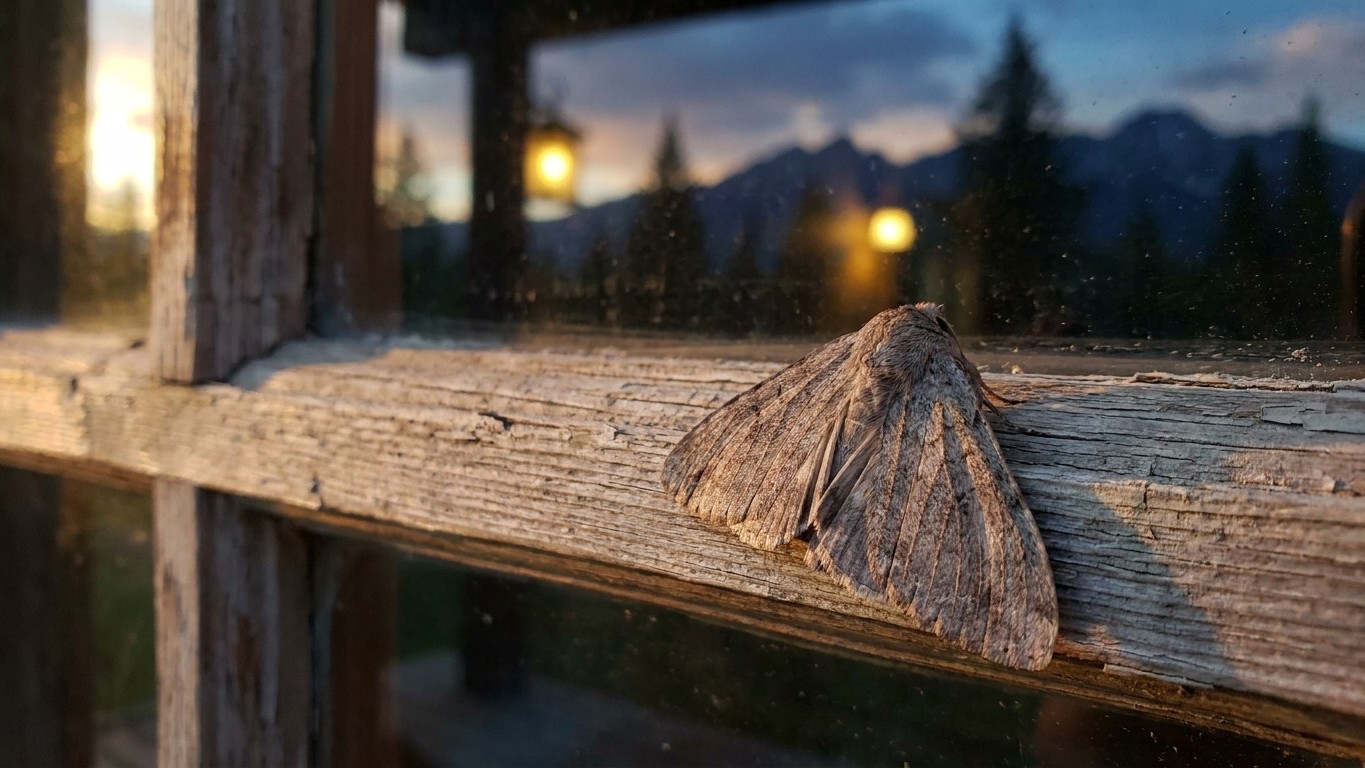

Miller moths show up in Montana twice a year, once in late May through June as they migrate from the plains toward the mountains, and again in September when they reverse course and head back down to lay eggs. The moths themselves don’t sting, bite, or chew through fabric. What stops them from swarming porch lights and slipping under doors comes down to three things: turning off unnecessary outdoor lighting, sealing gaps around windows and doors, and reducing the flowering plants that draw them in during peak travel weeks.
That’s the short version. The longer story involves wheat fields, grizzly bears at 10,000 feet, and a moth that spends most of its life underground before it ever bothers your porch light.
What Exactly Is a Miller Moth

The “miller moth” isn’t a distinct species. It’s the adult stage of the army cutworm (Euxoa auxiliaris), a grayish-brown moth about an inch and a half across with mottled wings that leave a fine dust on your fingers if you touch them, similar to the flour dust that gave old-time millers their nickname. That’s where the common name comes from, not because they infest flour or grain in your kitchen.
Before becoming moths, they’re larvae, dark caterpillars that feed on winter wheat, alfalfa, and other crops across eastern and central Montana. Farmers deal with the caterpillar stage as a genuine agricultural pest. Homeowners deal with the adult moth stage, which is mostly a nuisance rather than a threat.
When Miller Moths Show Up in Montana
Montana sees two distinct waves, and the timing shifts a bit year to year depending on spring temperatures and snowpack.
The Spring Push
Adult moths emerge from the soil in late April through May, then start moving west toward the Rockies as temperatures climb. Peak indoor nuisance activity in towns like Billings, Bozeman, and Great Falls usually runs from mid-May through late June, with the heaviest few days often tied to a warm stretch after a cool snap. That’s when moths that have been resting in cracks and crevices suddenly become active all at once, giving the impression of a sudden invasion rather than a gradual buildup.
The Fall Return
By September, the same moths head back downhill from their high-elevation summer feeding grounds to lay eggs in agricultural soil before winter. This second wave tends to be shorter and less intense than the spring migration, but it can still fill up a porch light on a mild fall evening.
Population size varies considerably from year to year. A wet spring with good crop growth the previous season can mean more larvae survive, which translates into a heavier moth flight the following spring. Montana State University Extension entomologists have tracked years where outbreaks were barely noticeable and others where moths seemed to cover every lit window in a neighborhood.
Why Montana Sees So Many Miller Moths
Montana sits at the center of the army cutworm’s range for a reason that has nothing to do with pest control and everything to do with geography. The eastern two-thirds of the state grows enormous acreages of winter wheat, which gives cutworm larvae exactly the food source they need in fall and early spring. Once those larvae mature into moths, the same insects turn around and fly toward the mountains, where alpine wildflowers offer nectar all summer long.
That mountain connection produces one of the stranger facts about this insect: grizzly bears in the Yellowstone ecosystem, much of which sits along Montana’s southern border, dig through talus slopes at high elevation specifically to eat miller moths. Researchers with the U.S. Geological Survey have documented bears consuming thousands of moths in a single day during peak summer aggregation, since the moths pack surprisingly high fat content for their size. It’s a strange loop, a wheat-field pest becomes a critical calorie source for one of North America’s largest predators, all within a few hundred miles.
For homeowners, none of that ecology matters much when moths are piling up against a screen door. What matters is that Montana’s mix of large-scale grain agriculture and adjacent mountain ranges creates ideal migration corridors that pass straight through towns and suburbs sitting between the two.
What Stops Miller Moths From Getting Inside
Miller moths don’t want to be in your house. They’re drawn to light, and once inside they’re just trying to find a dark, cool spot to hide during the day. Control comes down to cutting off the two things that attract them: light and easy entry points.
Outdoor lighting is the biggest single factor. Porch lights, garage lights, and even a bright TV glow through an uncurtained window can pull moths in from surprising distances during peak flight nights. Switching porch bulbs to yellow “bug light” LEDs, or simply turning off exterior lights during the worst two or three weeks of the spring migration, cuts down on swarms dramatically. Motion-sensor lighting helps too, since it keeps fixtures dark most of the night instead of running continuously.
Sealing the house matters just as much. Miller moths slip through gaps as small as a quarter inch, so weatherstripping around doors, caulking gaps in window frames, and checking that dryer vents and utility penetrations have tight-fitting covers all reduce the number that make it inside. Older Montana homes with settled foundations often have gaps around basement window wells that go unnoticed most of the year and become moth highways for a few weeks each spring.
Once moths are already inside, a few practical habits limit the mess:
- Vacuum resting moths instead of swatting them, since crushed moths leave a greasy stain that’s harder to clean than the moth itself
- Check behind curtains, in closets, and along baseboards, where moths tend to rest during daylight hours
- Keep porch lights off or dimmed on the warmest evenings, which are almost always the heaviest flight nights
- Reduce flowering annuals right next to entry doors during peak weeks, since moths feed on nectar and will linger near blooming plants
Insecticide sprays generally aren’t worth the effort or the expense for miller moths. They’re a temporary seasonal visitor, not a breeding infestation, and killing a few dozen moths with a spray does nothing to stop the thousands still migrating outside. Pest control professionals in Montana typically recommend exclusion and light management over chemical treatment for this specific insect, reserving sprays for situations where cutworm larvae are actually damaging a lawn or garden bed.
Miller Moths vs. Other Moths Around the House
One mix-up worth clearing up: miller moths get blamed for damage they don’t cause. Pantry moths and clothes moths, both smaller and paler than the miller moth, are responsible for chewed sweaters and infested flour. If you’re finding actual larvae in stored grain or holes in wool clothing, that’s a different pest entirely, and it calls for different solutions like sealed storage containers and cedar or lavender sachets rather than light management.
Miller moths, by contrast, don’t reproduce indoors and don’t feed on anything in your pantry or closet. Their presence is a transit problem, not an infestation, which is part of why they tend to disappear on their own within a few weeks once the migration window closes.
Ranchers in the Golden Triangle region of north-central Montana sometimes report the heaviest moth years overlapping with the best wheat yields, since the same mild, wet spring conditions that help crops thrive also help cutworm larvae survive at higher rates. It’s a reminder that the moth showing up on your porch light traveled from a wheat field, and it’s headed for a mountainside where, if it’s lucky enough to avoid a hungry grizzly, it will spend the summer feeding on alpine flowers before making the trip back down in fall.