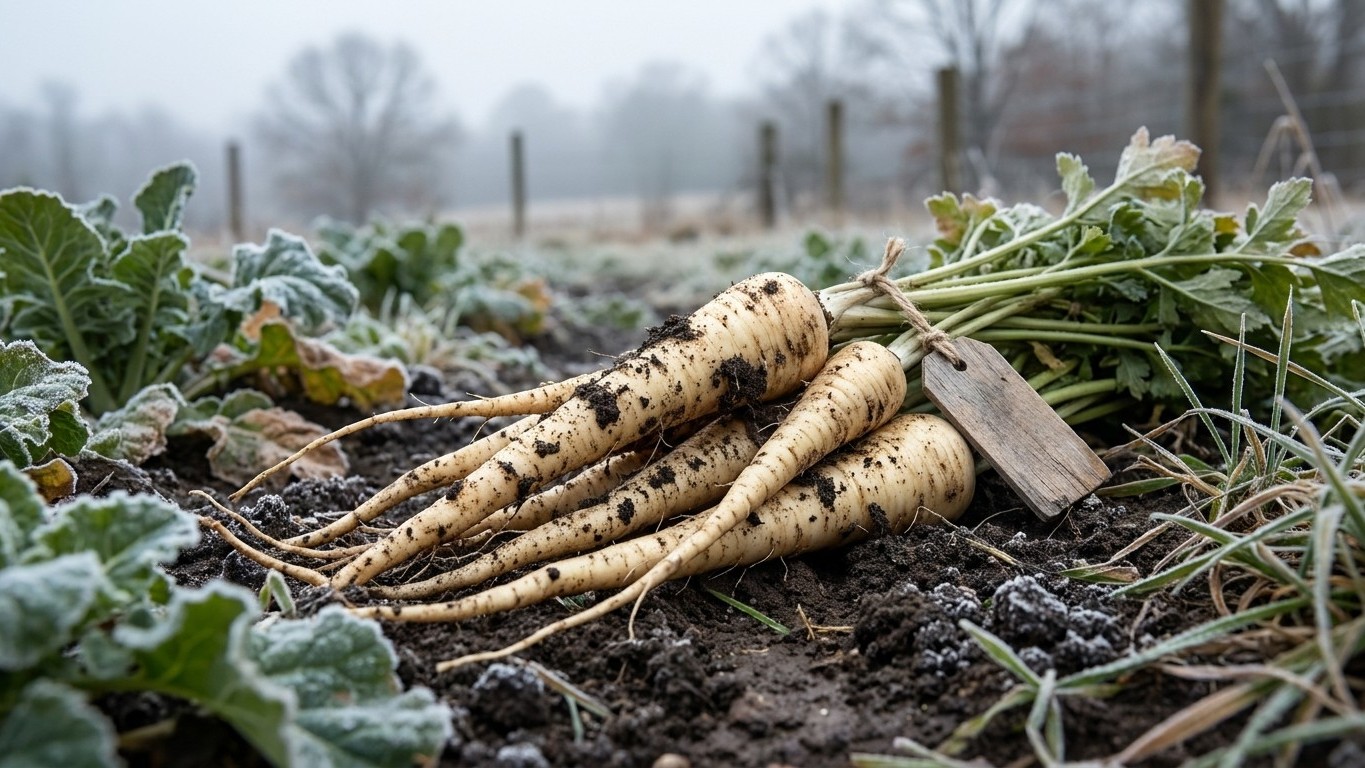

Yes. Sioux Falls averages a coldest-month low of 8.5°F, and that kind of sustained deep cold guarantees the parsnip several frosty weeks in the ground, the exact condition that turns stored starch into sugar. A South Dakota parsnip left in place past first frost won’t just survive, it will sweeten. The bigger question is whether the growing season leaves enough time to get there before the ground locks up.
The short answer
Start with the number that actually decides this, not the zone map most gardeners default to. The mean daily minimum for South Dakota’s coldest month, measured at the Sioux Falls reference station over the 1991-2020 period, sits at 8.5°F. That’s not a record low or some rare cold snap. That’s the average low for the coldest stretch of a typical winter. A territory that regularly drops that far below freezing isn’t flirting with frost, it’s living in it for weeks at a stretch.
That distinction matters because sweetening in parsnips has nothing to do with hardiness zone labels and everything to do with actual frost exposure. A gardener in a mild-zone coastal spot can technically grow parsnips just fine, watch them size up nicely, and still end up with a root that tastes flat and starchy because winter there never delivers the sustained cold snap the plant needs. South Dakota has the opposite problem in the best possible way: too little frost is never the issue here. The concern runs the other direction, toward managing a season that gets cold fast and stays cold long.
Utah State University Extension, the source horticultural authority behind the parsnip sweetening mechanism, is specific about what triggers it: several weeks of cool, frosty weather after the root has sized up, converting starch into sugar. Not a single overnight freeze. Not a light frost that nips the tops and moves on. Weeks of it. Sioux Falls’ 8.5°F average coldest-month minimum means that once autumn turns, the cold doesn’t let up after one bad night, it settles in and stays, which is precisely the pattern parsnips are built to use.
So the plain verdict: a parsnip grown anywhere in South Dakota‘s climate zone, given a soil that lets the root grow straight and a planting date that gets it to maturity before frost, will sweeten reliably. This isn’t a marginal territory hoping for a lucky cold snap. It’s a place where the frost arrives on schedule and lingers, and where the harder question isn’t “will it get cold enough” but “did I plant early enough to have a mature root waiting when it does.”
Does the season fit?
Parsnips need 100 to 120 days counted from the day the seed goes into the ground, not from germination and not from transplanting, because parsnips are always sown directly where they’ll grow. Utah State University Extension also flags something gardeners routinely miss: germination itself takes 14 to 21 days. That’s nearly three weeks of bare-looking soil before a single true leaf shows, and a lot of gardeners assume a failed crop and re-sow right when the first seedlings were about to emerge. Patience here isn’t optional, it’s part of the timeline.
Working out whether South Dakota’s window fits means lining up three numbers: the last spring frost, the first fall frost, and that 100-to-120-day requirement.
- Sowing date. The guidance is to sow parsnip seed 2 to 3 weeks before the last spring frost. At the Sioux Falls reference station, that frost falls between April 29 and May 9, which puts a reasonable sowing window in early to mid April, ahead of the soil even fully thawing in a cold spring, so gardeners should watch soil temperature and workability as much as the calendar.
- Germination lag. Add the 14-to-21-day germination period on top of that sowing date. Seedlings won’t reliably show above ground until roughly late April into mid-May, even though the seed went in weeks earlier.
- Maturity date. Counting 100 to 120 days from the seeding date (not from emergence) lands maturity somewhere in the mid-summer to early-August range, well ahead of autumn.
- Frost arrival. The first fall frost at the Sioux Falls station runs September 24 to October 4, which leaves a comfortable stretch between a mature root and the first freeze, plenty of margin for the roots to finish sizing before cold weather starts working on them.
- Verdict on fit. The math works with room to spare. Even a gardener who sows on the later end of the window and experiences slower germination in a cool spring should still land a mature parsnip well before the first fall frost, and the gap between maturity and frost gives the roots time to stabilize before the sweetening process even begins.
That said, these frost dates come from a single airport weather station, and Extension guidance elsewhere consistently notes that suburban and rural gardens tend to see later spring frosts and earlier fall frosts than an airport reading, sometimes by one to two weeks, more at elevation. A gardener in a low-lying rural spot or at higher ground should treat these dates as a starting reference and adjust conservatively, sowing a few days earlier isn’t a bad hedge given how forgiving the rest of the timeline is.
What goes wrong here
South Dakota’s season and climate favor parsnips more than they punish them, but a few specific failures show up often enough to name directly, each with a different cause and a different fix.
- Forked roots from heavy or stony ground. Much of South Dakota’s prairie soil runs heavy with clay or carries glacial till full of small stones, and a taproot pushing into either one will split around the obstruction rather than growing straight down. Utah State University Extension’s fix is direct: deep sandy soil is ideal, and where the ground is heavy, it needs to be double dug to loosen and aerate well below where the root will travel. A raised bed filled with a looser mix solves the same problem without reworking existing ground.
- Forked roots from overwatering, a separate cause entirely. Even in loose, workable soil, inconsistent or excessive watering can cause the same forking by encouraging the root to branch rather than drive down in one line. The remedy is steady, moderate moisture rather than heavy watering followed by dry stretches, don’t treat this as the same problem as heavy soil, because dumping sand into wet, over-irrigated beds won’t fix a watering habit.
- Pulling the crop before the sweetening window closes. A mature parsnip in July or August tastes like a mediocre carrot, starchy and bland, because the sugar conversion hasn’t started yet. The temptation to harvest as soon as the root looks full-size is understandable but premature here. Leave the roots in the ground after the tops die back and let several hard frosts do their work before digging.
- Waiting too long and losing the ground to a hard freeze. South Dakota’s winters get cold enough, that mean 8.5°F coldest-month minimum, that soil can lock solid faster than gardeners expect once real winter sets in. A heavy layer of mulch over the row buys extra digging time by delaying how deep the freeze penetrates, but it’s still worth planning to harvest before the ground turns to concrete rather than after.
Common questions
Do parsnips need to be replanted every year in South Dakota, or can they overwinter?
Parsnips are grown as an annual root crop, sown fresh each spring. Leaving a root in the ground through winter for sweetening is normal and encouraged, but the plant itself won’t produce a usable second-year root, so replanting each spring is standard practice regardless of how mild or harsh the winter runs.
How do I know if my parsnip seed is dead versus just slow to germinate?
Given the 14-to-21-day germination window Utah State University Extension describes, don’t judge a planting a failure until at least three weeks have passed with no growth. Keep the soil consistently moist during that stretch, since parsnip seed dries out and loses viability quickly compared to other root vegetables.
Can I harvest Parsnips in South Dakota before the first frost if I’m short on time?
You can, and the root will be edible, but it won’t have gone through the starch-to-sugar conversion that gives parsnips their signature sweetness. If the calendar allows it, waiting until after several frosts produces a noticeably different, sweeter result for the same root.
Does mulching change when I should sow parsnips in the spring?
Mulch mainly affects the fall harvest window by slowing how fast the ground freezes, not the spring sowing date. Sowing still ties to the last spring frost window at your location, springtime soil temperature and workability matter more than mulch for that decision.