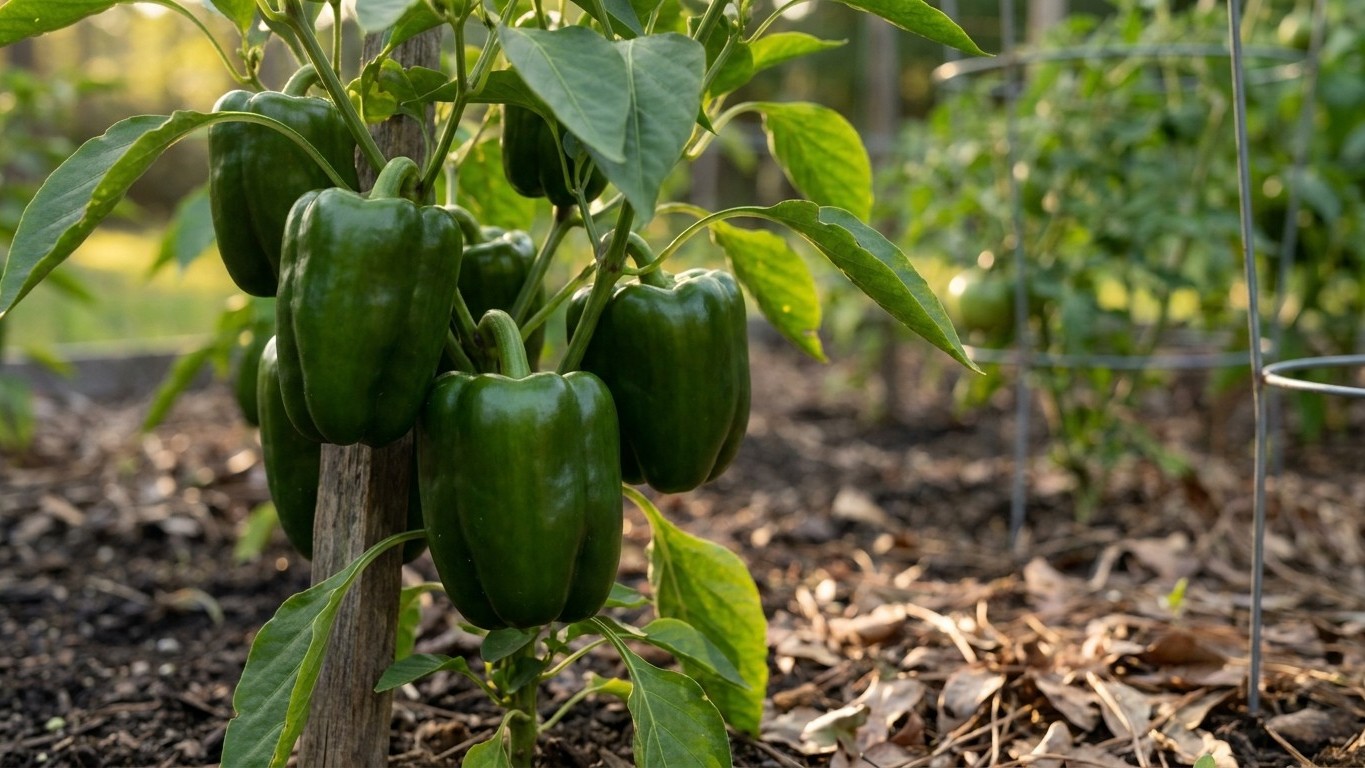

Before any insect takes a bite, weather takes its cut of a South Dakota pepper crop: heat spells, cold nights and a short season. This site does not carry a pest-by-pest calendar, so this page covers the climate side and says where the numbers stop. The reference station at Sioux Falls averages 13.8 days a year at 90 F or higher, which is a light heat load. That puts most of the risk on the cool end.
The short answer
Pepper fruit set fails at both ends of the thermometer. Utah State University Extension puts the limits at nights below 55 F or days above 90 F. Either one can make blossoms drop instead of turning into peppers. The two ends deserve separate checks, because South Dakota’s climate data covers one of them and leaves the other to you.
The hot end: 13.8 days
NOAA NCEI Climate Normals give the Sioux Falls reference station a mean of 13.8 days a year reaching 90 F or more. Spread over a whole summer, that is a little under two weeks of days hot enough to interfere with fruit set. It is an average, so some summers bring more and some bring fewer. It measures heat load (the thing that drives water demand and heat stress), not the typical summer temperature.
For a pepper plant, that count means heat is a visitor, not a resident. A stretch of 90-degree afternoons can cost you a round of blossoms, but the plant keeps flowering once the weather breaks. Gardeners in places with 60 or 80 such days have a very different problem. Here, the heat end is usually a few bad days in July or August that you can ride out with steady watering and a little afternoon shade.
The cool end: watch your own nights
The other limit is the one people forget. Nights below 55 F stall fruit set just as surely as hot days do. This site does not carry summer night minima, so there is no number here to give you, and guessing one from your latitude or from how cold your January gets would only mislead you. Warm days and cool nights are not the same kind of climate fact, and the winter record says nothing about June nights.
The fix is cheap. A min/max thermometer set at plant height will tell you what your garden does overnight. Log it through the weeks when blossoms first open. If your readings dip under 55 F, you will know why flowers are dropping. A forecast with lows in the low 50s is your cue to cover plants at dusk.
Frost sets the outer boundary. At the Sioux Falls airport station (USW00014944), NOAA NCEI puts the last spring frost between April 29 and May 9, using the 30 to 70 percent probability band for 32 F freezes. That is the reference-city figure, not a promise for the whole state. Suburban and rural gardens usually see the last spring frost one to two weeks later, and more than that at elevation. Check your own county before you trust it.
If you are still choosing what to plant, Growing Peppers in South Dakota covers the full season, and Pepper Varieties That Ripen in a South Dakota Season covers which ones fit it.
When to start seed here
The rule has two anchors and one subtraction. Transplant after the last frost, once the soil reaches 60 F. Then count back 8 to 10 weeks, because that is how long Utah State University Extension says transplants need indoors. The dates change by county, but the arithmetic does not.
- Find your transplant date. Start with your county’s last spring frost. The Sioux Falls reference range is April 29 to May 9, and rural gardens usually run one to two weeks later. Then wait for the soil to reach 60 F. A soil thermometer pushed in 2 to 3 inches deep settles it, and the soil often reaches 60 F after the last frost, not on it.
- Subtract 8 weeks. Eight weeks is 56 days. This gives you the latest sensible sowing date.
- Subtract 10 weeks. Ten weeks is 70 days. This gives you the earliest sowing date that makes sense.
- Sow between the two. The window between those dates is about two weeks wide. Sowing in the middle of it leaves room for a slow germination week.
- Add the harvest wait. Clemson Cooperative Extension says peppers should be ready for harvest about 70 to 85 days after transplanting. Add that to your transplant date to see whether your season has room.
A worked example, not a forecast
Say a rural garden sits two weeks behind the Sioux Falls frost range. Take the late end, May 9, add two weeks, and the earliest transplant date is May 23, assuming the soil has reached 60 F. Count back 56 days and you land on March 28. Count back 70 days and you land on March 14. Sow seed between those two dates.
Now run it forward. From a May 23 transplant, 70 days brings you to August 1 and 85 days brings you to August 16. The first fall frost date is not published on this page, so check your county’s date and make sure there is slack after mid-August. A soil that takes until June to warm pushes every one of these dates later by the same number of days, and that is why the soil reading matters more than the calendar.
Starting too early backfires. Transplants held indoors past the window turn leggy and root-bound, and they sulk when they go out.
What goes wrong here
South Dakota’s climate causes a short, predictable list of pepper failures. Each one has a fix that costs little.
- Blossom drop in a hot spell. Days above 90 F make flowers fall off before they set. Sioux Falls averages 13.8 such days a year, so expect a few, not a season of them. Keep the soil evenly moist, mulch to hold in water, and drape 30 percent shade cloth over plants during a heat wave if you have it. New blossoms follow once the heat breaks.
- Blossom drop on a cool night. Nights below 55 F cause the same drop from the opposite direction. Summer night minima are not carried on this site, so only your own thermometer can tell you when it is happening. When the forecast shows lows near 55 F, cover plants at dusk with row cover and pull it off in the morning so the plants do not overheat.
- Sunscald. Where the sun is strong, peppers that lose leaf cover develop pale, papery patches on the fruit that face the sun. Anything that strips foliage invites it, including heavy pruning and leaf disease. Leave the canopy alone, and shade exposed fruit during the hottest weeks.
- Blossom-end rot. A dark, sunken patch at the bottom of the fruit is usually a water-uptake problem, not a shortage of calcium in the soil. Swings between dry and soaked ground are the usual trigger. Water deeply on a steady schedule, mulch, and skip adding lime or calcium unless a soil test says to.
For a closer look at flowers that open and then fall, see Why Peppers Fail to Set Fruit in South Dakota.
After the harvest: the refrigerator is too cold
Clemson Cooperative Extension gives the best storage conditions as 45 to 50 °F and 80 to 90 percent relative humidity, for two to three weeks. That is warmer than a household refrigerator. Below about 45 °F, peppers develop pits and go soft, which is chilling injury. It is the mistake nearly everyone makes with a fresh pepper. Two to three weeks is a maximum under ideal conditions, not a promise. A cool pantry or basement shelf gets closer to the target than the crisper drawer does.
Common questions
How many hot days does South Dakota get?
The Sioux Falls reference station averages 13.8 days a year at 90 F or higher, per NOAA NCEI Climate Normals. It is one station, and your garden may run hotter or cooler.
Can I use the Sioux Falls frost dates for my garden?
Use them as a starting point. The last spring frost there falls between April 29 and May 9, but suburban and rural gardens often see it one to two weeks later, and more at elevation. Your county’s date is the one to count back from.
What night temperature stops peppers from setting fruit?
Utah State University Extension names nights below 55 F as the cool limit. This site does not carry summer night minima, so you need to record your own overnight lows with a min/max thermometer.
Should I store peppers in the refrigerator?
Not if you can avoid it. The best storage range is 45 to 50 °F with 80 to 90 percent humidity, and a refrigerator runs colder than that. Below about 45 °F, peppers pit and soften. Even in good conditions, two to three weeks is the ceiling, so eat or preserve them before then.