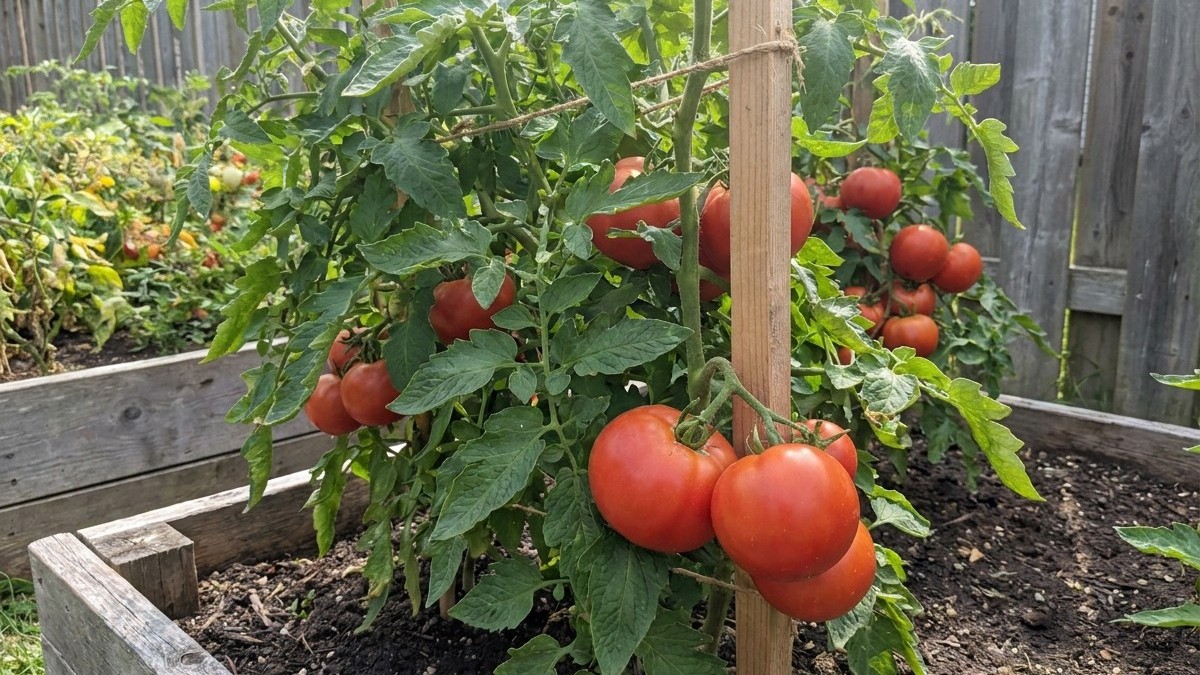

Pick tomatoes in South Dakota before the first fall frost hits your county, and don’t wait for every fruit to blush red on the vine. Sioux Falls sees its first 32°F freeze between September 24 and October 4 in a typical year, but that’s an airport-station average, not a promise for your backyard. The real skill isn’t picking on a calendar date. It’s reading the fruit and the sky together, then knowing what to do with everything that’s still green when the cold finally shows up.
When to pick tomatoes in South Dakota
Ripening isn’t a light switch. It’s a slow chemical process driven by warmth, and that process stalls out well before a killing frost ever arrives. Once nighttime temperatures start settling into the 50s, the enzymes that turn tomatoes red slow down, and fruit that’s still hard and green at that point often sits in limbo on the vine for weeks. That’s the window South Dakota gardeners need to watch, more than any single date on a chart.
Sioux Falls’ fall frost range of September 24 to October 4 (NOAA NCEI 1991-2020 climate normals, station USW00014944) marks the point where the growing season ends outright, not the point where you should still be waiting for perfection. Gardens outside the city, especially in low-lying rural spots or at higher elevation, commonly see that first freeze one to two weeks earlier than the airport station records. If you’re gardening in the Black Hills or a river-bottom lot that collects cold air, plan for the early end of that shift, not the late one.
The practical move is a full harvest sweep once frost is forecast within 48 to 72 hours, taking everything on the vine regardless of color. Waiting for one more day of sun to finish off the last blush of pink usually costs you the whole plant’s remaining crop instead.
Reading the fruit stage
Not every green tomato is equally worth saving. Sorting by stage before frost tells you what to expect once they’re inside.
| Stage | Appearance | Ripens indoors? |
|---|---|---|
| Mature green | Full size, pale green, glossy skin, seeds developed | Yes, reliably |
| Breaker | First streaks or blush of color at blossom end | Yes, quickly |
| Pink/turning | More than half colored | Yes, within days |
| Immature green | Small, hard, dull, seeds not formed | Rarely, texture stays poor |
Mature green and anything past breaker is worth bringing indoors. Immature green fruit, the ones that are still small and dense with underdeveloped seeds, is better used for frying or pickling than banked for ripening, since it tends to shrivel instead of coloring.
What to do with the green ones
A frost-driven harvest usually leaves a gardener with three buckets: fruit close enough to ripe to color up on its own, mature green fruit worth the wait, and small hard green tomatoes that will never make a decent ripe tomato no matter how long you store them. Sorting on the porch, right after picking, saves a lot of wasted counter space later.
That third bucket, the truly immature green fruit, is where cooking beats waiting. Fried green tomatoes are the obvious use, sliced thick, dredged, and pan-fried while the interior stays firm. Green tomato salsa verde is another route, swapping tomatillos for chopped green tomatoes with onion, jalapeño, and lime. Both dishes actually want that tart, dense texture immature fruit brings, so there’s no downside to using the least promising tomatoes first.
Pickling is the other classic outlet, and it’s forgiving of size and shape in a way fresh eating never is. Sliced or whole small green tomatoes packed in a vinegar brine with dill and garlic keep for months in the refrigerator, and they use up the odd-shaped or blemished fruit that wouldn’t ripen attractively anyway.
Green tomato relish and chow-chow, the vinegar-based Southern preserve that’s found a following well north of its origin, are worth mentioning for anyone with a genuinely large haul, say a five-gallon bucket’s worth pulled off a dozen plants ahead of a hard freeze. Canning green tomato relish in small batches spreads that harvest across the winter instead of letting it rot in a garage.
For fruit that’s mature green or already showing color, cooking is a waste. Those tomatoes are worth the patience of the ripening process, and that’s a separate track entirely from what goes straight into the skillet or the jar.
Ripening indoors, and how long they keep
Mature green and breaker-stage tomatoes ripen fine off the vine, since the fruit itself carries enough stored sugar and the ripening hormone ethylene to finish the job without any more sunlight. What they need instead is steady warmth, some airflow, and protection from bruising.
A single layer of tomatoes in a cardboard box or a paper bag, kept somewhere between 65°F and 75°F, works better than a plastic bag or an airtight container. Plastic traps moisture against the skin and speeds up rot rather than ripening. A paper bag folded loosely at the top actually concentrates the ethylene the fruit gives off, which speeds ripening along, while still letting some air exchange happen so mold doesn’t take hold.
Stacking fruit more than two layers deep asks for trouble. The tomatoes on the bottom bruise under the weight of the ones above, and a single soft spot spreads rot to its neighbors within days. Spreading fruit out on a windowsill, a spare table, or shallow trays in a spare room keeps each tomato accessible for the daily check that indoor ripening demands.
Timelines and checking in
Mature green fruit typically takes one to three weeks to color up fully at room temperature, with breaker-stage tomatoes finishing in under a week. Checking every two or three days and pulling ripe fruit out immediately keeps the batch from becoming a breeding ground for the one or two tomatoes that always seem to rot before they ripen.
Once a tomato is fully colored, it keeps at counter temperature for about a week before quality drops. Refrigeration slows that decline and can stretch a ripe tomato’s usable life to close to two weeks, though the texture turns mealier the longer it sits cold, since chilling breaks down the membranes that give a fresh tomato its snap. Refrigerating fruit that’s still green, on the other hand, halts the ripening process altogether and can leave it stuck pale and hard indefinitely, so the fridge is a tool for ripe fruit only, never for the green batch waiting to turn.
A useful habit for a big frost harvest is staggering the boxes, starting a new box every few days as the first one finishes ripening, so the kitchen isn’t flooded with forty ripe tomatoes on the same afternoon.
What goes wrong here
The most common mistake is picking too early out of nerves about frost, then finding a whole box of immature green fruit that shrivels instead of ripening. If the seeds inside a cut tomato aren’t fully formed and surrounded by gel, that fruit was picked before it had the internal reserves to finish the job, and no amount of patience in a paper bag fixes that.
Mold is the second recurring problem, especially in a humid basement or a sealed plastic tub. Any fruit with a soft spot, a split skin, or insect damage should be pulled out of the ripening batch and used immediately rather than left to ripen alongside sound fruit, since one moldy tomato spreads spores to everything touching it.
Frost damage itself is easy to miss until it’s too late. Fruit left on the vine through even a light freeze develops a water-soaked, mushy patch that turns to rot within a day or two, even if the tomato looked fine when it was picked. Any fruit that was on the plant during a frost event, even if it seems undamaged, should be used or processed right away rather than set aside to ripen over weeks.
Cracking around the stem after a sudden cold snap followed by a warm spell is another frustration gardeners run into during the shoulder season, tied to the same swings in soil moisture and temperature that make South Dakota’s fall weather unpredictable in the first place. None of that is a reason to abandon the harvest, just a reason to sort ruthlessly and use the questionable fruit first, before it decides the question for you. For frost-timing specifics down to the county, South Dakota State University’s Extension Service maintains local guidance at extension.sdstate.edu.
Common questions
Can I pick tomatoes early to beat a frost forecast, even if they’re still fully green?
Yes, and it’s the right call when a hard freeze is coming within a day or two. Mature green fruit, meaning full-size with developed seeds, ripens fine indoors. Small, hard, immature fruit is better used for frying or pickling than left in a ripening box.
Do I need to wash tomatoes before storing them to ripen?
No. Washing adds moisture that speeds up rot during storage. Wipe off visible soil with a dry cloth and save the rinse for right before eating.
Will a tomato ripen faster next to a banana?
Somewhat, since bananas release a fair amount of ethylene gas, the same compound tomatoes use to trigger their own ripening. Placing a banana in the same paper bag can shave a day or two off the process for fruit that’s already at the breaker stage.
Is it worth covering plants overnight instead of picking everything before frost?
For one light frost, row cover or an old sheet draped over plants can buy a few extra days of ripening time, especially since South Dakota’s fall frost dates (September 24 to October 4 at the Sioux Falls reference station) can arrive earlier in outlying counties. Once a hard freeze is forecast, covering rarely holds and a full harvest is the safer bet.