
Vermont’s growing conditions come down to two numbers: a mean coldest-month minimum of 12.9°F at Burlington and a USDA hardiness range of zone 3b to 5b across the state, according to NOAA’s 1991-2020 climate normals and the USDA’s 2023 hardiness map. Flowers that thrive here are the ones bred or adapted for real cold, not the ones that merely tolerate a light frost. Start by matching any plant tag’s zone number against your own town’s zone, not the statewide range, before you buy.
What thrives in Vermont

The plants that do well in Vermont share a few traits: they shrug off a hard freeze, they don’t need a long hot stretch to finish blooming, and they can handle wet spring soil without rotting. NOAA’s 1991-2020 normals put Burlington’s average of days reaching 90°F or hotter at just 5.4 a year, so anything that depends on sustained heat to set buds or ripen seed struggles here even in a good year. That rules out a lot of the classic Deep South and desert-Southwest palette and points instead toward plants built for short, cool summers.
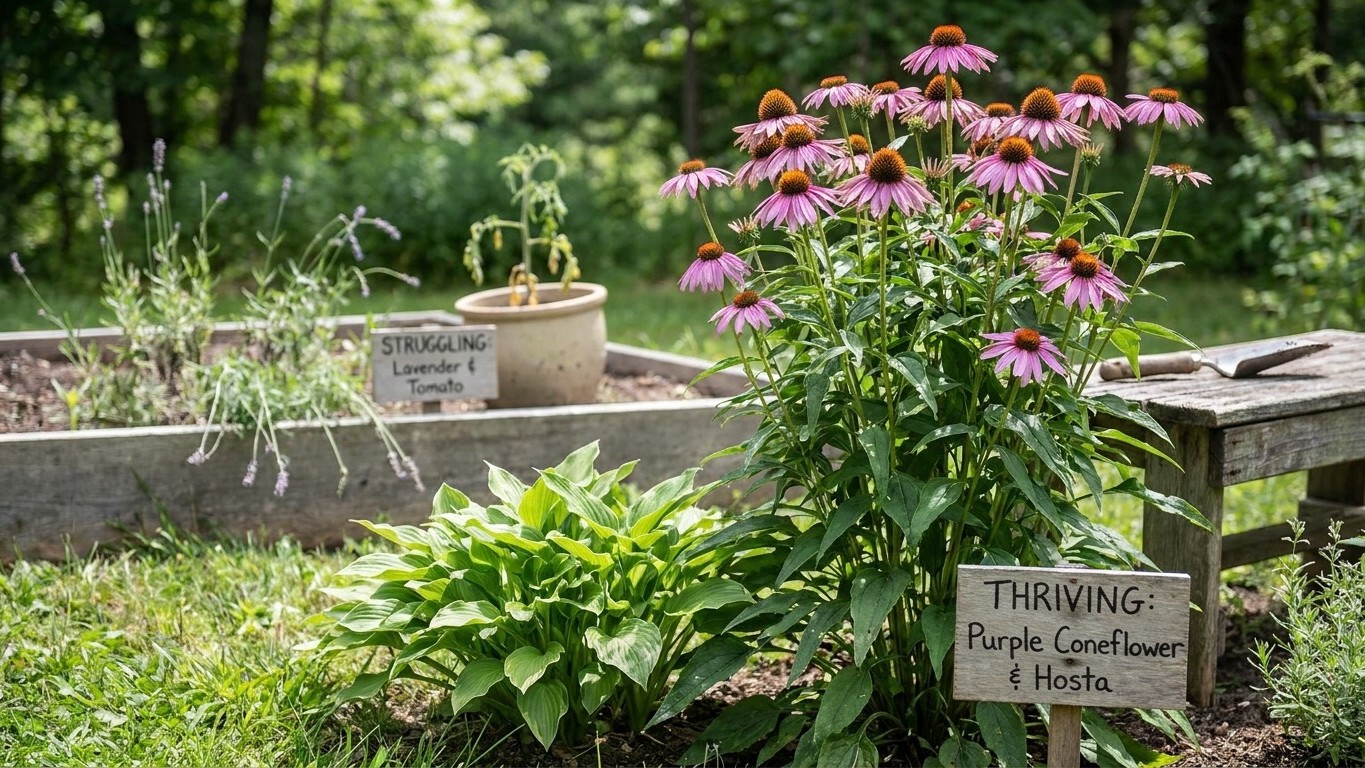
Cold hardiness is the first filter, not an afterthought. The USDA’s 2023 Plant Hardiness Zone Map puts the state between 3b and 5b, and Burlington, sitting in the mild pocket along Lake Champlain, runs toward the warmer end of that range. The Green Mountains and the Northeast Kingdom run colder, often by a full zone or more, so a plant rated hardy to zone 5 that survives fine in Burlington may not make it through a winter in Craftsbury or Peru. Peonies, daylilies (Hemerocallis), Siberian iris, garden phlox (Phlox paniculata), purple coneflower (Echinacea purpurea), and sedum (Hylotelephium, formerly Sedum) all carry the cold tolerance to handle zone 3b without a second thought.
Heat and drought play a smaller role here
Because Vermont summers are short and rarely brutal, drought tolerance matters less than it does in the Mountain West or the desert Southwest, where gardeners are managing a completely different set of stresses. That contrast is worth seeing in practice: compare this to the high-desert conditions covered in Flowers That Actually Thrive in New Mexico, and the Ones That Struggle, or the mild, marine-influenced summers described in Flowers That Actually Thrive in Oregon, and the Ones That Struggle. Vermont sits in between: wet enough in spring that soggy soil kills more plants than dry soil does, and cool enough that heat stress is rarely the problem.
Wet, heavy clay is the more common killer in Vermont gardens than drought ever is. Raised beds or amended, well-drained soil solve more problems for tender-crowned perennials than any amount of watering vigilance does in July.
Native plants worth the space
Native and regionally native plants earn their keep in a Vermont border because they’ve already solved the cold-hardiness problem without any help from the gardener. Once their root systems are established, usually by the second full growing season, they need far less supplemental water and almost no winter protection, because they evolved to handle exactly the freeze-thaw cycles and wet springs the state produces every year.
New England aster (Symphyotrichum novae-angliae) is one of the most reliable late-season natives across the Northeast, throwing purple-to-pink blooms from late summer into the first hard frosts and feeding migrating monarchs and native bees when almost nothing else is flowering. Joe Pye weed (Eutrochium purpureum and Eutrochium maculatum) does the same job earlier, with tall dusky-pink flower clusters that draw swallowtails and bumblebees through midsummer. Both are native to the broader northeastern region rather than to any single Vermont county, so check with a local nursery or the extension service if you want a plant with documented local provenance.
Bee balm (Monarda fistulosa) and wild bergamot cousins bring hummingbirds and bumblebees to a border from July into August, and butterfly weed (Asclepias tuberosa) is the milkweed species most gardeners plant on purpose, since it hosts monarch caterpillars without the aggressive spread of common milkweed. Cardinal flower (Lobelia cardinalis) wants consistently moist soil, which makes it a good choice for the low, damp corner of a yard that kills off less tolerant perennials. Wild columbine (Aquilegia canadensis) self-seeds modestly and blooms early, bridging the gap between spring bulbs and the main perennial flush.
The pollinator argument is not sentimental, it’s practical. A border built around three or four regionally native species in bloom at staggered times keeps bees and butterflies working your yard from May through the first fall frost, which does more for fruit set on nearby vegetables and berries than any single showy hybrid will.
Perennials that come back

At Burlington’s end of the state’s 3b-5b range, a long list of perennials returns reliably year after year without mulching or digging up. Peonies, daylilies, hosta, Siberian iris, garden phlox, coneflower, black-eyed Susan (Rudbeckia fulgida), and sedum all winter over in ordinary garden soil across most of the state. Lupine (Lupinus polyphyllus) and lily species (Lilium, particularly Asiatic and Oriental hybrids) also come back reliably, though lilies benefit from a layer of mulch in the colder Northeast Kinggom towns.
What gets grown as an annual here
A fair number of popular garden flowers are genuinely perennial, just not in a climate this cold. Dahlias are perennial roughly from zone 8 south and are grown as annuals in Vermont unless the tubers are dug up in fall and stored indoors over winter. Canna and tender hibiscus follow the same pattern: gorgeous through the short summer, but the rootstock won’t survive a Vermont winter in the ground. Snapdragons (Antirrhinum majus) are short-lived perennials in warmer zones but are planted fresh each spring here, and gladiolus corms need the same fall dig-and-store routine as dahlias if you want to keep them.
Read the plant tag’s hardiness zone against your own, not against the state average. A tag that says “hardy to zone 6” is telling you the plant needs winters milder than anything Vermont offers outside the very warmest microclimates near Lake Champlain. Treat anything rated zone 6 or higher as an annual, or as a container plant you can bring indoors, unless you’re gardening in one of those sheltered pockets and are willing to gamble on a mild winter. Anything rated zone 5 or lower is a safer bet for most of the state, and zone 3 or 4 ratings are the ones to trust in the coldest valleys and at higher elevations.
Putting a border together
A Vermont border works best built in three height layers: tall plants like garden phlox, delphinium, and lilies at the back or center, mid-height perennials like coneflower, black-eyed Susan, and bee balm filling the middle, and low, spreading plants like sedum, catmint (Nepeta), or creeping thyme along the front edge. Plan bloom succession before you plant a single thing, because a border that peaks all at once in July and then goes flat for the rest of the season looks worse than one with fewer total flowers spread across more weeks.
Sequencing bloom across a short season
Given Burlington’s last spring frost falling between April 30 and May 10 and the first fall frost arriving October 3 to October 13 according to NOAA’s climate normals, the state’s frost-free window runs to roughly five months at its longest, and considerably less in the mountains and the Northeast Kingdom. Peonies and columbine open the season in late spring. Daylilies, garden phlox, bee balm, and coneflower carry the middle of summer. New England aster and sedum, which deepens from green to rust-red as it flowers, take over as the nights cool into September and October.
Repeat, don’t scatter. Three clumps of the same coneflower spaced through a bed read as intentional. One of each of six different plants reads as a seed-packet sale. Buy in odd-numbered groups of three or five where the budget allows, and repeat at least one color or shape at both ends of the border so the eye has something to follow.
Leave room at planting for what a perennial will become in three years, not what it looks like in the one-gallon pot. A hosta or daylily planted at final spacing looks sparse the first season and crowded by the third if you didn’t leave that gap in year one, and dividing overgrown clumps later is more work than spacing generously up front.
Local help
The University of Vermont’s extension service runs a Master Gardener program and publishes plant lists suited to the state’s specific counties and elevations, which is a better source for a hyper-local recommendation than any national catalogue. Call or email before you plant anything unusual, especially if you’re gardening at elevation or in the Northeast Kingdom, since the growing conditions there differ substantially from Burlington’s. For more on planning a Vermont yard beyond flowers, see our broader Vermont guides.
Common questions
What zone is Vermont for planting?
The USDA’s 2023 Plant Hardiness Zone Map places Vermont between zones 3b and 5b. Burlington and the mild strip along Lake Champlain sit toward the warmer end of that range, while the Green Mountains and the Northeast Kingdom run colder, so always check your specific town rather than assuming a statewide number.
Can I grow roses in Vermont?
Many hybrid tea roses struggle here because they’re rated for milder zones than most of Vermont offers, but shrub and rugosa-type roses bred for cold climates do fine. Check the hardiness rating on the tag against your own town’s zone before buying, the same rule that applies to any perennial.
Why did my perennial come back smaller or not at all?
The most common cause in Vermont is wet soil over winter rather than cold itself, since a lot of perennial crowns rot in heavy, saturated clay before the cold even becomes an issue. Improving drainage, or raising the bed a few inches, solves this more often than adding winter mulch does.
When is it safe to plant tender flowers outside?
NOAA’s 1991-2020 climate normals put Burlington’s last spring frost between April 30 and May 10, and other parts of the state run later, sometimes by two or three weeks at higher elevations. Soil temperature lags behind that date, so waiting a week or two past your local last-frost window is often safer for tender annuals and dahlia tubers than planting right on the date.
Related guides
- Flowers That Actually Thrive in New Hampshire, and the Ones That Struggle
- Flowers That Actually Thrive in Massachusetts, and the Ones That Struggle
- Flowers That Actually Thrive in Oregon, and the Ones That Struggle