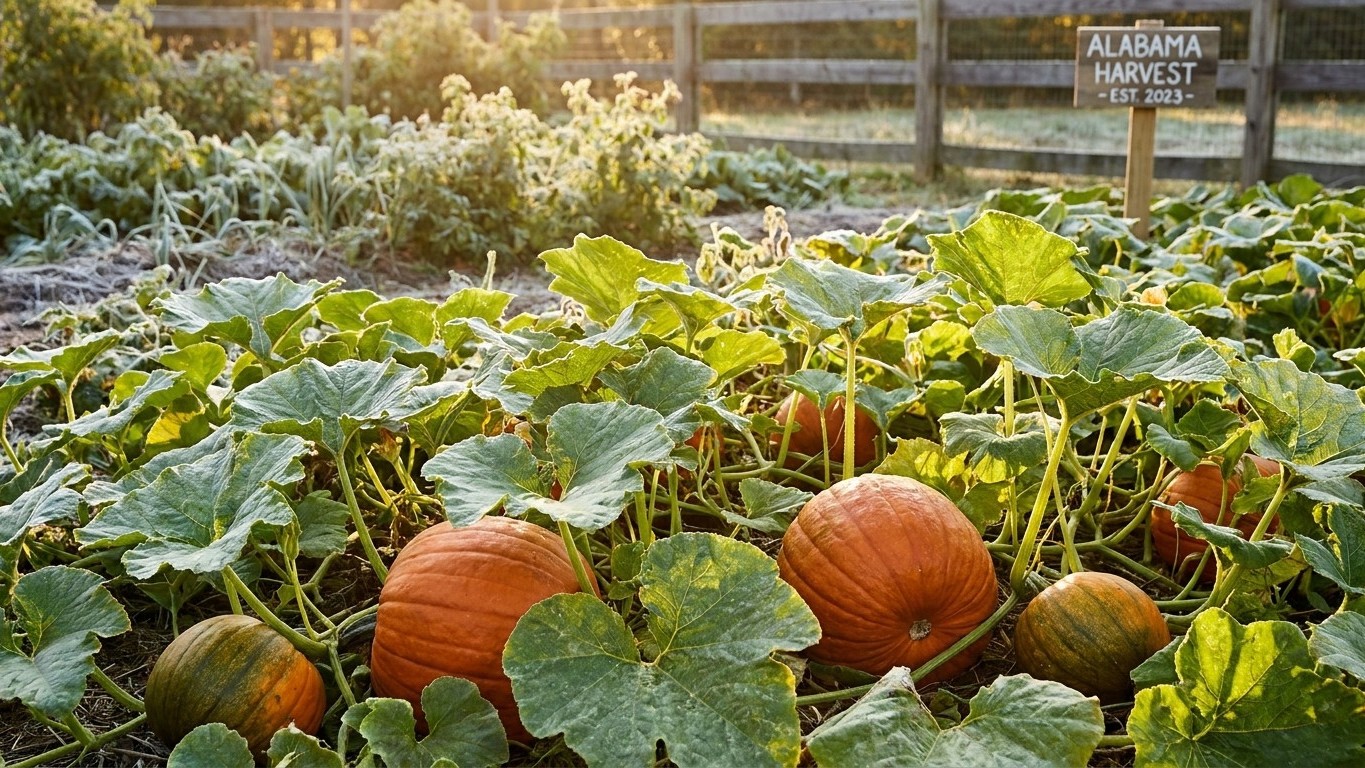

Yes, but only if the first flower opens by roughly late August to mid-September, depending on where in Wisconsin you’re growing and which variety you planted. Miss that window and the vine runs out of season before the fruit finishes coloring. The math that gets you there starts with the frost date, not the seed packet.
The short answer
Wisconsin’s first fall frost lands somewhere between October 17 and October 29, based on 1991-2020 climate normals from the NOAA National Centers for Environmental Information for a single reporting station. That’s the wall your pumpkin vine runs into. Everything else in this page works backward from that wall.
Counting backward from frost
According to Utah State University Extension, a pumpkin needs 45 to 55 days after flowering to reach maturity, not 45 to 55 days from the day you dropped a seed in the ground. Subtract that range from the frost window and you get the real deadline: a flower needs to open somewhere between late August and mid-September for the fruit behind it to have any real shot at ripening before the vine goes down. Push that flowering date into late September, and you’re growing a green pumpkin that frost will finish off before the sun does.
That’s not a single date. It’s a window, and a wide one, because the frost window itself spans nearly two weeks and the maturation range spans ten days on top of that. A gardener who tracks the date of the first open female flower, not the planting date, is the one who actually knows whether harvest will happen on schedule or not.
Why location changes the math
The October 17-to-29 band comes from one weather station, and Wisconsin is a big state with a lake down one side of it. Lake Michigan holds heat and pushes the first freeze later along the shoreline, sometimes well past that window. Move inland into southern Wisconsin and the first freeze can arrive in early October instead. Head north and it can come earlier still. If you’re gardening near the lakeshore, you likely have more room to let a late flower ride. If you’re inland or up north, the safe flowering deadline slides earlier than the statewide range suggests.
When to sow here
Here’s where a lot of Wisconsin gardeners get the timing backward. The instinct is to sow the week after the last spring frost clears, which falls between April 16 and April 29 according to the same NOAA climate normals. But Utah State University Extension is clear that pumpkins go in the ground once soil temperature reaches 65°F, and that’s a separate clock entirely. Soil warms far slower than air. Bare, unmulched ground in much of Wisconsin typically doesn’t hold a steady 65°F until several weeks after that spring frost window has closed, often putting the real sowing date in mid-to-late May for southern counties and later farther north.
The steps, in order:
- Let the last spring frost window pass. That’s April 16 to April 29 for the state’s tracked normals, but treat it as a floor, not a green light for seeding.
- Check soil temperature directly with a probe thermometer at planting depth rather than guessing from the calendar. Air temperature in the 60s doesn’t mean the soil has caught up yet.
- If the season feels tight, use black plastic mulch or row covers to speed soil warming. Row covers alone can buy back roughly two weeks compared to bare, unprotected ground, which matters when you’re racing a fall frost window that opens as early as mid-October.
- Direct-seed or set transplants only once 65°F holds for several consecutive days, not just one warm afternoon.
- From there, watch the vine rather than the calendar. The seeding date only sets up when flowers show up weeks later; it’s the date the first female flower opens that actually starts the 45-to-55-day countdown to a ripe pumpkin.
Variety choice plays into this too, though not in a way this page can quantify. Wisconsin gardeners commonly grow Connecticut Field, Howden, Autumn Gold, Jack O’Lantern, Baby Boo, Casperita, Big Max, Sugar Pie, and Cinderella, among others. Utah State University Extension doesn’t publish a days-to-maturity, size, or color figure broken out by variety, so the seed packet in your hand is the only source for that specific number, not this article and not a general rule of thumb.
What goes wrong here
Wisconsin’s frost window and the pumpkin’s own maturation clock leave a narrow margin. Three failures show up over and over, and each one has a fix that starts earlier than most gardeners think.
The three failure points
- A late flower that never colors. A female flower that opens after the safe window, especially into late September in most of the state, doesn’t get its 45 to 55 days before frost knocks the vine down. The fruit sits green and hard on the vine. Remedy: once you’re past the safe flowering deadline for your part of the state, pinch off new blooms so the plant stops investing energy in fruit that has no chance of finishing, and put that energy into the pumpkins already sizing up.
- A ripening fruit caught by frost. A pumpkin that’s colored up but still attached when frost hits gets its skin and stem damaged, which shortens how well it holds afterward. Remedy: harvest with the stem attached ahead of the forecast frost, even a day or two early, and move the fruit somewhere it will not freeze. Utah State University Extension doesn’t publish a storage temperature or humidity figure, only that instruction: keep it where it won’t freeze.
- A vine that dies back before the skin hardens. Frost kills the foliage fast, but a pumpkin’s rind can still be soft underneath even after the leaves are black. Remedy: press a thumbnail into the skin near the stem; if it dents easily, the fruit isn’t done. Covering the fruit itself, not just hoping the vine survives, with a sheet or tarp on a forecast frost night can buy a few extra days for the rind to firm up.
Pumpkin vines in Wisconsin also deal with squash bugs and cucumber beetles well before frost becomes the issue; both pests have their own dedicated pages on this site covering identification and control rather than repeating that here.
Common questions
What if my pumpkin’s flower opens after the safe window?
The fruit behind it is unlikely to reach full color before frost, based on the 45-to-55-day maturation figure from Utah State University Extension. Some gardeners let it ride anyway for smaller, novelty-use fruit, but for a fully ripe pumpkin, a late flower is generally a lost cause for the season.
Does soil temperature matter more than air temperature for sowing?
For germination, yes. Utah State University Extension ties sowing to a 65°F soil temperature specifically, not to the last frost date, because seeds sitting in cold, damp soil below that mark tend to rot rather than sprout, even once the air has warmed up.
Can pumpkins still mature in far northern Wisconsin?
It’s tighter there. The state’s frost window runs October 17 to 29 for the tracked station, but northern areas typically see their first freeze earlier than that band, which narrows the safe flowering deadline correspondingly. Choosing a variety with a shorter maturation window and pushing soil warming with row covers both help close that gap.
How do I know a pumpkin is actually ripe and not just orange?
Color change alone isn’t the full story. Check that the rind resists a thumbnail press and that the stem has started to dry and harden. Harvest with that stem attached, and get the fruit somewhere it won’t freeze if frost is forecast, per Utah State University Extension’s guidance.