
In Wisconsin, pumpkin seed generally goes into the ground somewhere between mid-May and the first week of June, once the soil itself (not just the air) has warmed enough to sprout it. Sow too early and the seed sits and rots; sow too late and the vine runs out of season before the fruit can color up and cure. The exact window shifts a bit depending on where in the state you garden.
The short answer
Start from the back end of the calendar. Wisconsin’s first fall frost, based on NOAA climate normals for the period 1991 to 2020, arrives somewhere between October 17 and October 29, depending on the year. That’s the wall every pumpkin vine is racing toward, whether the grower thinks about it or not.
Pumpkins need 45 to 55 days from the moment a flower opens, not from the day the seed goes into the ground, to produce a fruit that’s ready to harvest, according to Utah State University Extension. That distinction matters more than almost anything else in pumpkin timing. A vine can look enormous, healthy, and covered in blossoms in early September and still fail to deliver a single orange pumpkin, because the flowers that opened didn’t have enough days left before frost to finish the job.
Run the math backward from the frost window. Using the earlier end of the frost range (October 17) and the longer end of the maturation window (55 days), the last flower that can safely open and still ripen falls around late August. Using the later frost date (October 29) and the shorter maturation window (45 days), a flower opening in mid-September could still, in theory, squeak by. That’s a wide spread, and it exists because frost dates vary year to year and mile to mile, not because the plant’s own clock is flexible.
The safest practice is to treat late August as the real cutoff for new flowers, and to view anything opening after Labor Day as a gamble. Lake Michigan complicates this further: it holds heat late into fall and delays the first freeze along the lakeshore, while inland southern Wisconsin tends to see its first freeze in early October and the northern part of the state, well before that. A grower near Milwaukee’s shoreline has more slack than one growing the same variety near Rhinelander.
None of this changes the seed-sowing date directly. It changes how much margin a grower needs to build in when choosing a sowing date, because the goal isn’t just “get flowers,” it’s “get flowers early enough that the fruit behind them has time to finish.”
When to sow here
The last spring frost in Wisconsin falls between April 16 and April 29, again per NOAA’s 1991-2020 climate normals. That date tells a gardener when it’s safe to stop worrying about a freeze killing tender seedlings. It does not tell a gardener when the soil is ready for pumpkin seed, and treating those two dates as the same thing is the single most common timing mistake with this crop.
Pumpkin seed needs soil at 65°F to germinate reliably, per Utah State University Extension. Soil doesn’t warm at the same pace as the air above it. Air can clear 32°F on a sunny April afternoon while six inches of ground, still damp and shaded by mulch or last year’s stubble, sits ten or fifteen degrees colder. In practice, that gap means the soil in most of Wisconsin doesn’t reach a reliable 65°F until several weeks after that last frost date has passed, which pushes real sowing into mid-May at the earliest for the southern part of the state, and later than that farther north.
A row cover can close some of that gap. Laid over freshly sown ground, it traps solar heat during the day and slows heat loss at night, and growers commonly use it to buy about two weeks of extra warming time compared to bare soil left exposed. That’s not a substitute for waiting on the thermometer. It’s a way to sow a little earlier than bare soil would otherwise allow, without pushing seed into ground that’s still too cold to sprout it.
Here’s the sequence that respects both the frost calendar and the soil calendar:
- Let the last frost window (April 16 to April 29) pass completely before doing any prep that assumes the danger of freezing seedlings is over.
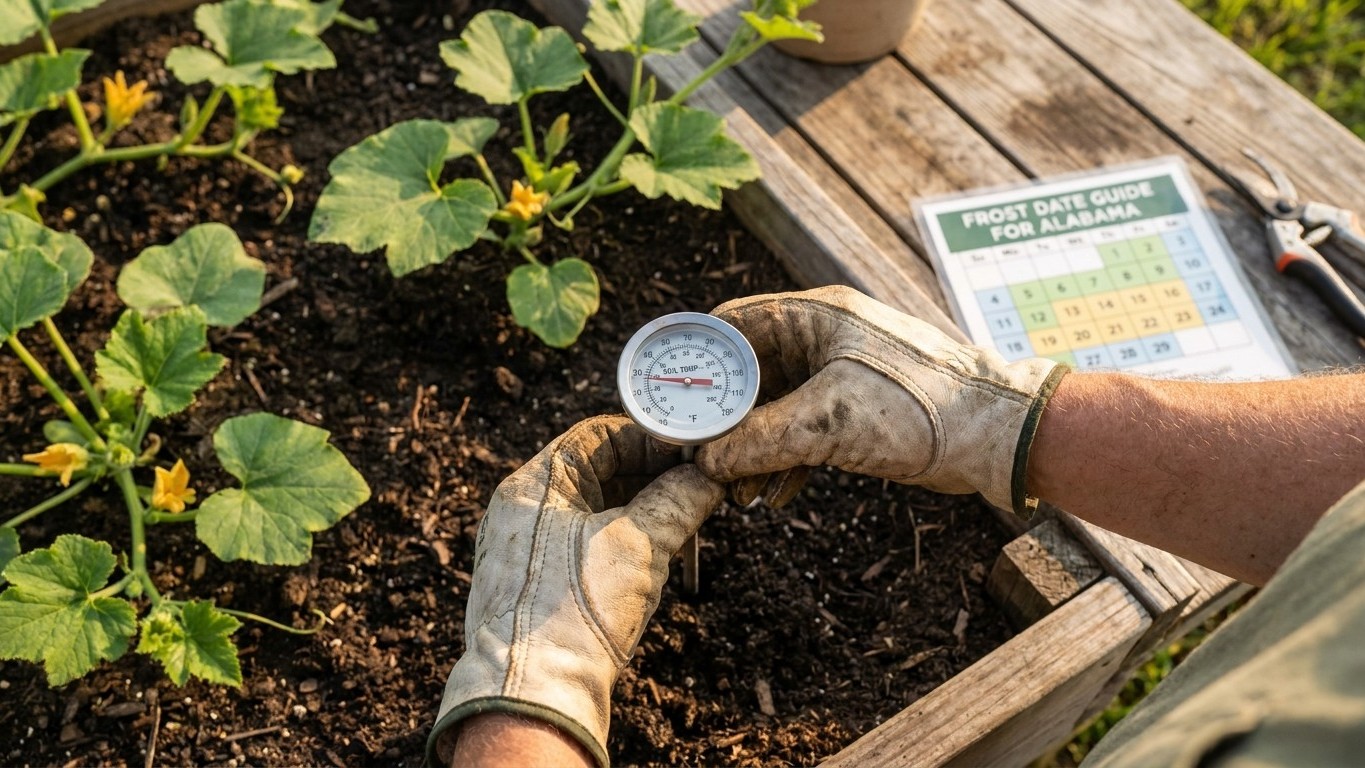
- Check actual soil temperature with a soil thermometer rather than guessing from the calendar or the air temperature; wait for a consistent 65°F reading, which typically lands weeks after the last frost date, not the same week.
- If sowing earlier is worth the effort, lay a row cover over the prepared bed to accelerate soil warming by roughly two weeks, then sow once the covered soil itself hits 65°F.
- Without a row cover, plan on sowing directly once ambient conditions have held the soil at or above 65°F for several consecutive days, generally mid-May into early June depending on location within the state.
- Count forward from that sowing date to expected flowering, and confirm the resulting flowering window still leaves 45 to 55 days before the region’s first fall frost.
What goes wrong here
- A late flower that never colors. This happens when the vine keeps producing new blossoms into late summer, and the grower assumes more flowers means more pumpkins. A flower opening after the safe late-August cutoff often doesn’t have the 45 to 55 days it needs before frost shuts the season down. The remedy is to pinch off new blossoms once the calendar crosses that point, forcing the plant’s energy into the fruit that’s already set and has a real chance of finishing.
- A fruit caught by frost before harvest. Even a fruit that’s mostly colored can be lost if it’s left on the vine past the first freeze, since frost damages the flesh and shortens how long the pumpkin will hold afterward. Utah State University Extension advises harvesting with the stem attached and moving fruit somewhere it won’t freeze, rather than leaving it in the field once frost is forecast, even if it looks a day or two from perfect.
- A vine that dies back before the skin hardens. Foliage can collapse from disease, drought stress, or simply reaching the end of its natural life before the rind on late-set fruit has had time to toughen. A softer rind bruises easily and stores poorly. Cutting back on overhead watering late in the season and keeping the vine as healthy as possible into September gives the last fruit a better shot at a properly hardened shell before the foliage gives out.
Insect pressure adds another layer of risk to an already tight calendar, since both squash bugs and cucumber beetles can weaken or kill vines mid-season, cutting the growing window even shorter. Wisconsin gardeners dealing with either pest can find pest-specific guidance on squash bugs in Wisconsin pumpkins and cucumber beetles in Wisconsin pumpkins.
Common questions
Can I sow pumpkin seed in Wisconsin in April?
Not usually. The last spring frost falls between April 16 and April 29, and soil doesn’t reach the 65°F pumpkins need until weeks after that date. Seed sown in April sits in cold, often wet soil and is more likely to rot than sprout.
Does a warm spring mean I can sow pumpkins earlier?
Air temperature can climb quickly on a warm week, but soil temperature lags behind it. Checking soil directly with a thermometer, rather than judging by how warm the days feel, is the only reliable way to know sowing is safe.
What happens if a pumpkin flower opens in mid-September?
It’s a risk. Working from the 45 to 55 day maturation window after flowering and Wisconsin’s first fall frost arriving between October 17 and October 29, a mid-September flower has little to no margin left before frost, and depending on the specific dates involved, may not finish at all.
How do I know a pumpkin is ready to pick before frost?
Utah State University Extension recommends harvesting with the stem left attached and storing fruit somewhere it will not freeze. The source does not publish a specific storage temperature or keeping time beyond that guidance, so growers should prioritize getting fruit off the vine and out of freezing conditions rather than chasing an exact number.