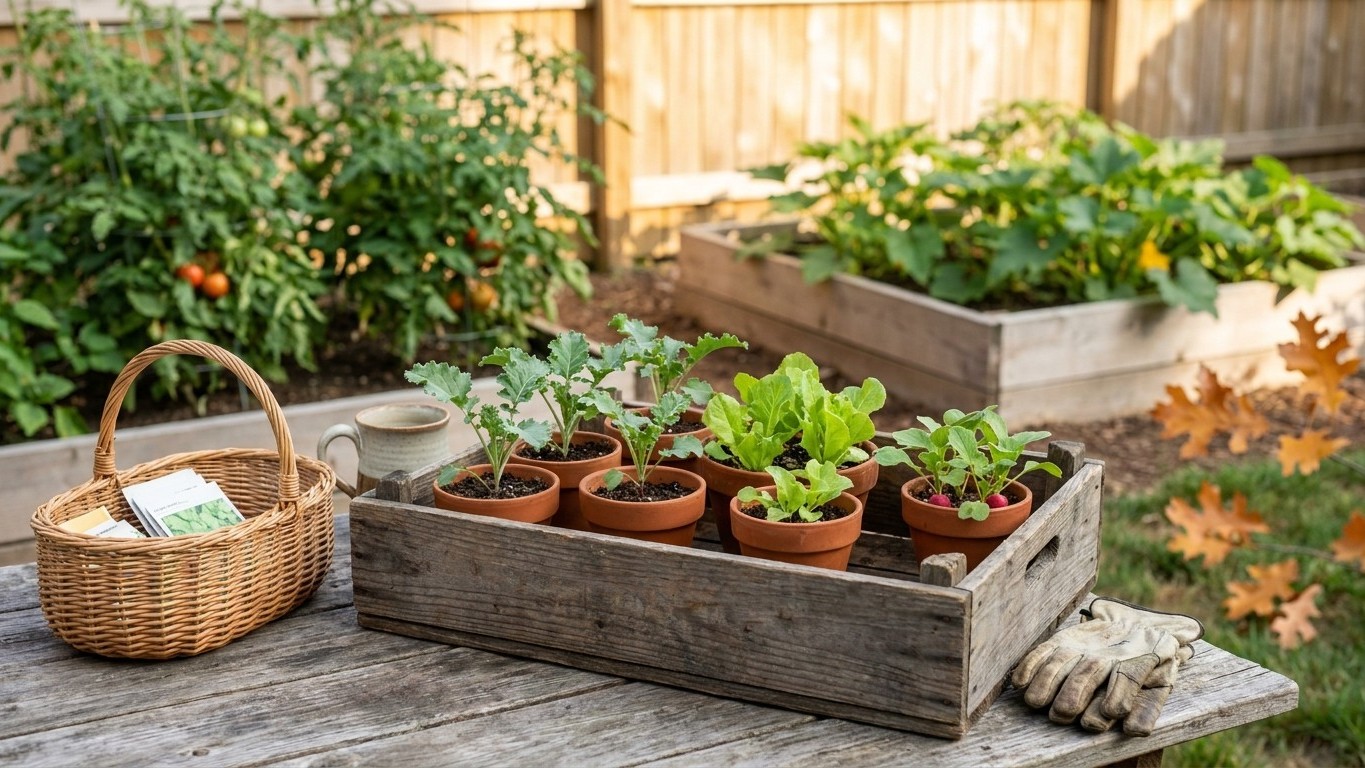

August in Wyoming means fast crops, not new warm-season plantings. With first fall frost landing between September 24 and October 5, you have roughly three to nine weeks of frost-free growing left, depending on when in the month you’re reading this. That window rewards quick greens and root vegetables, not tomatoes or squash starts.
What goes in the ground in August

The frost countdown is the only calendar that matters here. Early August still leaves about seven to eight weeks before the first frost date range of September 24 to October 5, which is enough time for a genuine second crop of something quick. By the last week of August, that window has narrowed to three to five weeks, and the list of what will actually mature shrinks fast.
Direct-sow radishes any time this month. Most varieties finish in 25 to 30 days, so even a late-August sowing has margin to spare. Spinach and arugula are close behind, usually ready in 30 to 40 days, and both handle a light frost without complaint once they’re established. Baby lettuce and mesclun mixes work the same way: sow, harvest young, and don’t wait for full heads. Turnips fall into the early-August window rather than the late one, since many varieties need 40 to 60 days for usable roots.
What doesn’t belong in the ground now is anything that needs the full season to ripen. Bush beans planted in the first week of August are already a gamble at 50 to 55 days to maturity against a frost that could arrive by late September. Corn, squash, and any new tomato or pepper transplants are off the table entirely; they won’t produce before the cold shuts them down, and putting them in now just wastes seed and space that could go to something that will actually feed you before frost.
A quick gut check
Before sowing anything in the second half of August, count the days to maturity on the seed packet and compare it against the shorter end of the fall frost range (September 24). If the math doesn’t clear with a week or two of buffer, skip it and wait for a crop with a shorter clock.
What to start under cover
Starting seeds indoors in August is really about the fall garden, not next spring. If you want kale, collards, or Swiss chard transplants ready to go into a cold frame or a protected bed, count backward from the frost window rather than a fixed date. A kale transplant needs about three to four weeks of indoor growth before it’s sturdy enough to move outside, and once transplanted it still needs another five to six weeks to reach a harvestable size, even though the leaves themselves shrug off frost. Do that math against September 24 and you land squarely in early August as the last reasonable start date for most of the state.
The two failure modes show up every year. Start too early, and by the time outdoor soil temperatures and daylight allow transplanting, the seedlings are rootbound and leggy in their trays, stretching for light and stalling once they hit the ground. Start too late, and the plant runs out of growing season before it sizes up, leaving you with a bed of stunted greens that never quite got there. Neither mistake is fatal, but both cost you weeks you don’t have to spare in a state where the frost-free season already runs short.
Perennial herbs and some hardy flowers are a lower-stakes option for indoor starts this month, since they aren’t racing the frost the same way. They’ll spend the coming months building roots rather than trying to produce a harvest before the ground freezes, which makes the exact start date far less critical than it is for kale or chard headed for a fall plate.
What is ready to pick
Garlic and onions are usually finishing up or already cured by August, and the signs are easy to read. Garlic is ready when the lower leaves have browned but four or five green leaves remain at the top; pull too early and the bulbs are small, too late and the cloves separate in storage. Onions tell you themselves: once the necks soften and the tops flop over, stop watering and let them cure in a dry, airy spot for two to three weeks before storing.
Peas planted earlier in the season are winding down by mid-August in most of the state, and this is the point where letting a few pods go too long turns tender peas starchy overnight. Summer squash and cucumbers, if they were started early enough to be producing, need checking every couple of days; both crops go from perfect to oversized in a single warm stretch. New potatoes can be dug now if the plants were set early, and the test is simple: scratch around the base of a plant and see if the tubers are golf-ball size or bigger.
Herbs like basil, dill, and cilantro are at their best cut regularly through August rather than left to bolt in the heat. Regular harvesting keeps the plant producing tender leaves instead of pushing straight to seed, which happens fast once daytime temperatures climb.
The jobs that matter this month

Water is the single biggest variable in a Wyoming August, and inconsistency is what actually damages crops, not heat by itself. Deep, infrequent watering that soaks down 6 to 8 inches encourages roots to follow the moisture downward, where they’re buffered against the swings between hot afternoons and cool, dry nights that define this part of the growing season. Shallow daily sprinkling does the opposite, keeping roots near the surface where they dry out fast.
Grasshoppers are the pest to watch through August across most of the state, and they build in number as the month goes on. Check the undersides of leaves and the base of stems weekly, and deal with light infestations early with row covers over vulnerable seedlings rather than waiting until a bed is stripped. Aphids on brassicas and squash are the other common problem this time of year; a strong blast of water from a hose knocks most colonies down before they need anything stronger.
Staking and caging should already be done for tomatoes and vining crops by August, but this is the month to check ties and supports before an afternoon thunderstorm, common across the state, knocks over a top-heavy plant loaded with fruit. Mulch beds that have thinned out over the summer; a fresh 2 to 3 inch layer holds soil moisture and keeps roots several degrees cooler during the hottest stretch of the year.
Succession sowing ties everything together. As radishes, lettuce, and early greens come out, refill that space immediately with another quick crop rather than leaving bare soil. With the frost window closing by late September, every empty week of bed space this month is a harvest you won’t get.
What not to do in August
The most common mistake is planting anything warm-season because the days still feel like midsummer. Air temperature is not the deciding factor; the calendar distance to the first fall frost is, and by August that distance is measured in weeks, not months. A new tomato transplant put in during August has no realistic path to ripe fruit before the season ends.
Easing off on water because nights start cooling is another one. August is frequently the driest stretch of the year across Wyoming, and a plant that’s been watered consistently all summer can wilt fast if irrigation tapers off before the heat actually breaks. Keep the deep-watering rhythm going until temperatures genuinely drop, not just because the calendar suggests fall is near.
Feeding nitrogen late in the season is a mistake that shows up on tomatoes, peppers, and squash. A high-nitrogen fertilizer applied in August pushes leafy growth right when the plant should be putting energy into ripening what’s already set. If anything, a lower-nitrogen, higher-potassium feed supports fruit finishing rather than more foliage the plant won’t have time to use.
Pulling garlic or onions before they’ve fully signaled readiness costs you storage life. Bulbs harvested too green don’t cure properly and rot faster in storage, while bulbs left too long in wet soil can split or start regrowing. Watch the leaves, not the calendar, for the actual cue.
Checking this against your own county
A statewide frost window is a starting point, not a fixed instruction. Wyoming’s elevation swings from around 3,100 feet along the Belle Fourche River to well over 13,000 feet in the Wind River Range, and that difference alone can shift frost dates by weeks in either direction. The NOAA station behind these figures (USW00024018) reflects one location; a garden at 6,000 feet or higher should expect a shorter frost-free season than the 130-day average cited for that elevation, and frost is possible in any month at the highest sites in the state.
For a planting calendar built around your specific county and elevation, the University of Wyoming Extension is the right next stop.
Common questions
Can I still plant tomatoes in Wyoming in August?
No. With first fall frost arriving between September 24 and October 5, a new tomato transplant set out in August has no realistic path to producing ripe fruit before the season ends.
What’s the fastest crop to plant in August in Wyoming?
Radishes, typically ready in 25 to 30 days, are the surest bet for a late-August sowing, followed closely by baby lettuce and arugula.
Why does elevation matter so much for frost dates in Wyoming?
Higher elevation sites cool faster and lose heat overnight more readily, which shortens the frost-free season well below the roughly 130 days typical at 6,000 feet, and frost becomes possible in any month at the state’s highest elevations.
Is it too late to start a fall vegetable garden in August?
Early August still leaves enough time for quick greens and root crops. By late August, only the fastest-maturing options, radishes, baby greens, and frost-tolerant kale transplants started earlier in the month, have a realistic shot at maturing.
Gardeners who plant by the Moon can check the August 2027 moon planting calendar, a tradition rather than a proven method.