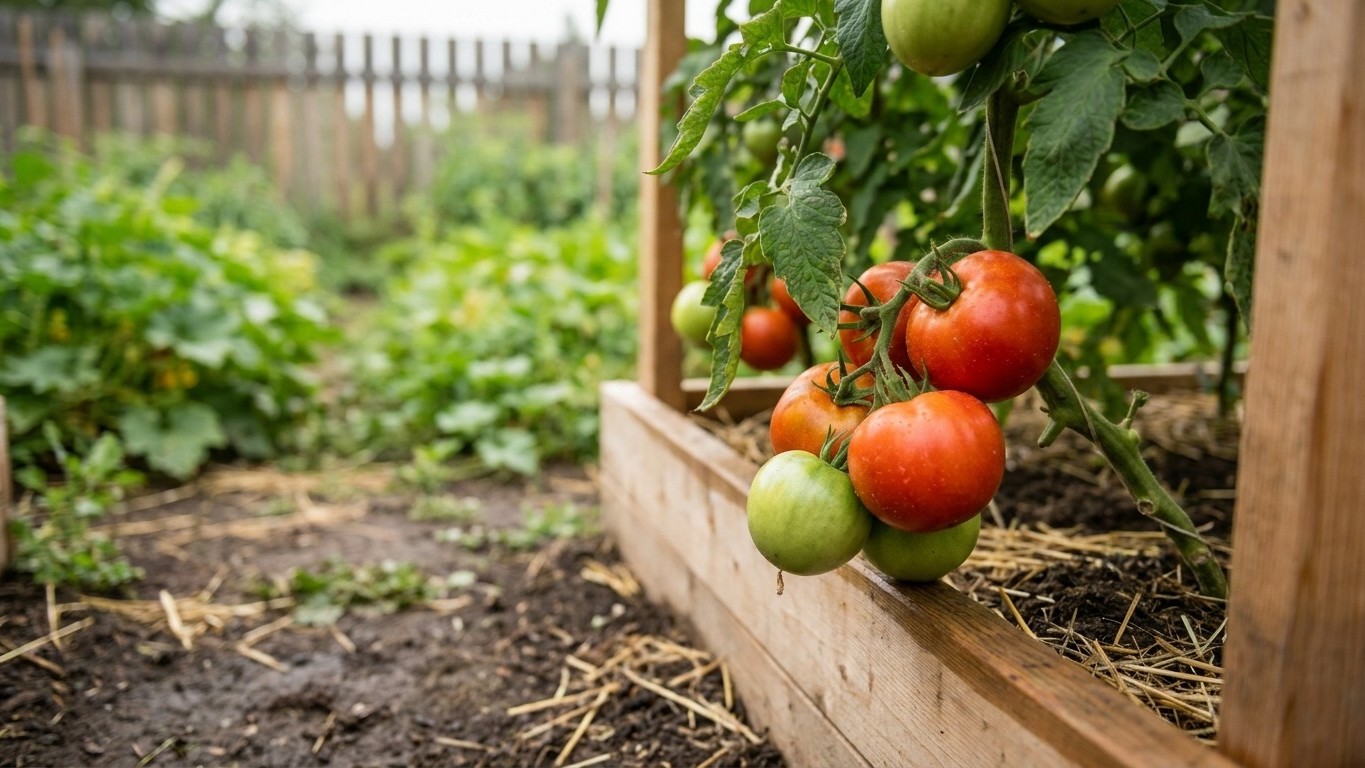

Eleven weeks, give or take, is what Whitehorse gardeners actually get between frosts most years — last one hovering near June 5, first one creeping back in by late August. That narrow window is the whole story here: a tomato boasting 75 or 80 days to maturity is betting on a season that rarely stretches that far. The varieties worth your seed money are the quick ones, the 55-to-65-day types bred for short, cool summers rather than the glossy heirlooms that need a Kansas August to finish.
What this comes down to in Yukon

In Yukon, the frost-free window decides which tomatoes are worth growing more than soil or feeding schedule ever will. Environment and Climate Change Canada’s 1981-2010 climate normals for Whitehorse put the average last spring frost at June 5 and the average first fall frost at August 25, and both are means, not guarantees: frost falls later than June 5 in one year out of two, and it can arrive earlier than August 25 just as often. That leaves a working season of about eleven weeks, and a tomato rated much past 60 days from transplant is gambling with a season that may not show up. If you haven’t already covered the basics of growing tomatoes in Yukon, the margins below assume a warm, sheltered spot and a transplant rather than a direct-seeded start.
The varieties below are ordered from the shortest days-to-maturity to the longest, using each cultivar’s catalogue figure counted from the transplant date rather than from seed. Catalogue numbers are bred and tested the same way regardless of where you garden, but they still shift by a week or so with how warm or cool the actual season runs, so treat the ranges below as a planning tool, not a countdown clock.
Sakura

Sakura needs about 55 days from transplant to first ripe fruit, one of the fastest cherry tomatoes in this list. It is a small, round, red cherry tomato bred for snacking and salads rather than sauce. Set out in mid June, it ripens by mid August and carries about 12 days of margin before Whitehorse’s average first fall frost, the widest cushion of any variety here.
Glacier

Glacier also finishes in about 55 days from transplant, but it is a determinate plant, meaning it sets one main flush of fruit and stops rather than producing steadily all season the way Sakura does. The fruit is small to medium, round and red, sized for slicing rather than salad tossing. That single-flush habit works in this territory’s favor, since the plant puts its energy into ripening fast instead of continuing to set new flowers after the season has effectively closed.
Valentine

Valentine matches Sakura and Glacier at 55 days from transplant. It is an indeterminate grape tomato, oblong rather than round, red-skinned, bred for a sweet snacking bite. Its intermediate resistance to early blight is worth having in a season where cool, damp early summer weeks are common.
Sun Gold

Sun Gold takes about 57 days from transplant, two days longer than the earliest three. It is an indeterminate cherry tomato with golden-orange, round fruit and a sweetness that has made it one of the most widely planted cherry varieties anywhere. At a mid June transplant it still ripens by mid August, leaving roughly 10 days before Whitehorse’s average first fall frost.
Supersweet 100

Supersweet 100 needs about 60 days from transplant. It is an indeterminate cherry tomato producing long trusses of small, round, red fruit. The extra five days compared with Sakura trims the margin to roughly a week before the average first fall frost, still workable but with less room for a cool start.
Juliet

Juliet also runs about 60 days from transplant. It is an indeterminate grape tomato, oblong and red, sized between a cherry and a small plum, useful for snacking or a quick sauce. Its intermediate resistance to both late and early blight is an advantage where a damp spring slows soil warm-up.
Jasper
Jasper matches Juliet at about 60 days from transplant. It is an indeterminate grape tomato with small, oval, red fruit and the strongest late blight resistance, rated high, of any variety in this list, alongside intermediate resistance to early blight. That disease resistance can matter more than the days-to-maturity number in a wet year, since blight can shut a plant down before it ever reaches its rated finish date.
Black Cherry
Black Cherry needs about 64 days from transplant, noticeably longer than the varieties above. It is an indeterminate cherry tomato with round, dusky purple-brown fruit and a rich, almost smoky flavor prized by market growers. At a mid June transplant it ripens toward late August, leaving only about 3 days before the average first fall frost, so it belongs in the warmest, sunniest spot the garden has.
Defiant PhR
Defiant PhR takes about 65 days from transplant, the longest determinate variety on this list. It is a red, round slicing tomato bred for high resistance to late blight and verticillium wilt, with intermediate resistance to early blight. That disease package is valuable, but the calculated margin before the average first fall frost runs to only about 2 days, which means this variety only pencils out in a season that runs at or later than average.
Comparing the full catalogue at a glance
The full list of Yukon-suitable cultivars lines up like this, with margin measured against Whitehorse’s average August 25 first fall frost:
| Variety | Type | Days from transplant | Margin before average frost |
|---|---|---|---|
| Sakura | Indeterminate | 55 | 12 days |
| Edox | Indeterminate | 55 | 12 days |
| Valentine | Indeterminate | 55 | 12 days |
| Glacier | Determinate | 55 | 12 days |
| Sun Gold | Indeterminate | 57 | 10 days |
| Attracta | Indeterminate | 58 | 9 days |
| Supersweet 100 | Indeterminate | 60 | 7 days |
| Juliet | Indeterminate | 60 | 7 days |
| Jasper | Indeterminate | 60 | 7 days |
| Tidy Treats | Indeterminate | 60 | 7 days |
| Black Cherry | Indeterminate | 64 | 3 days |
| Cherry Bomb | Indeterminate | 64 | 3 days |
| Defiant PhR | Determinate | 65 | 2 days |
| Kuzco | Determinate | 66 | 1 day |
Working it out for your own garden
The method matters more than any single answer here, because a table built for Whitehorse will not hold for a garden two weeks behind it. Start from the average last spring frost, add roughly a week or two of buffer before setting transplants into open ground since the average date is a coin flip rather than a promise, then add the seed packet’s days-to-maturity figure to see when the first fruit should color up. Compare that date to the average first fall frost, and whatever days are left over are the margin you actually have to work with.
Running the numbers on Sakura
Sakura is rated 55 days from transplant. Setting transplants out in mid June, after Whitehorse’s average last frost of June 5 (Environment and Climate Change Canada, 1981-2010 climate normals) has passed with a cushion, puts first ripe fruit in mid August. Against the average first fall frost of August 25, that leaves about 12 days of margin, which is enough room to still bring in a harvest even if frost arrives a few days earlier than the mean.
Running the numbers on Kuzco
Kuzco is rated 66 days from transplant, the longest figure in this catalogue. The same mid June transplant date puts first ripe fruit in late August, only about 1 day ahead of the average first fall frost. Since frost falls earlier than that August 25 average in roughly half of all years, Kuzco fails to fully ripen in a normal or cold year and only comes through in a season that runs later than average. That is the line a days-to-maturity number can draw for you, if you do the subtraction before you plant it rather than after.
For the arithmetic behind the transplant date itself, including how much buffer to build in past the average last frost, see Tomato Planting Dates in Yukon: Counting Back From Your Frost Window.
The mistakes this state punishes

The most expensive mistake here is ordering a slicing tomato bred for a long season because it looked good in a catalogue photo, without checking its days-to-maturity number against Whitehorse’s roughly eleven-week window first. A variety like Kuzco, at 66 days from transplant, can lose its entire crop to a single early frost while a 55-day cherry tomato planted the same week is already ripe and being picked.
The second is trusting a run of warm days in late May or early June and setting transplants out before the soil itself has caught up. Air temperature climbs faster than soil temperature, and a tomato transplant set into cold ground stalls for a week or two even if it survives, which quietly erases the margin a short-season variety was supposed to give you. Wait for the soil to warm, not just the calendar, and treat Environment and Climate Change Canada’s June 5 average last frost for Whitehorse as the middle of the risk, not the end of it.
The third is skipping disease resistance because the season feels too short for blight to matter. Yukon’s cool, often damp early summers are exactly the conditions late blight favors, and a plant that loses leaves to disease in July has fewer than eleven weeks left to recover before frost closes the season anyway. Varieties bred with resistance built in, such as Jasper’s high rating against late blight or Defiant PhR’s high rating against the same disease, keep that short season working for the plant instead of against it.
Checking this against your county
Every figure above is measured at the Whitehorse A station, and Yukon’s climate is not one thing: a garden in a sheltered river valley with good sun exposure can run measurably warmer than one on higher, more exposed ground, and the reverse is just as common. Before betting a season on a 64 or 65 day variety, check your own microclimate against the territorial averages rather than assuming Whitehorse’s numbers apply directly to your yard.
- Ask your local agricultural office whether frost records exist for a station closer to your own garden
- Compare your site’s elevation and exposure to the Whitehorse A station, since valley bottoms and hilltops trap or shed cold differently
- Keep your own frost log for a season or two, since a personal record beats any regional average for one specific yard
Agriculture and Agri-Food Canada keeps a federal portal at agriculture.canada.ca that can point you toward provincial and territorial contacts, since the territorial department’s own tomato pages could not be verified for direct citation here.
Common questions
Can I just start tomato seeds indoors earlier and grow a longer-season variety anyway?
Starting seed earlier indoors buys you a bigger transplant, not a longer outdoor season. The 55 to 66 day figures on seed packets are counted from the transplant date, not the sowing date, so an early indoor start does not push the average August 25 first fall frost back and does not add any margin.
What happens if I plant before Whitehorse’s average last frost date to squeeze out more time?
You risk losing the transplants outright, or stalling them for a week or two while cold soil slows root growth, which usually costs more time than it saves. Since the June 5 average is a coin-flip date rather than a safe one, most of the margin built into a 55 to 60 day variety already assumes you waited past it.
Do cherry tomatoes really ripen faster than slicers, or is that just marketing?
It is a real pattern, not marketing. Every cherry-type variety in the Yukon-suitable range above, including Sakura, Sun Gold and Supersweet 100, finishes at 55 to 60 days because smaller fruit needs less time to develop and color, while the slicing types on the list, like Glacier and Defiant PhR, sit at the same or a longer end of that range.
Is it worth growing a 64 or 65 day variety at all in this territory?
It can work, but only with the best microclimate your garden has, since the margin drops to just a few days against the average frost. A grower with a warm, sheltered, south-facing spot has more room to try something like Black Cherry or Defiant PhR than a garden in an open, low-lying area where cold air settles first.