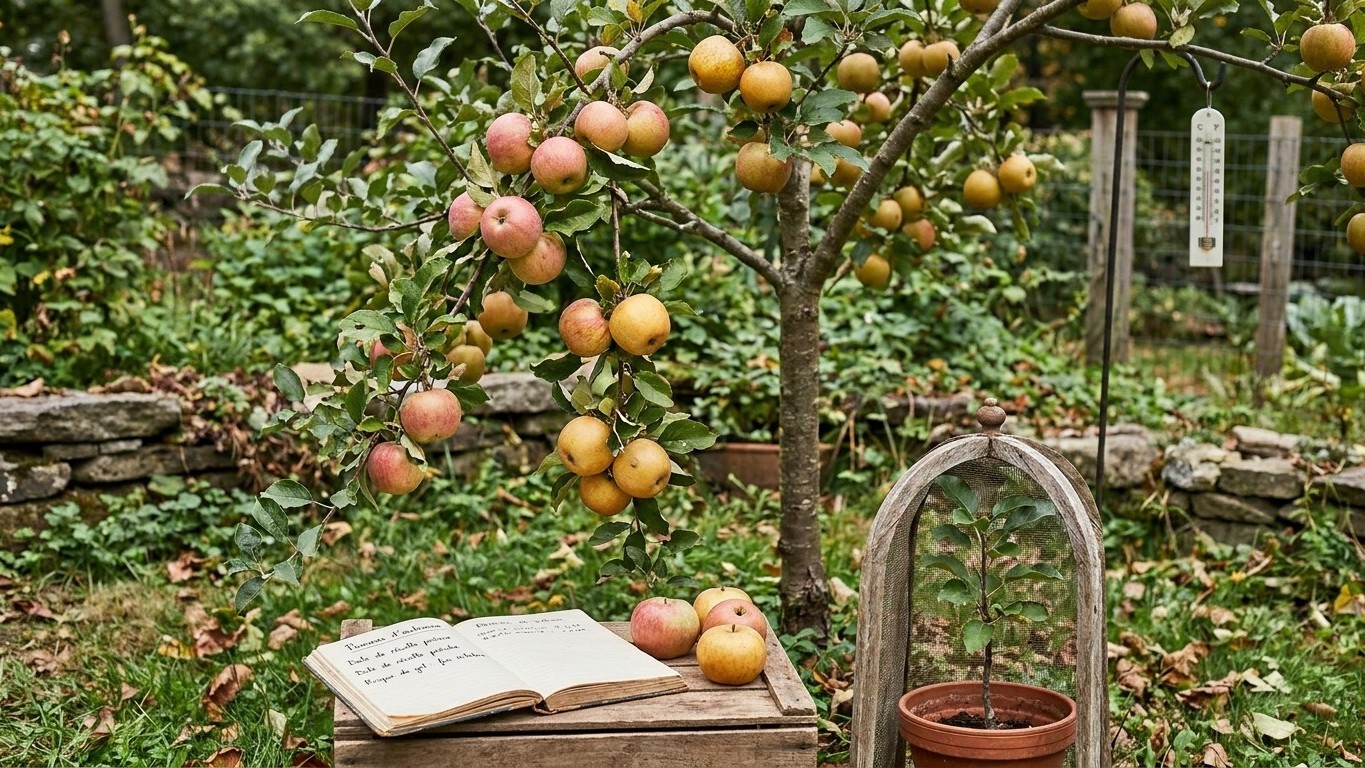

Yes, apples grow reliably across Connecticut. The USDA’s 2023 Plant Hardiness Zone Map puts the state in zones 6a to 7b, and NOAA’s NCEI 1991-2020 climate normals record the coldest month’s average minimum temperature at 23°F at the Bridgeport reference station, well inside the range apple trees tolerate without dieback. The harder question isn’t whether apples survive here. It’s whether the variety you plant blooms at the right time for your particular corner of the state and carries enough disease resistance to get through a Connecticut summer without constant spraying.
Can you grow apples in Connecticut
Twenty-three degrees is about as cold as an average Connecticut winter gets, and that number quietly ends the worry most people bring to apple growing here. A dormant, well-chosen tree shrugs off cold like that without noticing. The real trouble shows up later and warmer: humid summers that breed scab and fire blight, and a spring frost that can catch open blossoms at the one moment the tree can’t afford it.
The 23°F coldest-month minimum that NOAA’s 1991-2020 normals record at Bridgeport tells you something specific: winter cold alone rarely kills a dormant, well-chosen apple tree anywhere in the state. Apple wood tolerates far colder than that once it has hardened off in fall. The trees that struggle in Connecticut aren’t struggling against the thermometer. They’re struggling against wet, humid summers that favor apple scab and fire blight, and against a spring frost window that can catch blossoms at exactly the wrong moment. That risk gets its own section further down, because it does more crop damage in a typical year than winter cold ever does, as The Connecticut Apple Calendar, Stage by Stage lays out in more detail.
Where in the state it’s easiest
Backyard and small commercial orchards operate from the shoreline towns up through the Litchfield Hills and the Connecticut River valley. The coastal strip near Bridgeport and New Haven gives the longest, mildest growing season and the latest first frost in fall. Inland and upland sites carry a shorter season and a later spring frost date, which actually favors apples over more frost-tender fruit like peaches, but it does mean choosing bloom timing with more care. Elevation and air drainage matter more than latitude: a slope that lets cold air drain away on a still night will out-perform a low frost pocket a few miles closer to the coast.
Which varieties suit this climate

Start with The Best Apple Varieties for Connecticut, which breaks down bloom timing and disease resistance by regionth cold-hardy, disease-resistant cultivars bred for the Northeast rather than anything selected for a milder region. ‘Liberty’ and ‘Enterprise’ carry genetic resistance to apple scab, cedar apple rust and fire blight, which matters in Connecticut’s humid summers. ‘William’s Pride’ ripens early, in August, and is also scab-resistant, useful if you want fruit before the main September rush. ‘Empire’, ‘Macoun’ and the older New England heirloom ‘Northern Spy’ all have published hardiness ranges that cover Connecticut’s zones comfortably, though none of them carry the same built-in disease resistance as ‘Liberty’ or ‘Enterprise’.
| Variety | Published hardiness zone | Typical harvest window | Disease resistance |
|---|---|---|---|
| ‘William’s Pride’ | 4-8 | Early (August) | Scab resistant |
| ‘Liberty’ | 4-8 | Mid (September) | Scab, rust, mildew resistant |
| ‘Empire’ | 4-7 | Mid-late (late September) | Moderate, no built-in resistance |
| ‘Macoun’ | 4-7 | Mid-late (late September) | Moderate, prone to scab |
| ‘Enterprise’ | 4-8 | Late (October) | Scab, rust, fire blight resistant |
| ‘Northern Spy’ | 4-7 | Late (October) | Moderate, slow to bear |
Hardiness zone tells you whether a tree survives winter. It says nothing about whether it flowers well, and that’s the second filter people skip. Apple trees need a certain number of cold hours below about 45°F each winter before they’ll break dormancy and bloom on schedule. A low-chill variety bred for the Deep South can wake up during a January warm spell in the Northeast and then get its flowers frozen off, while a variety bred for a genuinely long, cold winter needs more chill than a mild region ever supplies. Connecticut’s winters are long enough that this cuts only one way here: the state sits toward the high-chill end of what’s grown in the eastern United States, so the risk is planting a Southern low-chill selection, not the reverse. No Connecticut-specific chill-hour threshold is published by a local source, so the practical move is to stick with cultivars developed for the Northeast and Upper Midwest rather than anything marketed for zone 8 or 9. Growers weighing the same trade-off farther south can compare notes with Growing Apples in Maryland, where the chill math runs the other direction.
Planting a pair that works here
Almost no apple variety sets a full crop on its own pollen. You need two trees that flower at overlapping times, and at least one of them has to produce fertile pollen. From the varieties above, ‘Liberty’ and ‘Empire’ bloom in the same midseason window and make a workable pair for most of the state. ‘William’s Pride’ blooms earlier than most midseason varieties, so pair it with another early-to-mid bloomer rather than assuming any two apple trees will overlap. If you’re not sure two specific cultivars overlap, a nearby flowering crabapple will pollinate almost anything and is the simplest insurance policy in a small yard.
Watch for triploid varieties, which produce sterile, useless pollen even though they’re happy to receive pollen from something else. ‘Baldwin’, a New England heirloom sometimes offered by regional nurseries, is one of these. Plant it and it needs two other diploid varieties nearby, one to pollinate it and a second to pollinate each other, since ‘Baldwin’ itself contributes nothing to the exchange. This is the single most common reason a new backyard orchard blooms beautifully and sets almost no fruit.
The frost that costs a crop here

NOAA’s NCEI 1991-2020 climate normals put the last spring freeze at the Bridgeport reference station somewhere between April 2 and April 12, based on the 30-70% freeze probability band. Bridgeport sits on Long Island Sound and is the mildest part of the state, so inland and northwest Connecticut see their last freeze run later into spring, sometimes by a week or more, and their first fall freeze arrive earlier. NOAA’s 1991-2020 normals also put Bridgeport’s first fall freeze between October 28 and November 10, again with the same coastal advantage over the rest of the state.
Why this window matters more than winter cold
A hard frost that hits an apple tree at the pink-bud or bloom stage doesn’t kill the tree. It kills the flowers. The tree leafs out fine and looks perfectly healthy all summer while producing nothing, because the crop for that year was destroyed in a few hours in April, not by the winter that came before it. This is the actual yield-limiting event for Connecticut apple growers most years, far more often than winter dieback.
There isn’t much a grower can do to protect a full-size apple tree from a hard freeze once it’s in bloom, short of running frost cloth or overhead irrigation on young trees at the block scale that commercial growers use. The more reliable fix is choosing a later-blooming variety where the local frost window runs late, since a tree that flowers after the risk has passed doesn’t need protecting in the first place. ‘Northern Spy’ and ‘Enterprise’ both bloom on the later side and are worth favoring in colder inland sites for exactly this reason. Growers in the Litchfield Hills face a bloom-stage frost risk closer to what growers see farther north in Maine deal with every spring, and the variety choices discussed in Growing Apples in Maine lean the same direction, toward late bloomers over early ones.
The apple year in Connecticut
Stage by stage
- Dormancy (winter): prune while the tree is fully dormant, before any bud movement.
- Green tip (as temperatures rise in early spring): buds swell and show green. Still frost-hardy at this stage.
- Pink (typically overlapping the tail end of the Bridgeport last-frost window, later inland): buds show color and become frost-vulnerable. This is when a late freeze does its damage.
- Bloom: flowers open and pollinators need to be active. Any frost now can wipe out the crop even though the tree survives untouched.
- Petal fall: petals drop, pollination is finished, and the first sign of a fire blight strike (if it’s going to happen) usually shows in the following weeks of warm, wet weather.
- Fruit set: small fruitlets form in clusters. Thin them to one or two per cluster if you want larger, healthier apples rather than a heavy crop of small ones.
- Harvest: timing depends on the variety, from ‘William’s Pride’ in August through ‘Enterprise’ and ‘Northern Spy’ close to the first fall frost, which NOAA’s normals put between October 28 and November 10 at Bridgeport.
Every one of those stages is set by the tree’s own development, not the calendar date, which is why two trees ten miles apart can be a week or more out of sync in a given spring. Growers further south, where bloom advances noticeably earlier in the year, follow the same seven stages on a different schedule, as laid out in Growing Apples in Maryland.
Local help
For current variety recommendations, spray timing, and pest and disease alerts specific to Connecticut conditions, the UConn Extension is the authoritative local source. Extension staff track fire blight and apple scab pressure through the growing season and adjust guidance by region, which a general national guide like this one can’t do. If you’re planting more than one or two trees, a call or visit to their office before you order stock is worth the time.
Common questions
Can I grow apples right on the coast versus up in Litchfield County?
Yes to both, but the two locations differ in bloom timing and frost risk. Coastal sites near Bridgeport get a milder, longer season with an earlier last frost, while Litchfield County and other inland, higher-elevation spots see a later last frost and an earlier first fall frost, so late-blooming varieties make more sense there.
Do I need to spray my apple trees every year?
Most varieties without built-in disease resistance need some fungicide program to get clean fruit in Connecticut’s humid summers. Disease-resistant cultivars like ‘Liberty’ and ‘Enterprise’ cut down the spray schedule considerably but don’t eliminate the need for pest management entirely. Check with UConn Extension for a current spray calendar rather than following an old printed schedule.
Will one apple tree by itself ever produce fruit?
Almost never a full crop. A few varieties set a light crop of fruit alone, but yield and fruit size improve dramatically with a second, compatible variety nearby for cross-pollination. Plan for two trees from the start rather than adding a second one later once you notice poor fruit set.
When should I plant a bare-root apple tree in Connecticut?
Bare-root trees go in either in early spring, while the tree is still dormant and before green tip, or in fall after leaf drop. Spring planting is the safer choice for beginners since it avoids a long stretch of winter before the roots have had a chance to establish.
How many years until a new apple tree actually bears fruit?
It depends on the rootstock. Trees on dwarfing rootstock often bear a first light crop in two to four years, while trees on standard, full-size rootstock can take five years or more. Check the rootstock listed on the nursery tag, since it affects both bearing age and the eventual size of the tree.