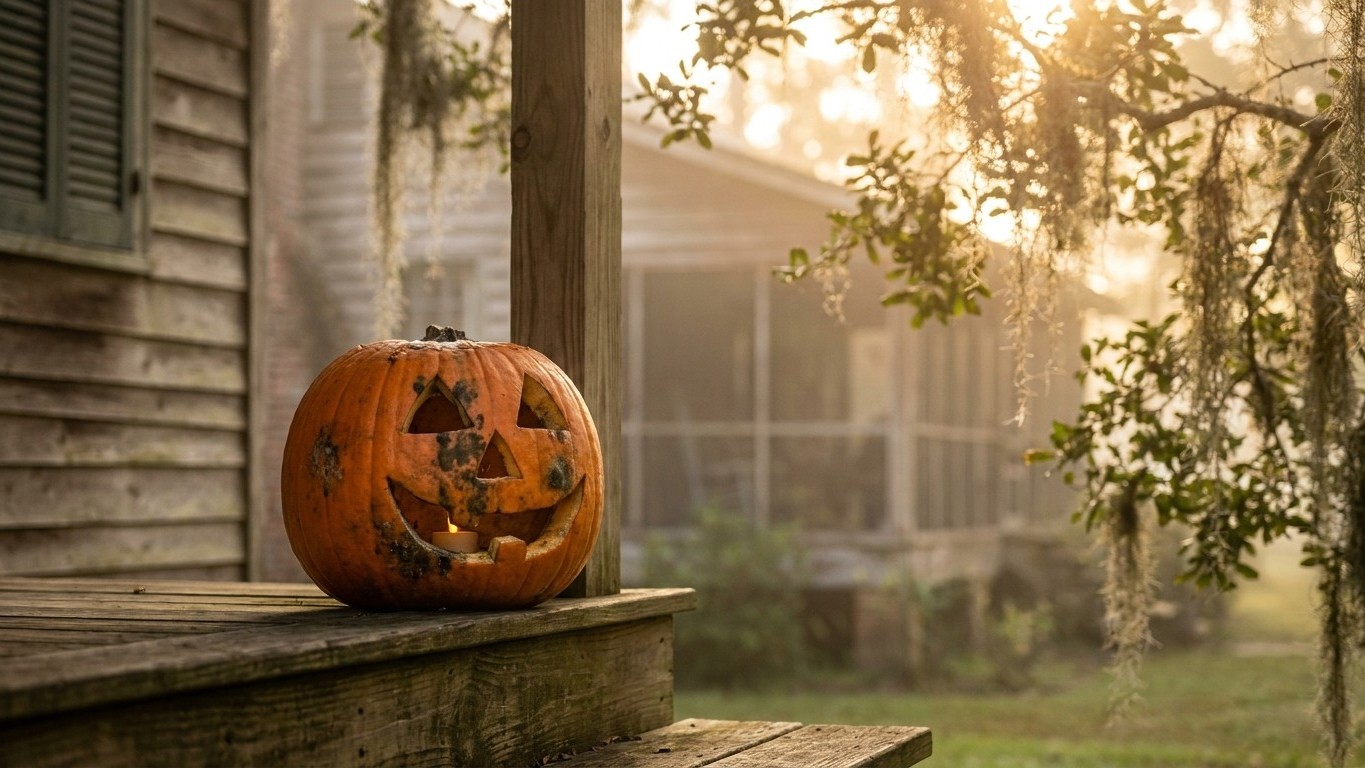

South Louisiana barely gets a real frost before Halloween, and that changes everything about pumpkin timing here. The mean first fall frost for the New Orleans reference station lands somewhere between December 17 and January 8, months after trick-or-treaters have gone home. That means the usual cold-weather deadline for outdoor decorations simply doesn’t apply. The question in Louisiana isn’t when frost will kill your pumpkin display. It’s how to keep a pumpkin from breaking down in weather that’s still warm and humid right up to October 31.
The short answer

Around Halloween, Louisiana has essentially no frost risk to plan around. NOAA’s 1991-2020 Climate Normals put the mean first fall frost for the New Orleans area between December 17 and January 8, a full six to ten weeks after the holiday. Even that window is only a probability band, not a guarantee: a 32°F freeze shows up in just 86.8 percent of years at this station, which means roughly one year in seven skips a freeze entirely. If you’re waiting for cold weather to tell you when to carve, Louisiana will never give you that signal before Halloween.
That flips the usual advice on its head. In states where frost arrives in October, homeowners carve early and accept that the display will freeze solid before it rots. Louisiana doesn’t get that trade-off. Without cold to slow things down, a pumpkin sitting out in Louisiana’s late-October warmth and humidity is working against heat and moisture the entire time, not against frost.
The practical window, then, is short by design: plan to carve within about three to five days of Halloween, not weeks ahead. Choose the pumpkin early if you want, but keep it whole and uncut until you’re close to the day itself. North Louisiana parishes do tend to see frost arrive earlier than the coastal south, since the data above reflects the New Orleans station specifically, so a family in Shreveport or Monroe may feel a cooler snap creep in before one in Houma or New Orleans does. But even in the northern part of the state, that cooler air is arriving well after Halloween in most years, not before it. Carve close to the day, keep the pumpkin whole until then, and treat cold weather as irrelevant to your timing this year.
Frost or heat: which one gets it here
The cold end
Frost is not the threat in Louisiana around Halloween. The NOAA data for the New Orleans station puts the mean first fall freeze in the December 17 to January 8 range, and it doesn’t happen at all in roughly one out of every seven years. Louisiana’s coldest month runs a mean daily minimum of 46.1°F, and that’s January, not October. By the time real cold shows up, Halloween is long past and any porch pumpkin has already met its fate one way or another. Northern Louisiana parishes generally trend cooler and see frost sooner than the coast, but nothing in the available data points to a frost risk anywhere in the state before Halloween itself.
The warm end
Heat is the actual variable here. A whole pumpkin is best kept in a cool, dark spot between 45 and 50°F, according to University of Illinois Extension. Louisiana’s coldest month barely dips to a 46.1°F mean minimum, and that’s in the dead of winter. In late October, ambient temperatures across the state run well above that band, often into the 70s and 80s during the day. That gap matters: a pumpkin left on an un-shaded porch or in a hot garage in Louisiana is sitting in conditions far warmer than what keeps it firm, and warmth accelerates the softening and mold that eventually ruin it. Here, the fight is against heat and humidity, not cold, and that should drive every storage decision between the pumpkin patch and the carving knife.
Where to keep it until you carve
- Choose an interior, air-conditioned room over the porch. Louisiana’s late-October air is too warm for the 45-50°F range a whole pumpkin needs, so a cooled hallway, laundry room, or spare bedroom closet beats any spot outside.
- If it must sit outside, pick shade over sun. A covered, north-facing porch stays measurably cooler than one that gets afternoon sun, and Louisiana’s humidity makes direct sun exposure even harder on a pumpkin’s rind.
- Keep it away from ripening fruit. Apples, tomatoes, and potatoes give off ethylene gas as they ripen, and that gas speeds up a pumpkin’s aging. Store it apart from the fruit bowl, not next to it.
- Never lift or carry it by the stem. Look for a pumpkin with 1 to 2 inches of stem intact at the patch, since that stem seals the top of the fruit. Breaking it off, even accidentally by using it as a handle, exposes that spot to rot. Carry the pumpkin from underneath instead.
- Set it on a dry, insulated surface. A cardboard flat or a folded towel between the pumpkin and a concrete floor or hot pavement keeps ground heat and moisture from working against it.
- Check it in the days before carving. Look for soft spots or blemishes developing on the skin. A pumpkin should stay heavy and firm; any softening is a sign to carve sooner rather than wait.
Checking this against your own county
The frost and Temperature figures here come from a single NOAA reference station near New Orleans, and Louisiana’s climate shifts noticeably between the coast and the northern parishes. If you want numbers specific to your own parish, whether that’s frost timing, soil conditions, or fall growing advice, the LSU AgCenter is the state’s land-grant extension service and the right place to check. Their county offices track local conditions parish by parish and can confirm whether your area’s fall pattern lines up with the coastal data used here.
Visit the LSU AgCenter to find your parish office and ask about local fall temperature trends before you plan your pumpkin display.
Common questions
Will a pumpkin freeze on my Louisiana porch before Halloween?
No. The mean first fall frost for the New Orleans reference station falls between December 17 and January 8, well after Halloween, so freezing isn’t a realistic concern for an October display anywhere in the state.
How long does a carved pumpkin actually last in Louisiana?
Neither University of Illinois Extension nor Utah State University Extension publishes a lifespan figure for a carved pumpkin, and no research-backed preservation method exists for extending it. What’s documented is how to keep a whole, uncarved pumpkin: 45-50°F, dark, and away from ripening fruit. The best approach is to choose a firm pumpkin with an intact stem, keep it whole until you’re ready, and carve it close to the day you plan to display it.
Is heat or cold the bigger risk for pumpkins in Louisiana?
Heat. Louisiana’s coldest month runs a 46.1°F mean minimum, and that’s in January. Around Halloween, the state is still well above the 45-50°F range a whole pumpkin prefers, so warmth and humidity are what shorten its life, not frost.
Does northern Louisiana carve on a different schedule than the coast?
The frost data available for this article comes from the New Orleans station, and northern parishes do tend to cool off sooner than the coast. But nothing in that data suggests frost arrives before Halloween anywhere in the state, so the heat-driven storage advice applies statewide.