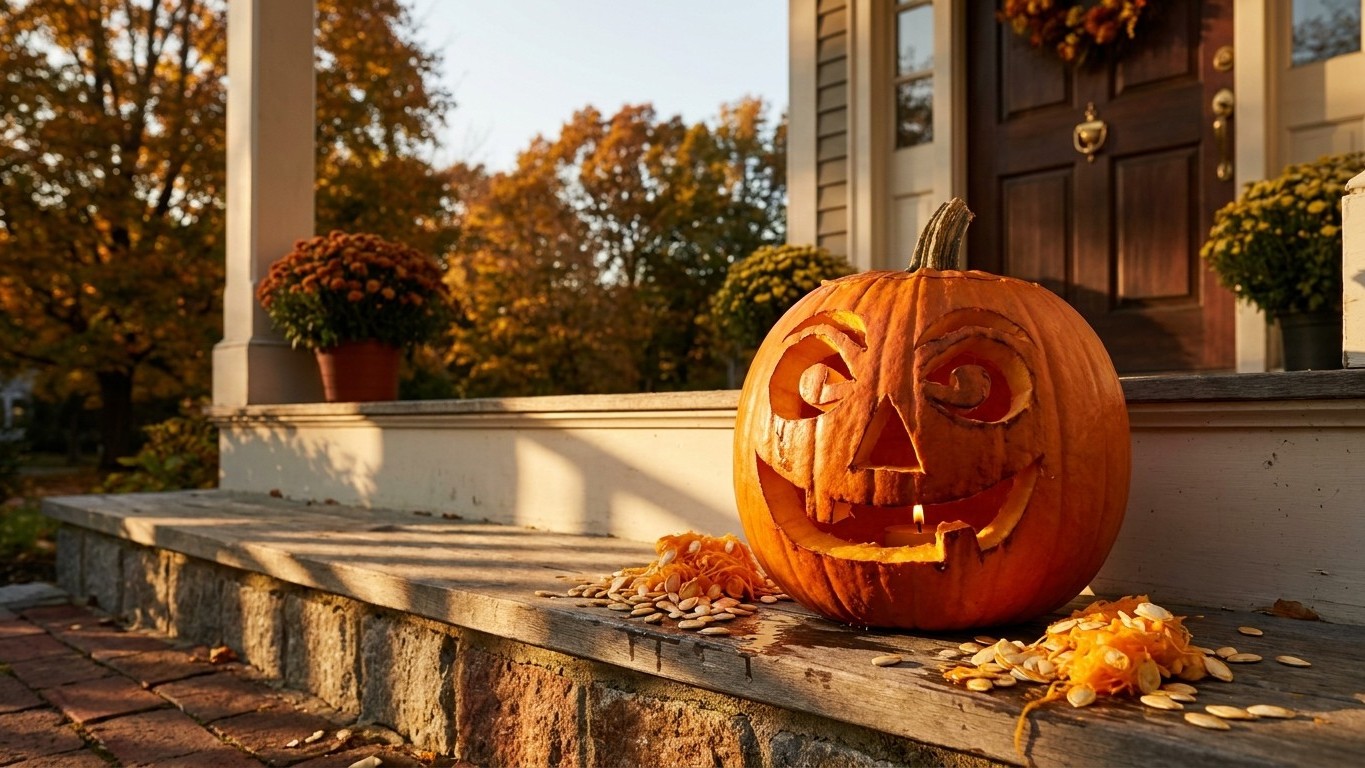

Around Boston, the mean first fall frost lands sometime between November 3 and November 14, according to NOAA climate normals for the Logan Airport station. That’s after Halloween, not before it. For a pumpkin sitting on a porch through October 31, that means frost isn’t the deadline pushing your carving date. The real question is how long the pumpkin can hold up on its own, and that gives you a window measured in days, not weeks, before the 31st.
The short answer

At the Boston reference station, the mean first fall frost falls somewhere between November 3 and November 14. Halloween comes and goes about 3 to 14 days ahead of that average. So in the mildest part of Massachusetts, a whole pumpkin left outside through October has essentially no frost risk to worry about before the trick-or-treaters show up. That’s a different situation than a lot of northern states, where frost regularly beats Halloween to the punch.
What that means in practice: you don’t need to carve early to dodge a freeze. The pumpkin sitting on your steps in mid-October is in no danger of turning to mush from cold weather before the holiday arrives. The pressure runs the other direction. A carved pumpkin starts breaking down the moment the skin is cut open, exposed to air, insects, and whatever Temperature swing the week throws at it. Warm days in the 60s and 70s, which are common in Massachusetts October, speed that up. So the window to carve isn’t set by frost at all here. It’s set by how many days you’re willing to let a cut pumpkin sit before it goes soft.
A reasonable target for most of the state: carve within about three to five days of when you actually plan to display it, and no earlier than that if you want it looking sharp on Halloween night. That’s not a frost-driven number, since frost isn’t in play yet. It’s a shelf-life number, and it depends heavily on how the pumpkin was chosen and stored beforehand, which the next sections cover.
One more wrinkle: the Logan Airport station sits on the water in the mildest corner of the state. Inland communities, the Pioneer Valley, and especially the Berkshires typically see frost arrive earlier in the fall than the coast does. If you’re carving in Pittsfield or Amherst rather than Boston or the South Shore, treat the November 3-14 window as optimistic for your own yard, and lean toward carving a little closer to Halloween itself rather than earlier in the month.
Frost or heat: which one gets it here
The cold end
Massachusetts is unambiguously a cold-winter state. The coldest month, typically January, has a mean daily minimum of 23.1°F at the Boston reference station. That’s a genuine freeze, the kind that would destroy a carved pumpkin overnight. But that number describes deep winter, not late October. By the time real winter cold sets in, Halloween is long past and the pumpkin conversation is over for the year.
The relevant frost question for carving season is narrower: does a hard freeze show up before October 31? At the coastal reference station, the answer is generally no. The mean first fall frost arrives after Halloween. So for a lot of eastern Massachusetts, the classic “will my pumpkin freeze solid on the porch” worry doesn’t really apply on the timeline that matters. Inland and upland areas are the exception, and they deserve their own caution, covered above.
The warm end
Here’s the part that surprises people: in most of Massachusetts, the more common risk in late October isn’t freezing, it’s the opposite. A whole pumpkin is best kept between 45-50°F, according to University of Illinois Extension guidance. October afternoons in Massachusetts routinely climb into the 60s, sometimes higher, especially in a sunny spot near a house wall or a black asphalt driveway. That’s well above the storage band. A pumpkin baking in direct sun all day, even in a state known for cold winters, is sitting in conditions warmer than it wants.
So the honest answer for Massachusetts is a bit of both, but weighted toward warmth for most residents. Freezing is real, but it’s a January problem. Warmth above the 45-50°F comfort zone is the day-to-day problem through October, and it’s the one that actually affects how long your pumpkin holds up before Halloween.
Where to keep it until you carve
Getting a whole pumpkin close to 45-50°F and dark, without freezing it or baking it in the sun, takes a little thought in a typical Massachusetts house. Here’s a practical order of preference:
- An unheated garage or breezeway. This is usually the closest thing to the ideal band in a Massachusetts home during October, cool but not yet freezing, and shaded from direct sun.
- A cellar or basement stairwell. Older Massachusetts homes with stone or concrete basements often run naturally cool and dark, which suits a whole pumpkin well for weeks at a time.
- A shaded, covered porch on the north or east side of the house. Out of direct afternoon sun, this keeps the pumpkin from swinging into the 70s on a warm October day.
- Avoid the kitchen counter or a sunny mudroom. Indoor heating and direct light push the pumpkin well past 50°F, softening it faster than it needs to.
- Keep it away from the fruit bowl or a bag of apples. Ripening fruit gives off a gas that ages the pumpkin prematurely, so the classic autumn display of pumpkins next to a crate of apples is actually working against you.
Wherever you land, the goal is simple: cool, dark, and away from anything else that’s ripening. That buys the pumpkin the most time before you’re ready to cut it.
Checking this against your own county
Frost data from a single Boston-area station is a useful reference point, but Massachusetts covers a lot of ground climatically, from Cape Cod to the Berkshires. If you want numbers specific to your own town, UMass Extension is the land-grant university resource for the state and can point you toward local frost data and growing information tailored to your county. That’s a better starting point than guessing based on a coastal Boston average, especially if you live well inland or at higher elevation.
Common questions
How long does a carved pumpkin actually last in Massachusetts weather?
No university extension publishes a specific number of days for a carved pumpkin, and there’s no verified preservation protocol, despite what you might read elsewhere. What’s actually documented is how to choose and store a whole pumpkin well. Carve close to when you plan to display it, and expect a carved pumpkin to decline faster on a warm, sunny October day than on a cool, shaded one.
Should I worry about frost killing my pumpkin before Halloween?
At the Boston-area reference station, the mean first fall frost arrives around November 3 to November 14, after Halloween. So for much of eastern Massachusetts, frost isn’t the main threat before the 31st. Inland and higher-elevation areas can see frost earlier, so adjust accordingly if that’s your area.
What should I look for when picking a pumpkin at the patch?
Look for one with 1 to 2 inches of stem still attached, according to University of Illinois Extension. Once the stem breaks off, that spot is exposed and spoils faster. Never carry a pumpkin by the stem, since that’s exactly the kind of stress that snaps it. Skip anything with blemishes or soft spots, and go by weight rather than shape.
Is it better to carve early or wait until right before Halloween?
Given that frost isn’t the deciding factor for most of Massachusetts, waiting until a few days before Halloween generally makes more sense than carving early. A whole, uncarved pumpkin stored cool and dark holds up for three to six months. Once it’s cut open, the clock starts running faster, particularly if the weather that week is on the warm side.