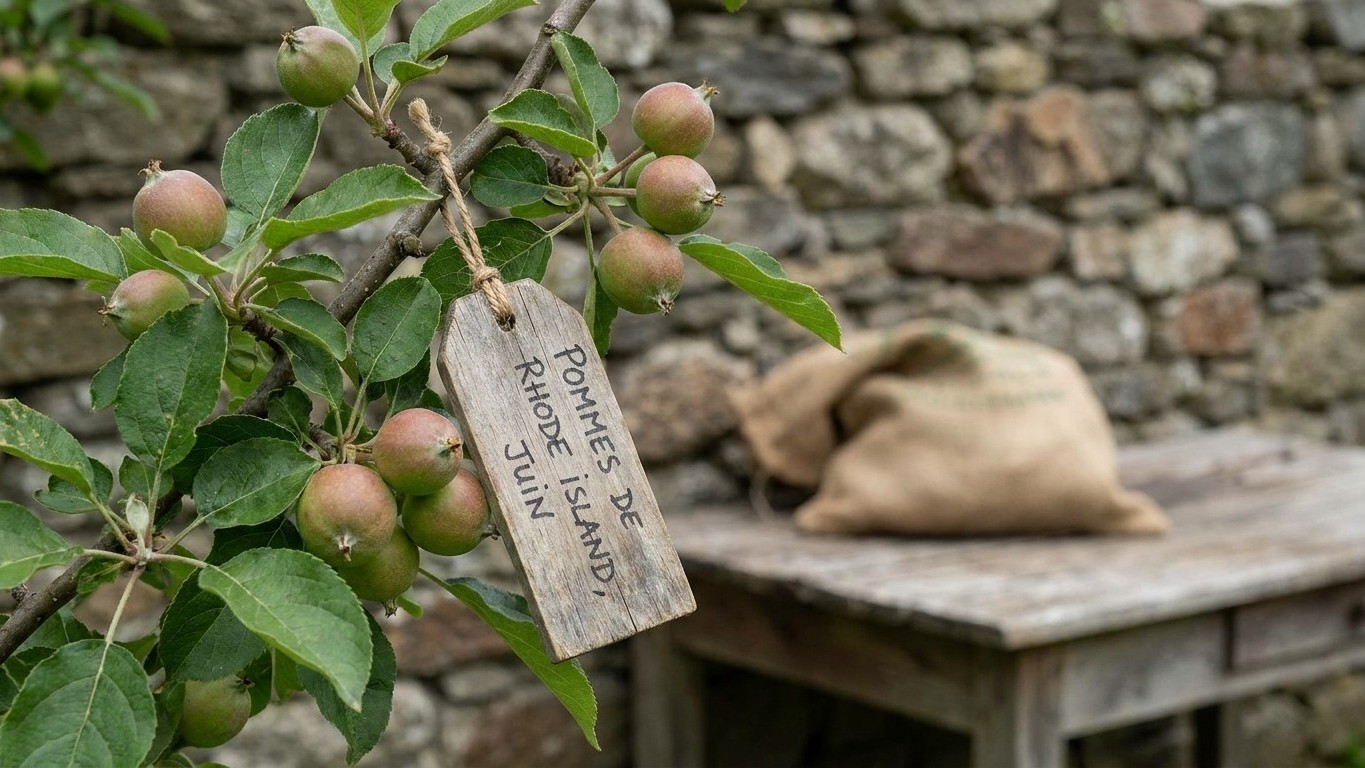

Rhode Island’s own winter, the one Providence-area records put at 21°F on the coldest average night, sits well within what a northern apple tree expects, so yes, apples work here. The zones stretching from 6a near the coast to 7b inland mean almost any high-chill variety sold locally can survive; the real risk is picking one that never blooms because it was bred for a milder place. Confirm six hours of sun and well-drained soil in your spot, then choose a high-chill variety and a same-season pollinator to match it.
Can you grow apples in Rhode Island
Apples do well across Rhode Island. The USDA Plant Hardiness Zone Map, 2023 edition, based on 1991-2020 normals, places the state in zones 6a to 7b, a span that covers almost every apple variety sold by northern nurseries. Near Providence, NOAA’s National Centers for Environmental Information (NCEI) put the coldest month’s average nightly low at 21°F under those same 1991-2020 climate normals. That’s a real winter, cold enough to kill a tender fig back to the ground some years, but nowhere near the threshold that would rule out apples.
The zone range itself says something. A 6a to 7b spread is wide for a state this small, and it reflects geography more than measurement error. Narragansett Bay moderates the coastal strip, so towns close to the water tend to run milder through winter than inland spots at the same latitude. A garden a few miles inland, or one that sits in a low frost pocket on clear nights, can run noticeably colder than the Providence airport figures above. That’s the caution NOAA attaches to every normals record: the number comes from one station, and a particular yard may not match it.
Practically, this means a backyard grower should treat the Providence figures as a starting point, not a guarantee. Gardeners along the coast likely sit at the milder end of the 6a-7b band and have more room to try a marginal variety. Gardeners inland or at higher ground, especially anywhere cold air settles overnight, should plan for the colder end and pick a tree rated hardy through zone 5 or 6 rather than gambling on a mild winter, and checking a guide to Rhode Island apple Best varieties can help narrow the choice, while The Rhode Island Apple Calendar, Stage by Stage lays out what to expect once a tree is in the ground. Either way, apples are a realistic crop for a Rhode Island yard, not a project confined to one corner of the state.
Site selection matters as much as the zone number. Apples want full sun, six hours at minimum, and soil that drains well after a hard rain. A tree planted in a low spot that stays wet through spring will struggle no matter what the hardiness map says, and a shaded corner of the yard produces sparse, poorly colored fruit even in a favorable zone. Pick the sunniest, best-drained spot available before shopping for a variety.
Which varieties suit this climate

Start with hardiness, then filter by chill. A variety’s published hardiness rating tells you whether the tree survives a Rhode Island winter at all. A second, separate figure, its winter chill requirement, tells you whether it flowers properly once it does. Skip that second filter and a tree can live for years without ever blooming well.
Several old New England standards carry hardiness ratings that comfortably cover zones 6a to 7b. ‘Liberty’, bred for scab resistance, is rated hardy to zone 4. ‘Macoun’, a McIntosh cross, is also rated to zone 4. ‘Cortland’ matches that rating, and ‘Honeycrisp’ is rated to zone 3, colder than anything Rhode Island’s coldest month demands. ‘Enterprise’ and ‘Gravenstein’ both carry published ratings into zone 4 as well. All of these are high-chill varieties, selected in northern nurseries, which is exactly what this state’s long winters call for.
Winter chill: the filter most guides skip
Apple trees need a minimum number of hours below roughly 45°F while dormant before they can leaf out and bloom evenly the following spring. Varieties bred for the Deep South or the low desert, such as ‘Anna’ or ‘Dorsett Golden’, need only a few hundred chill hours and are built for a short, mild winter. Plant one of those in Rhode Island and it satisfies its chill requirement long before spring, then risks breaking dormancy during any warm stretch in January or February, only to be caught by the next freeze. Rhode Island sits firmly at the high-chill end of the national range, so the traditional northern varieties above are the safer bet, not the low-chill types bred for warmer states. Growers facing the opposite problem, choosing low-chill trees for a short, mild winter, deal with that exact filter in Growing Apples in Arizona: Varieties, Timing and Frost Risk.
| Variety | Published hardiness | Chill need | Bloom season |
|---|---|---|---|
| ‘Liberty’ | Zone 4 and up | High | Mid |
| ‘Honeycrisp’ | Zone 3 and up | High | Mid |
| ‘Macoun’ | Zone 4 and up | High | Mid |
| ‘Cortland’ | Zone 4 and up | High | Mid-late |
| ‘Enterprise’ | Zone 4 and up | High | Late |
Treat the names above as catalogue-documented choices rather than a state recommendation, and confirm any final pick against a particular site and rootstock. Growers just north of the state, working through a colder version of this same hardiness filter, are covered in Growing Apples in Vermont: Varieties, Timing and Frost Risk.
Planting a pair that works here
Apples need cross-pollination from a second variety blooming at the same time, and at least one of the pair has to produce fertile pollen. Plant a single tree, however hardy, and even a good spring produces shy, uneven fruit set.
Among the varieties that suit Rhode Island’s hardiness and chill profile, match bloom timing rather than just names on a nursery tag. ‘Liberty’, ‘Honeycrisp’ and ‘Macoun’ all fall into the mid-season bloom group and pollinate each other well. ‘Cortland’ blooms mid to late, and pairs cleanly with ‘Enterprise’ at the late end of that same window. Planting a mid-season tree next to a strictly early or late bloomer risks missing the overlap entirely, especially in a spring that runs cold and compresses the bloom window into a shorter stretch.
The one local wrinkle worth naming: ‘Rhode Island Greening’, the heirloom that carries the state’s name, is a triploid. Triploid apples produce sterile pollen, so a Greening tree accepts pollen from a neighboring variety but can’t pollinate anything itself. A yard with only a Greening and one other tree can still fail to fruit well unless that second tree also has a third, fertile pollinizer nearby. Other well-known triploids to watch for on nursery tags include ‘Jonagold’, ‘Baldwin’ and ‘Winesap’.
- Two fertile, same-season bloomers: the simplest working pair for most yards.
- One triploid such as ‘Rhode Island Greening’ plus two fertile varieties: needed if the heirloom is the goal.
- Check the nursery tag for the words “triploid” or “sterile pollen” before buying a single tree expecting it to pollinate a second on its own.
Where space is tight, a flowering crabapple with a long bloom period can serve as a pollen source for any of the varieties above and takes up far less room than a second full-size apple tree. Whatever pair is chosen, keep the two trees within easy bee range of each other and closer still on a windy site, since bees do most of the cross-pollinating and won’t reliably work a long gap between trees.
The frost that costs a crop here

Near Providence, NOAA’s NCEI 1991-2020 climate normals put the last spring freeze in the window of April 7 to April 17, based on the 30-70% probability band for a 32°F freeze at the reference airport station. Gardens away from that immediate area, especially inland or in a low frost pocket, typically see their last frost run later than the airport figure, sometimes by a week or two, so treat this range as a starting point and check a particular site’s own history.
Why bud stage matters more than the calendar
The date on the calendar matters less than what the buds are doing. Apple buds move through a sequence each spring: dormant, green tip, pink, full bloom, then petal fall. A freeze that hits the tree while it’s still fully dormant does little damage. The same freeze hitting a tree already at the pink stage or in bloom kills the open flowers, not the tree itself. The wood, leaves and next year’s buds survive fine. What’s lost is that year’s crop, because a frozen flower doesn’t set fruit even though the tree looks perfectly healthy a week later.
This is the real risk in a Rhode Island spring: a warm stretch in late March or early April pushes buds to pink or bloom early, then a freeze inside that April 7 to 17 window, or a late cold snap arriving after it, wipes out the flowers for the season. The tree itself takes no lasting harm and blooms again fine the following year, which is exactly why the loss is easy to mistake for something else going wrong.
Two things help. Watch bud stage rather than the date on the wall, and hold off on aggressive early feeding or pruning that pushes bloom earlier than a site’s own frost pattern can support. Where a frost-prone site makes early bloomers too risky, choosing a variety from the mid or late bloom group buys real protection, since ‘Enterprise’ or ‘Cortland’ opening a week or more after an early bloomer can let the worst of the frost risk pass before the flowers are exposed. A frost cloth thrown over a young tree, or an overhead sprinkler run overnight, can save an open bloom in a pinch, but neither substitutes for planting a variety whose bloom timing already fits the site’s own frost pattern.
The apple year in Rhode Island
Match the calendar to the tree’s stage, not the other way around, and anchor both ends of the season to the Providence-area frost dates from NOAA’s NCEI normals: a last spring freeze of April 7 to April 17 and a first fall freeze of October 24 to November 3. Sites away from the reference station usually see a shorter frost-free season than those dates suggest, so build in a margin on both ends.
| Stage | Roughly anchored to | What to do |
|---|---|---|
| Dormancy | Through late winter, before the spring frost window opens | Prune, plant new bare-root trees, apply dormant oil |
| Green tip | Weeks before the April 7-17 window | Watch for buds swelling and greening. Last call for dormant spray. |
| Pink | Typically inside or just before the frost window | Check forecasts nightly. This is when a freeze starts to cost bloom. |
| Bloom / petal fall | Straddling the April 7-17 window in most years | Highest frost risk to the crop. Hold off on heavy feeding. |
| Fruit set | Weeks after bloom, once frost risk has largely passed | Thin fruit clusters, start a scab and pest spray schedule |
| Harvest | Before the October 24-November 3 fall freeze window, varies by variety | Pick by taste and ease of separation from the spur, not by date alone |
Early varieties like ‘Gravenstein’ typically finish well before the fall frost window even opens, while late-season keepers such as ‘Enterprise’ or ‘Cortland’ hang on the tree longer and gain extra weeks of ripening from the state’s frost-free stretch, particularly near the coast.
Local help
For variety lists tailored to a particular county, rootstock advice, and a current spray calendar, contact the University of Rhode Island Cooperative Extension, part of the USDA’s land-grant extension network, through its home garden program. Extension staff can also confirm frost risk and site conditions for a specific town, which will differ from the Providence airport figures.
Common questions
Can I grow apples right on the coast in Rhode Island?
Yes, and coastal sites often have an easier time of it. Narragansett Bay tends to keep winter lows milder along the shore than a few miles inland, though it can also delay or stretch out spring warming, which shifts bloom timing slightly compared to an inland yard.
Do I need two apple trees, or can I plant just one?
Plan on two trees, or one tree plus a neighbor’s tree or a flowering crabapple close enough for bees to work both. A single apple tree standing alone, even a self-fertile-labeled one, almost always sets a lighter crop than a properly cross-pollinated pair.
What rootstock should I use for a small yard?
Dwarfing rootstocks such as M9 or M26 keep a tree to roughly 8 to 12 feet and bear fruit sooner, while semi-dwarf rootstocks like M7 or MM106 grow larger and more forgiving of poor soil. Rootstock choice doesn’t change hardiness, which comes from the grafted variety, so still match the top variety to the zone and chill guidance above.
My apple tree bloomed but never set fruit. What happened?
The two most common causes are a spring freeze that hit the open flowers, which kills that year’s crop without harming the tree, and a missing or poorly timed pollinizer. Check whether a second variety was blooming at the same time and whether a frost landed during the bloom window before assuming something is wrong with the tree itself.
When is the right time to plant a new apple tree here?
Bare-root trees go in while still dormant, in early spring before green tip, since the tree isn’t actively growing yet and can tolerate a light frost during planting. Container-grown trees are more flexible and can go in through spring once the ground is workable, but avoid planting into a site that’s still waterlogged from snowmelt.