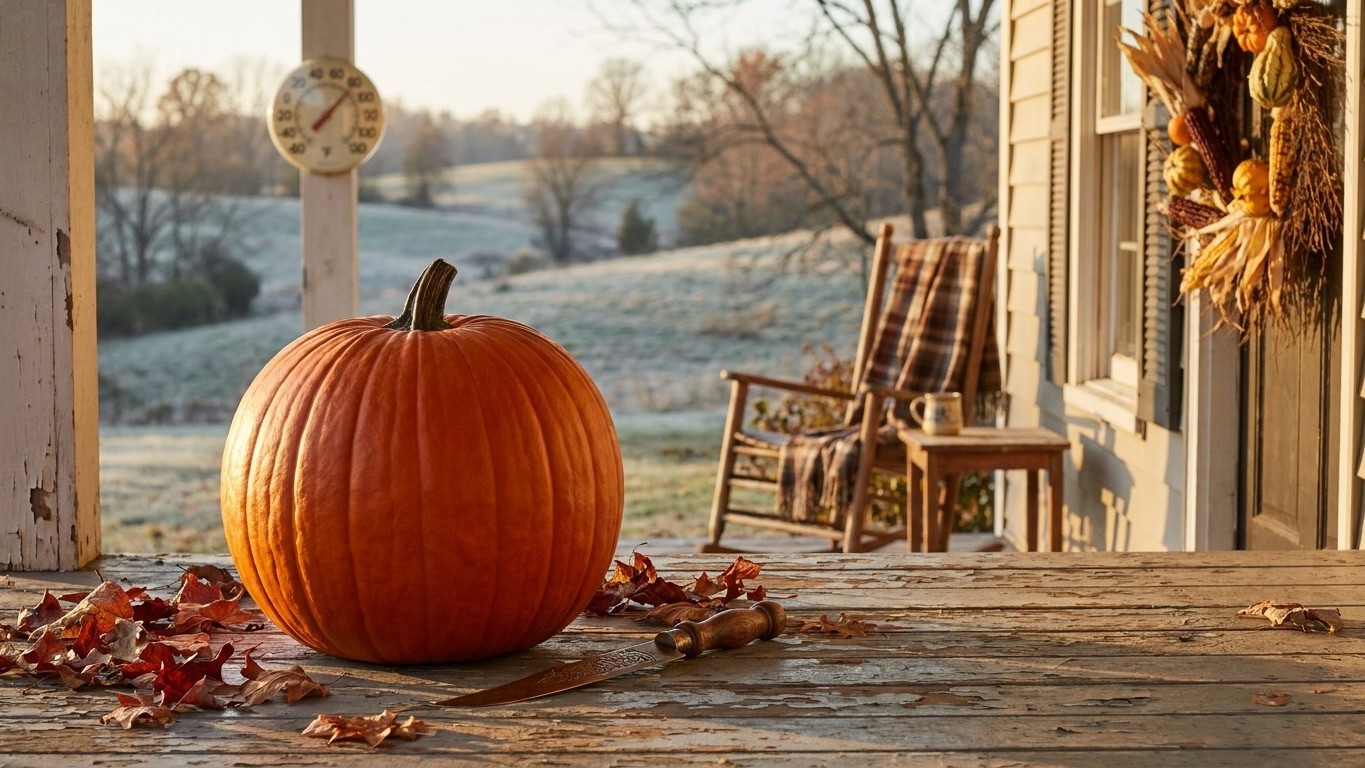

Middle Tennessee’s mean first fall frost lands somewhere around October 28 to November 8, a window that straddles Halloween itself. That means a pumpkin sitting on a porch through the end of October isn’t guaranteed a freeze before trick-or-treaters show up, but it isn’t guaranteed to dodge one either. Here’s how to time the cut so the jack-o’-lantern looks its best on the one night that matters.
The short answer

Carve close to Halloween. Not because tradition says so, but because the math of Tennessee’s climate points that way. The mean first fall frost for the region sits around October 28 to November 8, which means Halloween falls right in the middle of that spread most years. Some years the frost arrives a few days early. Other years it holds off until well into the first week of November. Either way, you can’t count on a hard freeze protecting or threatening your pumpkin on any fixed schedule.
What that uncertainty means in practice: keep the pumpkin whole and uncut until one or two days before Halloween, then carve. A whole pumpkin, stored properly, holds up for three to six months. Once you cut into it, that clock changes entirely, and no extension service publishes a reliable number of days a carved pumpkin lasts. That’s not an oversight. It’s because the answer depends on so many variables, the outdoor temperature, the humidity, whether the pumpkin sat in the sun, that a single number would be misleading.
So the real window isn’t “three days before Halloween” or “five days before Halloween.” It’s this: buy or pick the pumpkin whenever you like, store it whole and cool, and cut it as close to the actual day as your schedule allows. In East Tennessee and up on the Cumberland Plateau, where fall arrives a bit earlier and cooler than it does around Nashville, that same logic holds, just apply it with a slightly earlier mindset since those areas trend cooler and run later into frost season on the back end of winter too.
The frost normal itself is an average built from three decades of weather data, not a promise for this particular year. Treat it as a general signal that Halloween sits near the edge of frost season here, not as a date to circle on the calendar.
Frost or heat: which one gets it here
A whole pumpkin wants to sit somewhere between 45 and 50 degrees Fahrenheit. Tennessee’s late October doesn’t naturally hand you that temperature indoors or out, which means both ends of the thermometer can work against you depending on where you keep the pumpkin and how early in the month you’re storing it.
The cold end
Frost is the more talked-about risk this time of year, and with good reason: the mean first fall frost for the region runs October 28 to November 8, meaning the last week of October and the first week of November are exactly when a light frost becomes plausible. A frost isn’t the same thing as a hard freeze. Frost forms when surface temperatures dip to around 32°F under calm, clear conditions, and it can nip exposed foliage without doing serious damage to a thick-skinned pumpkin sitting on a porch. A hard freeze, several degrees colder and sustained longer, is a different animal and more likely to cause real damage. The coldest month min of 30.1°F you’ll see quoted for this area is a January figure describing winter hardiness, not a fall frost date, so don’t let that number color your Halloween planning. For pumpkins specifically, the late-October frost risk is real but modest, and a pumpkin already carved and displayed for one evening isn’t in danger from a single light frost.
The warm end
The bigger everyday risk in Tennessee is actually warmth, not cold. Early and mid-October afternoons here regularly climb well above the 45-50°F storage band, sometimes into the 70s. A pumpkin left on a sunlit porch or in a hot garage during that stretch is sitting in conditions far outside its ideal range, which speeds up softening and shortens the window before it even gets carved. Since frost doesn’t reliably show up until the very end of October at the earliest, most of the month is a heat management problem, not a cold one.
Where to keep it until you carve
Finding a spot in a Tennessee home that hits 45-50°F and stays dark isn’t always obvious, since most houses run warmer than that indoors. Here’s a practical order of preference:
- An unheated basement or cellar. This is usually the closest thing to ideal in a Tennessee home, staying cooler and darker than living spaces year-round.
- A detached garage, out of direct sun. Works well in the cooler back half of October, less reliable earlier in the month when garages can still run warm during the day.
- An enclosed, shaded porch. Fine as a short-term spot, but keep it out of direct afternoon sun and away from any heat radiating off brick or pavement.
- Away from apples, potatoes, and tomatoes. Ripening produce releases a gas that accelerates aging in a stored pumpkin, so keep it clear of the fruit bowl or the root cellar bin.
- Away from furnace vents or exterior doors that leak heat. Even a cool room can have a warm pocket near ductwork or a frequently opened door.
- Handled by its base, never lifted by the stem. The stem isn’t a handle, it’s the seal protecting the top of the pumpkin. A pumpkin with 1 to 2 inches of stem intact resists spoiling; break that stem off and the exposed spot becomes an entry point for rot.
Checking this against your own county
The frost figures here are built from a Nashville-area station, and Tennessee’s terrain is varied enough that your county could run noticeably earlier or later. East Tennessee and the Cumberland Plateau, in particular, tend to cool off sooner and stay cooler longer than Middle Tennessee’s lowlands. Before locking in a carving date, check current conditions and local frost guidance with the University of Tennessee Institute of Agriculture Extension, which maintains county offices across the state with region-specific advice. A quick call or visit to your local office will tell you whether this particular fall is running warm, cool, or right on the long-term average for your part of the state.
Common questions
Does a light frost ruin an uncarved pumpkin?
Not typically. A pumpkin’s thick rind handles a brief light frost far better than tender foliage does. It’s a hard, sustained freeze that poses more of a risk, and that’s less common right around Halloween than a single frosty night.
How long does a carved pumpkin actually last?
No university extension publishes a reliable number of days for a carved pumpkin, and claims of specific preservation tricks aren’t research-backed. What is established: choose a pumpkin with an intact stem and no soft spots, keep it whole and cool for as long as possible, and carve it close to the day you plan to display it.
Should I refrigerate a carved pumpkin?
Most home refrigerators aren’t sized for a whole pumpkin, and there’s no published guidance suggesting refrigeration extends a carved pumpkin’s display life in any specific, measurable way. Cool, dark, and out of direct sun remains the practical standard.
Is Halloween night itself likely to be frosty in Tennessee?
It’s possible but not guaranteed. Halloween falls near the early edge of the region’s mean first fall frost window, so some years bring a light frost by then and others don’t see one until a week or more later.