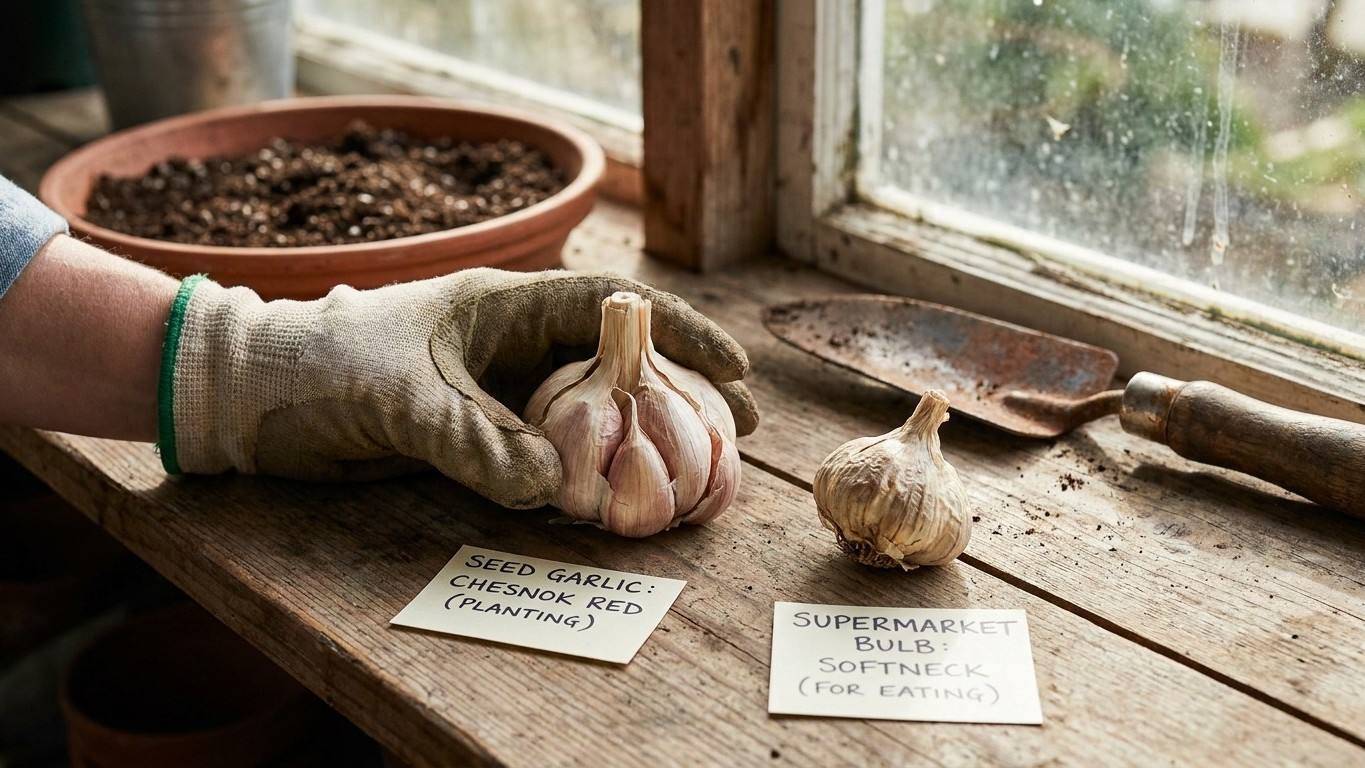

Supermarket garlic disappoints because most of it is treated with a sprout inhibitor called maleic hydrazide, bred for warm growing regions far from your garden, and sold with no variety name attached. That means the cloves you buy in a grocery store often will not sprout at all, or if they do, produce small, disappointing bulbs after a full season in the ground. The single action that fixes this: order certified, disease-tested seed garlic from a specialty seed grower, and pick a named hardneck or softneck cultivar suited to your winter, not whatever bin happens to sit by the onions.
Why this matters for garlic

Garlic occupies a bed for close to nine months, from the day a clove goes in the ground to the day you pull the bulb. Get the seed choice wrong and you do not find out until next summer, when you dig a bulb the size of a walnut instead of a fist, or find nothing sprouted at all. That is a long wait for a mistake to show itself, which is exactly why the seed you plant matters more than almost any other decision in the process laid out in Growing Garlic.
Most garlic sold in produce aisles is treated with a sprout inhibitor, usually maleic hydrazide, applied so bulbs stay firm and unsprouted on a shelf for months. That same chemical works against you in the garden. Treated cloves often refuse to sprout at all, or come up weak and stunted. Even untreated supermarket garlic is typically grown in a warm climate and bred for size and shelf life rather than for surviving a hard winter. Plant it in a cold-winter garden and it may never form a proper bulb, because the cultivar was never selected for that day length or that cold.
Supermarket bulbs also carry an unadvertised risk: soil-borne diseases such as white rot or bloat nematode, which can ride in on a clove and persist in a bed for years once introduced. That risk alone is reason enough to buy from a seed source that tests and certifies its stock, rather than from a grocery bin with no growing history attached to it.
When to do it
Seed garlic goes in the ground in fall, timed off the first hard frost rather than a date on a calendar. The general rule most seed garlic growers repeat is to plant late enough that the clove does not push up green growth before winter, but early enough that it has several weeks to grow roots before the ground freezes solid. Sources disagree on the exact width of that window, and some growers in mild climates plant later, since the ground there barely freezes at all.
Because that window shifts by hundreds of miles across the country, the only reliable way to time it is to work backward from your own first freeze date, not from a date that worked for a grower in a different state. Your state or county extension office publishes average first and last freeze dates for your specific area, and that is the figure to plant around, not one borrowed from an article written for someone else’s climate.
Order your seed garlic well ahead of that window. Specialty growers sell out of the better cultivars months before fall, and by the time supermarket garlic is the only thing left on a shelf, the good seed stock is usually already gone.
How to do it
Start by choosing a cultivar, not just a type. Hardneck garlic produces a stiff central stalk and sends up a curling scape in early summer, a step covered in Garlic Scapes: When to Cut Them, and What It Does to the Bulb. Softneck garlic has no stiff stalk, braids easily, and generally stores longer in a pantry. Named hardneck cultivars widely sold as seed include ‘Music’, ‘German White’ and ‘Chesnok Red’. Common softneck cultivars include ‘Inchelium Red’, ‘California Early’ and various ‘Silverskin‘ types sold for braiding.
Breaking bulbs into cloves
Break seed bulbs into individual cloves no more than a day or two before planting, keeping the papery wrapper on each clove intact. Discard any clove that is soft, discolored, or noticeably smaller than the others in the bulb. Small cloves reliably grow into small bulbs, so only plant the largest, firmest cloves from each head and cook with the rest.
Depth, spacing, and quantity
Plant each clove pointed end up, root end down, roughly 2 inches deep in loose, well-drained soil, spacing cloves about 4 to 6 inches apart within a row and 12 to 18 inches between rows. A single pound of seed garlic, once broken into cloves, typically plants somewhere around 40 to 60 cloves depending on clove size, enough for a modest home bed. A cultivar with fewer, larger cloves per bulb uses more seed per row foot than a softneck with many small cloves packed into one head.
- Loosen soil to a full spade’s depth and work in aged compost before planting
- Push each clove into the soil rather than dropping it into a loose hole, so it sits in firm contact with the ground
- Cover with soil, then a layer of loose mulch such as straw once the ground begins to cool
- Water once at planting if the soil is dry, then let fall rain take over
Mulch matters more than most new growers expect. A layer of straw or shredded leaves several inches deep insulates the clove through winter, moderates spring soil temperature, and suppresses the first flush of weeds. Where snow cover is reliable, snow itself acts as mulch and a lighter straw layer is enough. Where winters run dry and windy instead, a thicker mulch layer guards against frost heave, which can push a shallow-planted clove partway out of the ground before spring.
What goes wrong
The most common mistake is planting a whole bulb instead of breaking it into cloves first. A whole bulb produces a tight cluster of undersized, misshapen bulbs, a result that only becomes obvious at harvest, nine months after the mistake was made.
Planting too shallow is the second. A clove set at an inch or less can heave partway out of the soil during freeze-thaw cycles over winter, and by spring you find a scatter of green shoots lying loose on top of the bed with their roots pulled free. Deeper planting and a solid mulch layer are the two cheapest insurance policies against this.
Buying untested seed carries a slower, costlier failure. White rot and bloat nematode can enter a bed on infected seed stock and show no symptom the first year at all; by the second or third year of replanting the same ground, yields quietly decline and bulbs come up stunted or rotted at the base. Once either problem is established in soil, there is no reliable home treatment, which is why certified, disease-tested seed is worth the higher price over a cheap or unlabeled source.
Growers who save their own cloves year after year run into a related decline: yields and bulb size drop gradually over a run of seasons, a pattern covered in Replanting Your Own Garlic: How Long It Works Before It Declines. Bringing in fresh certified seed every few years resets that slow slide.
Finally, supermarket garlic that does sprout may simply fail to bulb properly if it is a softneck cultivar bred for a warmer, shorter winter than the one it lands in. The plant grows lush green top growth all spring and then bulbs poorly or not at all, a result that only becomes clear at the very end of the season, when there is nothing left to do about it.
How this changes across the country
Cold-winter growers in places like Minnesota, Vermont, and much of Canada’s prairie provinces lean almost entirely on hardneck cultivars, because hardnecks generally need a period of sustained cold to form a proper bulb and tolerate deep freezes far better than softnecks do. Growers in these regions also mulch more heavily, since a longer, harder winter gives frost heave more chances to work a shallow-planted clove loose.
Mild-winter growers in states like California, Georgia, and much of the Gulf Coast plant softneck cultivars more often, since many softnecks need less winter chill to bulb well and store longer in a warm pantry afterward, which suits the region’s long, hot summers. Some mild-winter growers also plant later in the fall than their cold-climate counterparts, since the ground rarely freezes hard enough to force an earlier date.
| Type | Winter needs | Typical storage life | Example cultivars |
|---|---|---|---|
| Hardneck | Needs sustained cold to bulb well | Shorter, several months | ‘Music’, ‘German White’, ‘Chesnok Red’ |
| Softneck | Tolerates mild winters, less chill needed | Longer, often into next spring | ‘Inchelium Red’, ‘California Early’, ‘Silverskin‘ types |
| Elephant garlic | Prefers mild to moderate winters | Moderate | ‘Elephant’ (a leek relative, not true garlic) |
Because the right cultivar and planting window both depend on your own winter severity, check your state or provincial extension service for a regional planting guide before ordering seed, rather than following a date or cultivar list written for somewhere else’s climate.
Common questions
Can I plant garlic from the grocery store?
You can, but it often fails to sprout because most supermarket garlic is treated with a sprout inhibitor, and even untreated bulbs are usually a mystery cultivar bred for a different climate. If you want to try it anyway, look for organic garlic labeled untreated, since organic rules generally prohibit that spray.
How is seed garlic different from garlic I’d eat?
Seed garlic is the same species, sold specifically for planting rather than eating, and reputable seed sellers test their stock for the soil-borne diseases that ordinary culinary garlic is never screened for. It usually costs more per pound than eating garlic for exactly that reason.
Do I need to plant a whole bulb or just one clove?
One clove, planted pointed end up, grows into one full bulb by the following summer. Planting a whole unbroken bulb produces a tight cluster of small, misshapen bulbs instead of one good one.
Can I save cloves from my own harvest to replant next year?
Yes, and many growers do it for years without trouble, but yields and bulb size tend to decline gradually over time, as explained in Replanting Your Own Garlic: How Long It Works Before It Declines. Bringing in fresh certified seed every few years resets that slow decline.