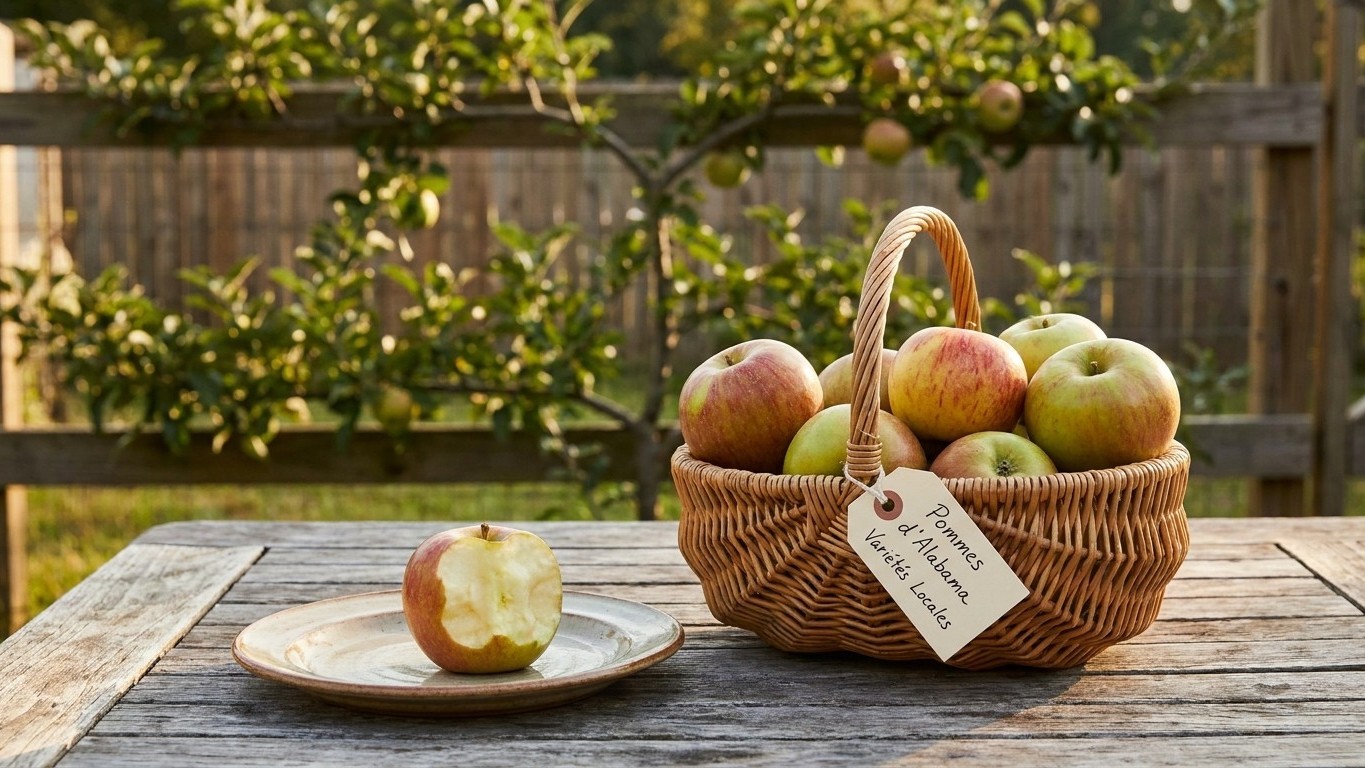

Alabama doesn’t have one best apple — it has one best match, and that match is between your county’s frost dates and the tree’s chill class, not the name on the nursery tag. A tree bred for a winter colder than yours will survive fine and still bloom thin and uneven, while a tree that flowers too early can lose its whole crop to a frost the calendar said was safe. Before you pick a variety, find your county’s typical last spring frost and pick a chill class that fits it — that one step decides more of your harvest than any cultivar name will.
The short answer for Alabama
No single apple cultivar is the “best” for the whole state, because survival is rarely what fails here. The filter that matters is winter chill and bloom timing, and both of those run on the tree’s stage rather than on a fixed date on the wall.
Huntsville’s last spring frost, per NOAA’s 1991-2020 normals, falls March 19 to April 3, and its first fall frost falls November 2 to November 16. A tree that blooms into the early end of that spring window risks losing its flowers to a return freeze. A tree bred for a much colder, longer winter than Alabama typically delivers blooms unevenly and sets fruit thin, even though it survives the winter itself without trouble.
Because no chill-hour count or extension-verified cultivar list for Alabama is available in the data behind this page, the reliable order of operations is to match chill class and bloom timing to your county before you match a name, then confirm the specific cultivars and rootstocks carried by nurseries in your part of the state with the Alabama Cooperative Extension System. That single check does more for your harvest than any variety name could.
Working through it

Apple cultivars sort into three broad chill classes: low, moderate and high. The number of hours below roughly 45°F a tree needs before it breaks dormancy evenly is a catalog-level fact printed by nurseries, not a local one, so it stays qualitative on this page. What is local is how much chill a given Alabama winter actually delivers, and that changes year to year and county to county enough that picking a chill class comes before picking a variety name.
Matching chill class to a mild winter
A winter as mild as Huntsville’s, where NOAA’s 1991-2020 normals put the coldest month’s average low at 31.8°F, will not reliably satisfy a high-chill cultivar bred for a longer, colder dormancy. Low- and moderate-chill selections tend to flower more evenly in a winter like this one. The trade-off runs both ways: many moderate-chill dessert apples common in mainstream nursery catalogs still need more chill than the Gulf Coast counties see most years, while a low-chill selection bred for the Deep South can trail a classic high-chill dessert apple on flavor and storage life.
Matching bloom timing to the frost window
Bloom timing is the other filter, and it works against the same frost dates used in The Alabama Apple Calendar, Stage by Stage. A cultivar that blooms early risks losing its flowers to a freeze landing inside the March 19 to April 3 window NOAA’s 1991-2020 normals record at Huntsville. A cultivar that blooms later, once that freeze risk has dropped off, trades a few days of growing season for a safer bloom.
| Chill class | Typical bloom timing | Trade-off in this climate |
|---|---|---|
| Low chill | Earliest to break dormancy | Blooms reliably in a mild winter but risks an early frost hit, and often trades some storage life and flavor intensity for that reliability |
| Moderate chill | Mid-season bloom | The safest general fit for a winter like Huntsville’s, though a stretch of unusually warm weeks can still leave bloom uneven |
| High chill | Latest to break dormancy | Needs a colder winter than most of Alabama delivers most years, and blooms thin and staggered when it does not get one |
None of this replaces an actual name. Once you know which chill class fits your county’s typical winter, the Alabama Cooperative Extension System keeps the county-level cultivar and rootstock lists that turn a chill class into a tree you can buy, and that step is important enough to get its own section below.
What changes across Alabama
Huntsville sits in the Tennessee Valley in the northern part of the state, and every NOAA figure used on this page comes from that one station. The rest of Alabama runs on its own clock. Elevation and cold-air drainage move the frost dates more than latitude does in a state this size.
The higher ground of northeast Alabama, including the plateau country around DeKalb and Jackson counties, sits cooler and holds its winter chill longer than the valley floor at Huntsville. An orchard planted there is likely to see its last spring frost land later and its first fall frost land earlier than the Huntsville normals describe, which pushes bloom later and shortens the fall end of the season.
South of the Black Belt, toward the Gulf Coast counties, winters run milder and shorter. That part of the state accumulates less winter chill in an average year, which favors low-chill selections over anything bred for a long dormancy, and its last spring frost typically arrives and clears earlier than Huntsville’s.
Valleys and low ground behave differently from the ridges around them, regardless of which region they sit in. Cold air is heavier than warm air and drains downhill overnight, so a low orchard block can see a frost on a night when a slope forty feet above it stays clear. That local pooling effect does not show up in any station’s climate normals, Huntsville’s included, which is why a grower has to walk their own ground rather than trust the regional figure alone.
The mistakes this climate punishes
Most of the failures growers report in Alabama orchards trace back to one of three timing mistakes, and every one of them is a stage error rather than a cultivar error. These are the same mistakes that trip up first-time growers across Growing Apples in Alabama, whatever cultivar ends up in the ground.
- Planting a high-chill cultivar in a low-chill county. The tree survives the winter fine, since Alabama’s coldest month minimum, 31.8°F at Huntsville per NOAA’s 1991-2020 normals, is mild enough for almost any cultivar to live through. The failure shows up at bloom, weeks later, as flowers opening unevenly over a long stretch instead of together, which leaves pollination and fruit set thin.
- Trusting the calendar instead of the frost window. A grower who works to a fixed date rather than to the tree’s actual stage gets caught when a given spring runs early or late against the March 19 to April 3 window NOAA records at Huntsville. The mistake shows up as bloom or petal-fall hit by a freeze a stage-based schedule would have anticipated.
- Feeding nitrogen too late in the season. A tree pushed into soft new growth in late summer has not hardened that growth off by the time the first fall frost arrives, November 2 to November 16 at Huntsville per the same NOAA normals. The damage shows up as blackened, dieback-prone shoot tips the following spring, not right away.
All three mistakes share a pattern worth remembering: the damage appears well after the decision that caused it, which is exactly why they get repeated. A chill mismatch stays invisible until bloom, a frost hit stays invisible until the flowers brown a day or two later, and frost-damaged wood from late feeding stays invisible until the tree tries to leaf out the following spring.
Checking this against your county
Every figure on this page is anchored to one station, in Huntsville, and the rest of the state runs on its own schedule. Before a tree goes in the ground, confirm the chill class and cultivar list your county’s climate actually supports with the Alabama Cooperative Extension System, at aces.edu. County offices track local cultivar performance and chill accumulation in a way no single statewide page can.
That call is worth making before the tree goes in the ground, not after a first disappointing bloom, especially if your site sits on a ridge, in a valley, or anywhere the local frost pattern is likely to run ahead of or behind the Huntsville normals used throughout this page.
Common questions
Can I even grow apples in south Alabama?
Yes, but the mild winters there deliver less chill than the northern part of the state, so a low-chill selection is more likely to flower evenly than one bred for a long, cold dormancy. No statewide source lists which cultivars fit which chill band, so confirm the local fit with the Alabama Cooperative Extension System before you plant.
How do I find out how much winter chill my place actually gets?
There’s no chill-hour count for Alabama in the data behind this page, and chill accumulation varies enough by county and by year that a single number wouldn’t be honest anyway. Your county extension office is the right place to ask, since they track it locally rather than off a single airport station.
My tree bloomed fine but barely set any fruit. What happened?
Uneven or thin fruit set after a normal-looking bloom usually points to a chill mismatch, a lack of a compatible pollinator nearby, or a frost that nipped the flowers before you noticed. Check the bloom dates against your own county’s frost window rather than Huntsville’s, since your local frost can run later or earlier than the reference station’s.
Is the Huntsville frost date the same for my whole county?
No. It’s a single-station figure, and NOAA’s own caution on it is that suburban and rural ground typically sees a later last spring frost and an earlier first fall frost than an airport station records, sometimes by a week or two and more at elevation. Treat the Huntsville dates as a reference point and confirm your own with local observation or your extension office.