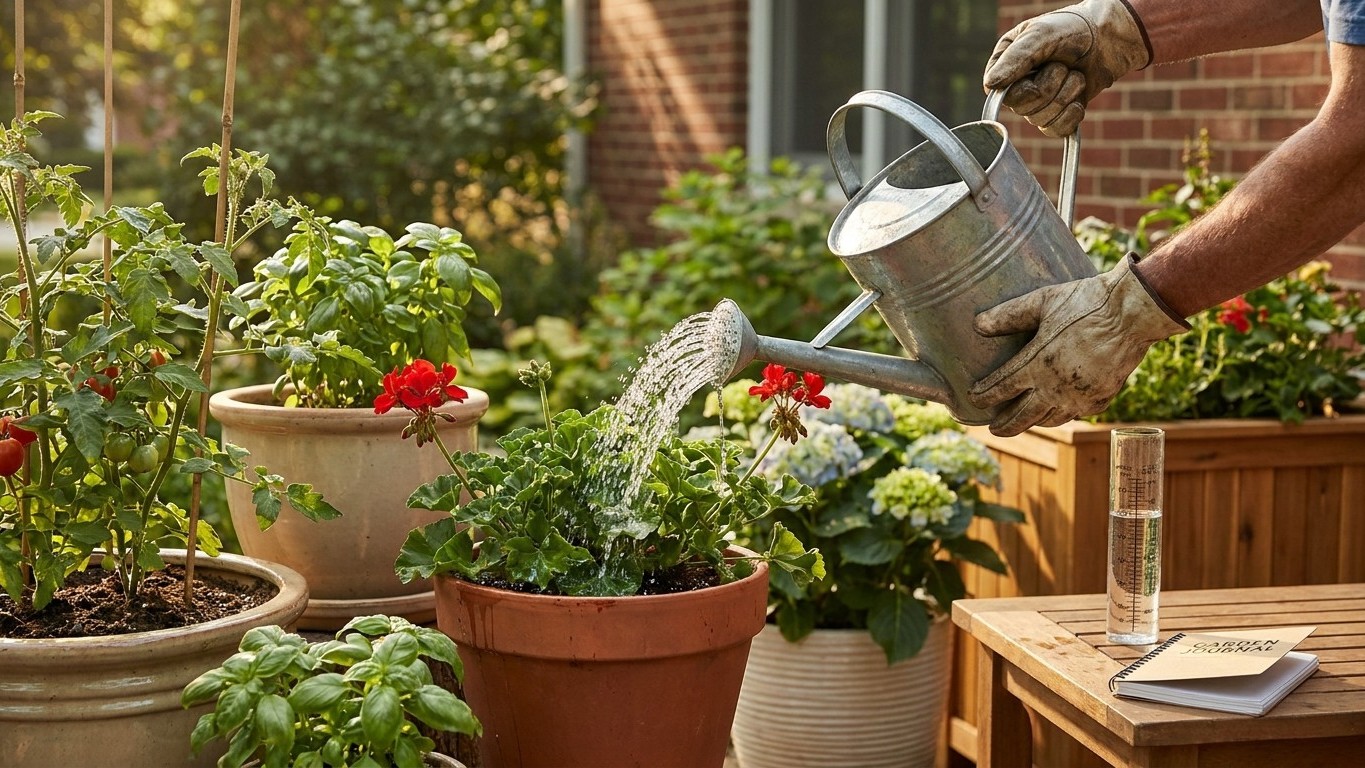

Michigan’s driest summer month brings just 3.26 inches of rain, while the state averages only 10.3 days a year at 90F or hotter. That combination means most Michigan gardens don’t face brutal heat for long, but they also can’t count on the sky to keep beds hydrated through August. A rain gauge and a bit of arithmetic do more for a Michigan garden than any watering schedule copied from a Southern state.
What changes here

Two numbers set the terms for watering in Michigan: 3.26 inches of rain in August, the driest month of summer, and 10.3 days a year that reach 90F. Read together, they describe a garden that rarely bakes under extreme heat but also can’t rely on summer storms to deliver a steady inch of water each week. That’s the number most vegetable beds and perennial borders want: about an inch weekly, whether from rain or a hose.
Do the math on August and the gap shows up fast. Spread 3.26 inches over roughly 4.3 weeks in the month, and the sky delivers about 0.76 inches a week on average. A bed that wants a full inch is short by roughly a quarter inch, week after week, through the driest stretch of the growing season. June and July aren’t much wetter, at 3.26 and 3.51 inches respectively, so the shortfall isn’t a single bad month, it’s the summer’s default condition.
That quarter-inch gap doesn’t hit every yard the same way. On sandy ground, water moves through fast and out of reach of shallow roots within a day, so the same weekly total needs splitting into more frequent, smaller waterings. On heavy clay, that inch can sit in the root zone for the better part of a week, which sounds convenient until a second watering arrives before the first has drained and roots start suffocating in saturated soil. Neither soil type erases the math above. Sand and clay just decide how the gardener divides that inch across the week, not whether it’s needed.
Michigan’s modest heat load also matters here. With only 10.3 days a year above 90F, evaporation losses aren’t as punishing as they are further south or west. That’s a small mercy: it means the quarter-inch weekly deficit in August is a manageable top-up, not an emergency, as long as it’s actually delivered rather than assumed.
How to water when it matters
The method that works on Michigan ground is the same one that works almost everywhere, but the timing and rhythm need to match local soil and rainfall rather than a generic gardening calendar. Deep watering pushes moisture down to where roots actually live, encouraging them to grow deeper instead of clustering near a surface that dries out in hours. Watering at the base, rather than overhead, keeps leaves dry and cuts down on the fungal problems that thrive on wet foliage. Morning watering gives plants a full day to take up moisture before evening humidity settles in, and it avoids leaving standing water on leaves overnight.
Checking soil moisture at root depth, not just at the surface, is what separates a good watering schedule from a wasted one. A finger pushed two inches down, or a trowel turned into the bed, tells the real story. Michigan’s clay-leaning soils in particular can look dry on top while staying damp just below, which fools a lot of gardeners into watering when the roots don’t need it yet.
- Check soil moisture two inches down with a finger or trowel before watering at all; if it’s still damp, wait.
- On sandy soil, water more often but in smaller amounts, roughly every two to three days during August’s driest stretch.
- On clay soil, water less often but more slowly, letting it soak in over 20 to 30 minutes so it doesn’t run off before it penetrates.
- Aim to make up the roughly quarter-inch weekly shortfall left after August’s average rainfall, using a rain gauge to confirm what actually fell.
- Water in the early morning, directing the hose or can at the soil around the base of the plant rather than the leaves.
- Spread two inches of mulch over the root zone to slow evaporation and stretch the time between waterings.
That quarter-inch figure is a starting point, not a rule. A raised bed, a container, or a spot next to a heat-reflecting driveway will all dry faster than the averages above suggest, and only a gauge on that specific plot settles it.
What goes wrong
“I water a little every day, just to be safe”
Daily light watering feels responsible, but it keeps moisture in the top inch of soil, which trains roots to stay shallow instead of reaching down where conditions are more stable. Those shallow roots dry out fast the moment a hot stretch hits, even one of Michigan’s relatively rare 90F days, because there’s no reserve of moisture below them to draw on.
“I water in the evening so it doesn’t evaporate”
Evening watering wets foliage right before the coolest, most humid hours of the day, and that combination is exactly what fungal diseases like powdery mildew and blight need to take hold. Water sitting on leaves overnight doesn’t get the chance to dry off before conditions turn favorable for disease.
“It rained yesterday, so I skipped watering”
A summer thunderstorm can dump visible rain that only wets the top half-inch of soil, especially on compacted or clay-heavy ground where water runs off before it soaks in. The only way to know if that storm actually helped is to check with a finger or trowel at root depth, not to trust the fact that it rained at all.
“I don’t bother with mulch”
Bare soil left exposed to Michigan’s summer sun loses moisture fast, undoing much of what a careful watering session just delivered. Skipping mulch is a small decision that adds up over the driest month, when every fraction of an inch retained in the soil matters more than usual.
“I water heavily since we don’t get much rain”
On Michigan’s clay-leaning soils, overcorrecting for a dry August by watering heavily and often can leave a bed saturated for days, starving roots of oxygen. The driest month here still isn’t dry enough to justify treating every clay bed like it’s in a desert; the soil holds water longer than the rainfall numbers alone suggest.
Local help
Michigan State University Extension is the state’s land-grant resource for garden and soil questions specific to local conditions, including guidance tailored to different regions and soil types across the state. Find them at canr.msu.edu/outreach. Watering restrictions vary by municipality and water provider, and they change with drought conditions, so check with the local water utility for current rules before setting a summer watering schedule.
Common questions
How much should I water my garden in Michigan during August?
Aim for about an inch of water a week total. Since August’s average rainfall of 3.26 inches works out to roughly 0.76 inches a week, most gardens need a top-up of about a quarter inch weekly during the driest stretch of summer.
Is Michigan’s summer heat hard on gardens?
Not especially. With only 10.3 days a year reaching 90F, Michigan’s heat load is modest compared to many other states, which keeps evaporation losses manageable as long as watering keeps pace with the rainfall gap.
Does clay soil mean I can water less often?
Less often, yes, but not less carefully. Clay holds water for close to a week, so watering again before it’s dried at root depth can drown roots rather than help them.
What’s the easiest way to check if a garden needs water?
Push a finger or trowel two inches into the soil near the plant’s base. If it’s dry at that depth, water; if it’s still damp, wait, regardless of what the surface looks like.