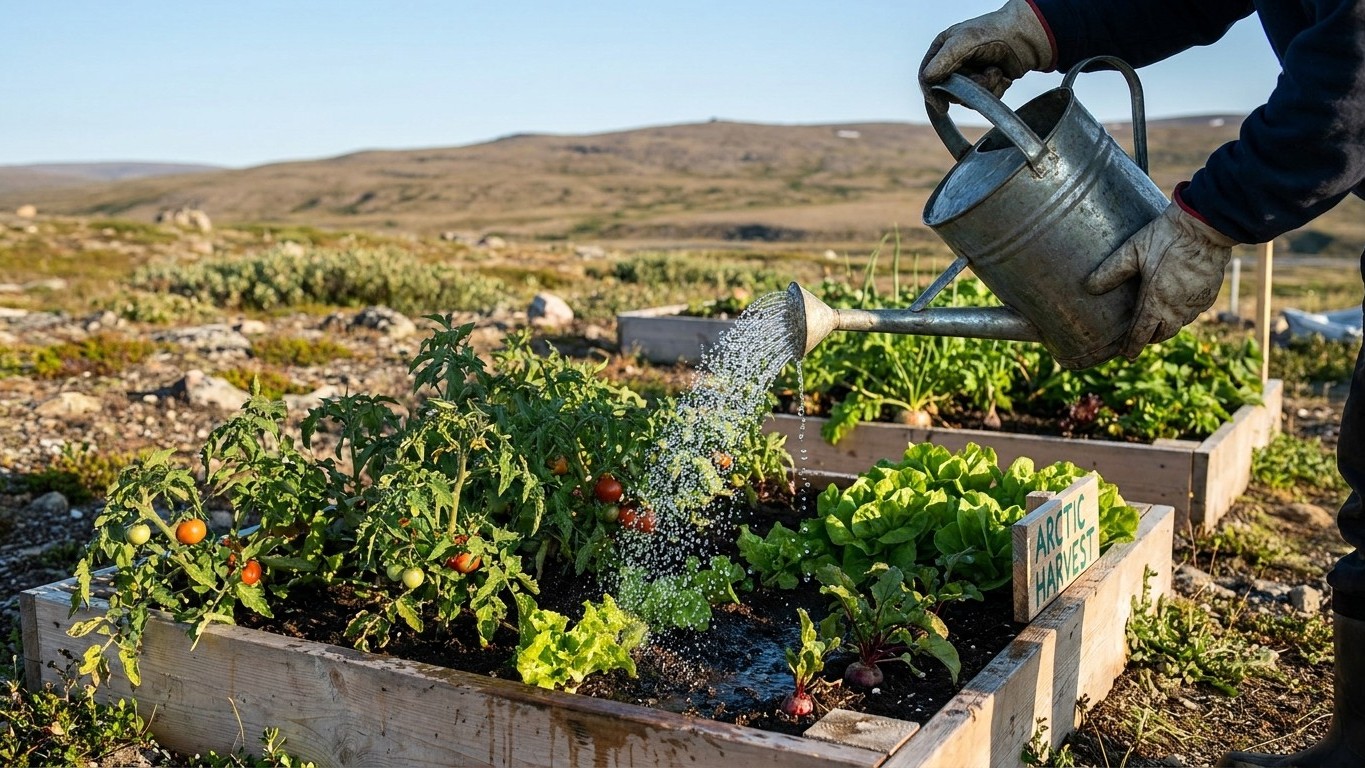

In Nunavut, the driest summer month brings just 1.05 inches of rain, and the territory averages 0.0 days a year at or above 90F. That combination means gardens rarely face heat stress, but they also rarely get enough rain to skip watering altogether. Hand-watering carries most of the load here, not the sky.
What changes here

Two numbers set the terms for every gardener in this territory: 1.05 inches of rain in June, the driest summer month, and 0.0 days a year that reach 90F. Put together, they describe a place where plants almost never bake under extreme heat, but where the sky also almost never delivers enough moisture on its own. Low heat load slows evaporation, which helps, but it doesn’t erase the shortfall in rainfall.
Do the arithmetic and the gap becomes concrete. A vegetable bed or a young perennial generally wants about an inch of water a week to keep roots evenly moist. Spread June’s 1.05 inches across roughly 4.3 weeks in the month, and the sky is only delivering about 0.24 inches a week on average. That leaves close to 0.76 inches a week that the gardener has to supply by hand, every week, through the driest stretch of summer. July and August ease the pressure slightly, at 1.65 and 2.26 inches respectively, but neither month reaches the full inch a garden wants either.
The 0.0 figure for days above 90F matters just as much as the rainfall number, because it changes how urgent that shortfall feels day to day. In a hotter territory, a missed week of watering can wilt a bed within days. Here, the cool summer air buys a little more time before soil moisture disappears, which is one reason gardeners in Nunavut can lean on a weekly rhythm rather than watching plants daily for signs of heat stress. The shortfall is steady and low-grade rather than sudden and severe, and that changes the whole approach to keeping soil moist.
How to water when it matters
Given a rainfall deficit that is chronic rather than dramatic, the method that works best here is deep, infrequent watering at the base of the plant, done in the morning. Deep watering pushes moisture down where roots actually grow, rather than wetting only the surface, which trains roots to reach downward instead of clustering near the top where they dry out fast. Watering at the base, rather than overhead, keeps foliage dry and cuts the risk of fungal disease taking hold. Morning watering gives the day’s mild warmth a chance to dry any incidental moisture on leaves before evening, when cooler, damp night air in Nunavut can let disease linger.
Checking the soil before watering matters more than following a fixed schedule, especially since the region’s rain arrives in small amounts that can fool a gardener into thinking the ground is wet when only the surface is damp. A finger or a small trowel pushed about two inches into the soil tells the real story: if it comes out dry at that depth, it’s time to water, regardless of how the surface looks or what fell from the sky that week.
- Check soil moisture two inches down with a finger or trowel before watering, rather than watering on a fixed calendar.
- If dry at that depth, water deeply at the base of the plant until moisture reaches several inches down, roughly delivering about an inch of water for the week as a starting point.
- Water in the morning, so any moisture on nearby foliage dries before nightfall.
- Space full soakings several days apart rather than watering lightly every day, letting roots pull downward between waterings.
- Adjust the following week based on what the soil check shows, since local rainfall from June’s 1.05 inches through August’s 2.26 inches shifts the exact gap the gardener needs to fill.
That one-inch-a-week figure is a starting point, not a rule. Container plants, raised beds, and different soil mixes all hold water differently, so the trowel check should always have the final say over any schedule.
What goes wrong
Watering a little every day
A light daily sprinkle feels attentive, but it only wets the top inch or so of soil. Roots follow the moisture and stay shallow, which leaves them exposed the moment a week goes by without watering. Given Nunavut’s already thin summer rainfall, this is the mistake that costs the most here: it turns a manageable weekly deficit into a constant, low-level drought stress that shallow roots can’t handle.
Watering leaves in the evening
Wetting foliage late in the day leaves it damp through the cool overnight hours, and that combination of moisture and lower temperatures is exactly what fungal diseases need to spread. Watering at the base, and doing it in the morning, avoids the problem entirely.
Trusting a rain shower
A passing summer shower can look like it solved the watering problem, but with average monthly totals as low as 1.05 to 2.26 inches, most rain events here are brief and light. A finger pushed into the soil often reveals the top half-inch damp and everything below still dry. Checking beats assuming, every time.
Skipping mulch
Bare soil loses moisture to the air far faster than mulched soil does. In a territory where every fraction of an inch of rain matters, leaving soil uncovered hands back the little moisture the sky just delivered, and with 0.0 days above 90F actual heat isn’t the thief here, exposed soil and open air are.
Local help
For planting advice suited to short northern growing seasons, the federal agriculture department maintains a public resource at agriculture.canada.ca. Watering rules can vary by community and water system in Nunavut, so check with the local municipal or hamlet water provider before setting a fixed outdoor watering routine.
Common questions
Does Nunavut get enough summer rain for a garden without extra watering?
No. Even in the wettest summer month, August, rainfall averages only 2.26 inches, well short of the roughly 4 inches a garden would want over that month.
Is heat stress a concern for gardens in Nunavut?
Rarely. The territory averages 0.0 days a year at or above 90F, so plants face almost no extreme heat, though the low rainfall still creates a steady moisture deficit.
Which summer month is driest for watering purposes?
June, at an average of 1.05 inches of rain, is the driest of the three summer months tracked at the Rankin Inlet reference station.
How do I know if my soil actually needs water, rather than going by the calendar?
Push a finger or small trowel about two inches into the soil. If it’s dry at that depth, water; if it’s still moist, wait and check again in a day or two.