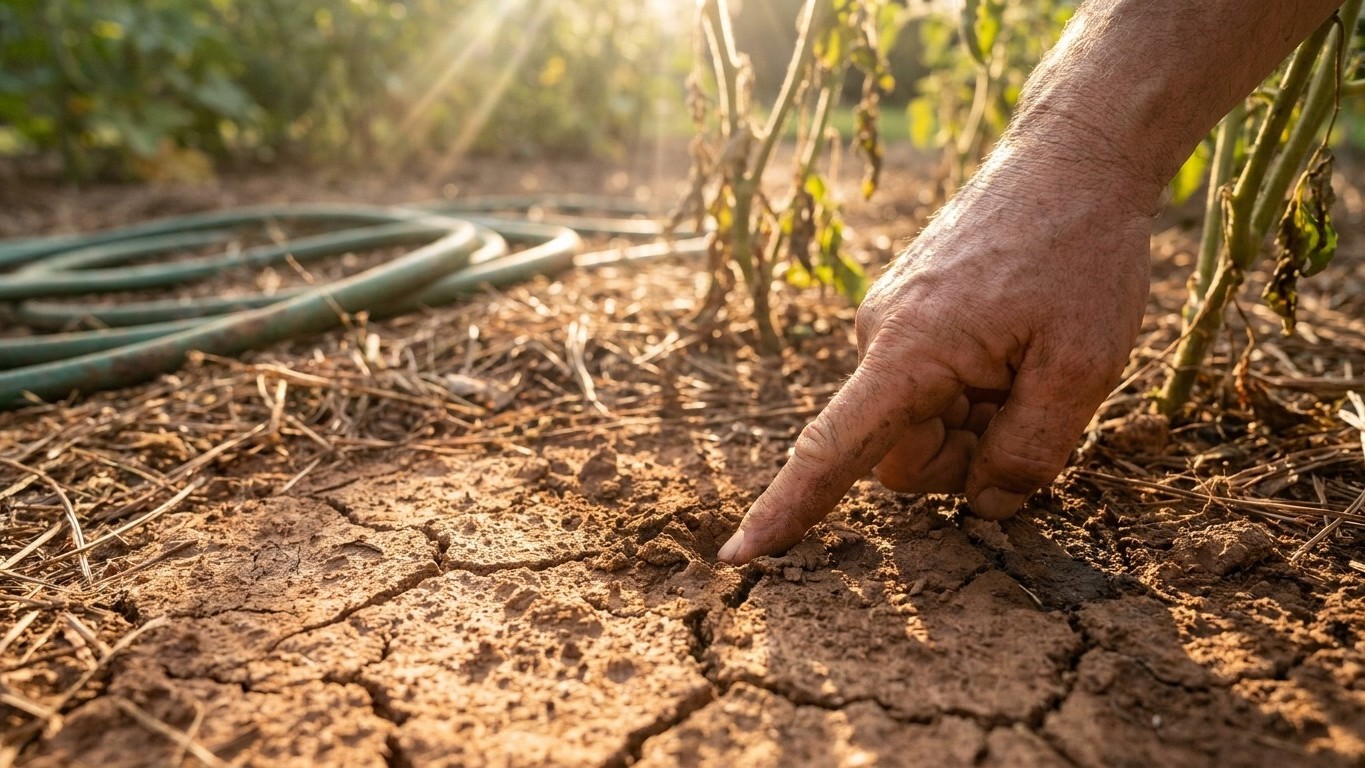

During a South Carolina dry spell, water deeply and infrequently at the base of the plant, in the morning, rather than a light daily sprinkle. Aim for roughly an inch of water a week delivered in one or two soakings, and check soil moisture two inches down with a finger before turning on the hose. June’s dry spells are the real test, since it’s the driest summer month here.
What changes here

Two numbers set the terms for watering in South Carolina. June, the driest summer month, averages 6.21 inches of rain. The same reference station logs 55.1 days a year at or above 90F. Put together, those figures say something specific: the sky delivers plenty of water over the course of a month, but the heat load is high enough to burn through it fast, and the rain rarely falls on the schedule a garden needs.
Do the arithmetic and June looks generous. Spread 6.21 inches evenly across roughly 4.3 weeks in the month, and the average comes out to about 1.45 inches a week, more than the inch a typical bed asks for. On paper, South Carolina gardeners shouldn’t need to water much in June at all.
That average is misleading, and this is where a dry spell earns its name. Rain in this climate rarely lands as a steady quarter-inch every couple of days. It tends to arrive as a single afternoon thunderstorm that dumps an inch in twenty minutes, much of which runs off a dry crust of soil instead of soaking to root depth, followed by a week or two of nothing. Meanwhile those 55.1 days above 90F are busy pulling moisture back out of the topsoil through evaporation, whether or not it rained recently. July (6.6 inches) and August (6.97 inches) tell the same story with slightly more rain and no less heat.
The gardener’s job during a dry stretch is to cover the gap between what the average says and what actually reaches the roots that week. On sandy ground, water drains through fast and needs replacing sooner. On heavy clay, the same inch can sit in the root zone for the better part of a week, which changes the schedule but not the total amount needed. Either way, the number to track isn’t the monthly average. It’s what the soil at root depth is holding right now.
How to water when it matters
The method that works in South Carolina isn’t different in principle from watering anywhere else, but the heat load here (55.1 days above 90F) makes the details matter more than they might in a cooler state. Deep, infrequent watering pushes roots downward, where soil stays cooler and moisture lasts longer between rains. Shallow, frequent watering does the opposite: it trains roots to stay near the surface, exactly where the day’s heat bakes them dry by afternoon.
Morning watering matters for the same reason evening watering causes trouble. Water applied early gives leaves time to dry before nightfall, which cuts down on the fungal and bacterial diseases that thrive on wet foliage overnight. Watering at the base, rather than overhead, skips the leaf-wetting problem altogether and sends water straight to where it’s needed.
Checking soil moisture beats guessing every time. A finger pushed two inches into the soil, or a trowel pulled up for a quick look, tells you whether the top half-inch that looks dry is hiding damp soil underneath, or whether the dryness goes deeper. That’s the only way to know if a bed genuinely needs water or just looks thirsty.
Texture changes the rhythm, not the total. Sandy soil holds little water at a time, so it calls for shorter, more frequent soakings even though it drains fast. Heavy clay holds a week’s worth of water once it’s soaked through, but watering it again before it’s had a chance to dry can drown roots and invite rot. Since South Carolina doesn’t have one soil type, treat any starting number as just that, a starting point to confirm against your own ground.
- Check soil moisture two inches down before watering; skip the session if it’s still damp.
- Water at the base of the plant, not over the leaves, early in the morning.
- Apply about an inch of water in one or two sessions per week as a starting point during a dry spell.
- On sandy soil, split that inch into three shorter waterings instead of one long soak.
- On clay soil, water once and let it fully absorb before checking again in five to seven days.
- Add a two- to three-inch layer of mulch to slow evaporation between waterings.
What goes wrong
A little water every day
Daily light watering feels responsible, but it keeps roots shallow and close to the surface, right where 55.1 days a year of 90F-plus heat does the most damage. Roots that never have to reach down for water stay near the top few inches, and that’s exactly the layer that dries out fastest once the sun is up. This is the mistake that costs the most here, because the heat load punishes shallow roots harder than in milder climates.
Wetting the leaves after dinner
Watering in the evening seems convenient, but leaves that stay wet overnight give fungal spores and bacteria hours to establish themselves in the dark and cooler air. By morning, the damage is already underway on tomatoes, roses and anything else prone to leaf spot or mildew.
Trusting a passing storm
A loud afternoon thunderstorm can look like it solved the watering problem, but a quick check with a finger often finds only the top half-inch of soil wet. The rest ran off before it soaked in. Checking the soil, not the sky, is the only way to know if that storm actually helped.
Skipping the mulch
Bare soil left exposed after watering gives the sun a clean shot at pulling that moisture right back out. Since South Carolina’s summer months bring both real rainfall (19.8 inches across June, July and August combined) and real heat, mulch is what keeps a wet bed from drying out again within a day or two, and it’s the reverse mistake here: overwatering a bed that’s already holding plenty of moisture from recent rain, without giving it a chance to dry between soakings, which can suffocate roots in heavier soils just as easily as drought stresses them.
Local help
Clemson Cooperative Extension covers watering guidance, drought conditions and local soil questions for South Carolina at clemson.edu/extension. Watering restrictions during dry spells vary by municipal or county water provider and shift with drought conditions, so check current rules with your own local water utility before setting an irrigation schedule.
Common questions
How often should I water my garden during a South Carolina dry spell?
Start with about an inch of water a week, split into one or two deep soakings, then adjust based on how your soil holds moisture at root depth.
Is it better to water in the morning or evening in South Carolina?
Morning is better. It gives leaves time to dry before nightfall, cutting down on the fungal problems that wet foliage invites overnight.
How can I tell if my soil is dry enough to need watering?
Push a finger or trowel two inches into the soil. If it’s dry at that depth, it’s time to water, regardless of how the surface looks.
Does South Carolina have watering restrictions during droughts?
Restrictions exist in some areas and change with drought conditions, but they’re set locally. Check with your municipal or county water provider for current rules.