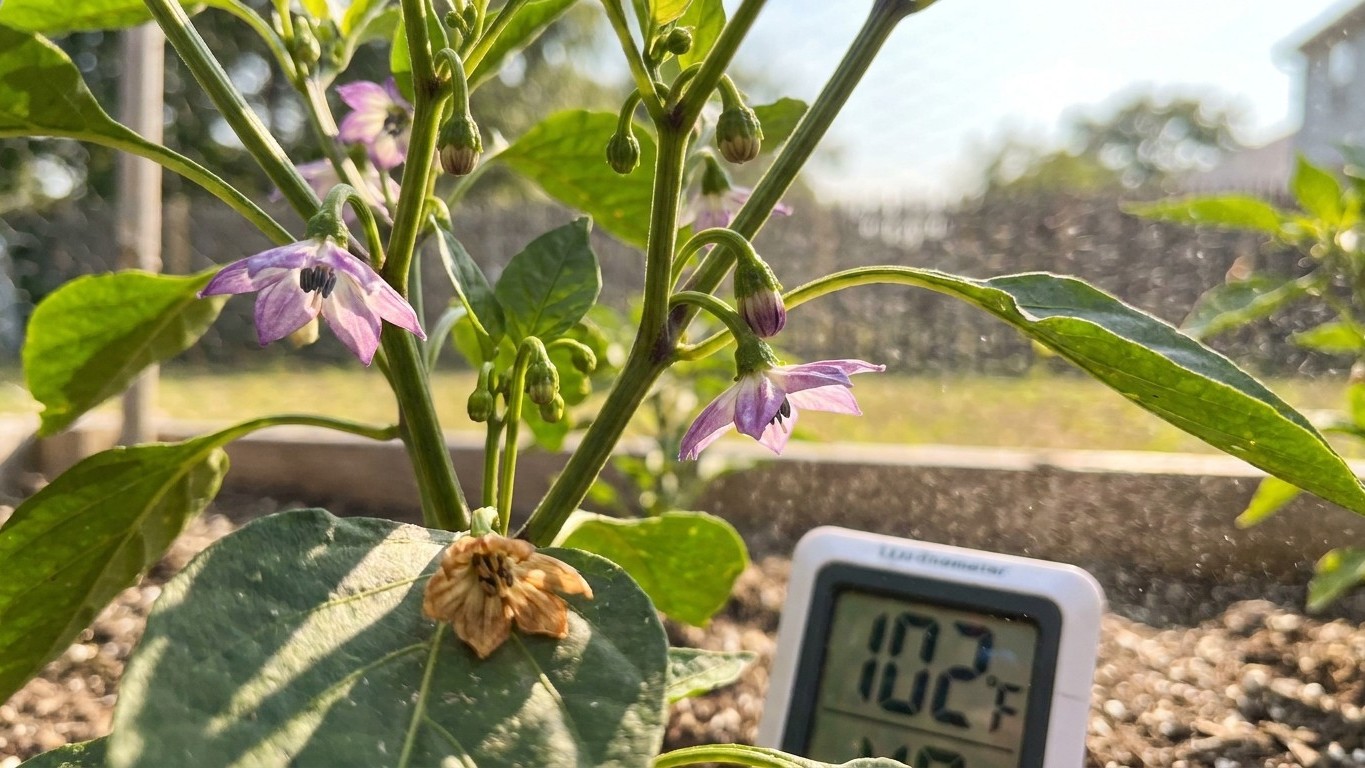

New Jersey peppers face trouble at both ends of the thermometer. On the hot side, the reference station in Newark logs 20.8 days a year at 90°F or above, enough to stall pollen and drop blossoms during a plant’s flowering window, which is why When to Start Pepper Seed in New Jersey matters as much as watching the thermometer once plants are in the ground. On the cool side, nights under 55°F cause the same failure, but this site doesn’t track summer night lows, so that half of the equation is on you to watch.
The short answer

Start with the number that’s actually measured here: 20.8 days a year at 90°F or hotter, averaged over 1991-2020 at the Newark reference station, according to NOAA’s Climate Normals. That’s not a handful of scorching afternoons scattered across a mild summer. It’s closer to three full weeks, cumulative, when pepper pollen can turn sterile and open flowers simply fall off the plant without ever setting fruit. If a chunk of those hot days lands during your plants’ flowering stretch, you can watch a pepper plant loaded with blossoms produce almost nothing for two or three weeks running.
The mechanism matters more than the raw count. Why Peppers Fail to Set Fruit in New Jersey comes down to this: pepper flowers need viable pollen and a functioning ovary to set fruit, and heat stress above roughly 90°F disrupts both. The plant isn’t dying. It’s protecting itself, and it will resume setting fruit once temperatures moderate, which is exactly why a hot stretch in July often produces a gap in harvest rather than a total loss for the season.
Here’s the half of the story this site can’t fill in for you: nights below 55°F cause the identical failure, blossom drop and poor fruit set, just from the other direction. New Jersey doesn’t have a single night-temperature profile. A yard in the Pine Barrens, a valley in Sussex County, and a shore town near Atlantic City can all report meaningfully different overnight lows on the same date, and this database doesn’t carry summer night minima for any of them. Don’t guess based on how far north or south you sit, and don’t assume the coldest month of the year tells you anything about a June or September night. Put a min-max thermometer in your pepper bed. It’s the only way to know if your cool end is the problem when fruit set stalls.
One more figure worth holding onto: once a flower does set fruit, Utah State University Extension notes it typically takes 35 to 45 days from that flowering point to a harvestable pepper, not from the date you sowed seed or transplanted. That window is why a bad two weeks of blossom drop in midsummer can push a harvest back by a month or more, and it’s also why choosing among Pepper Varieties That Ripen in a New Jersey Season matters as much as timing your seed start. The clock only starts ticking once the flower actually holds.
When to start seed here
Figuring out your seed-starting date isn’t a guess, it’s arithmetic, and you can redo this for your exact county with your own numbers.
- Find your frost window. The Newark reference station’s last spring frost, per NOAA’s 1991-2020 climate normals, falls between March 29 and April 6, based on the 30-70% probability band for a 32°F freeze. Suburban and rural yards away from that airport station typically see frost linger one to two weeks later, and sometimes longer at higher elevation, so treat this as a starting reference, not your personal date.
- Wait for two conditions, not one. Peppers need both frost to have passed and soil temperature at 60°F before transplanting outdoors, according to Utah State University Extension. Air temperature alone tells you nothing about root zone temperature, especially in a spring with a cold, wet stretch. A simple soil thermometer pushed 4 inches down, checked in the morning, is the only reliable read.
- Push your transplant date out from the frost window. Given Newark’s April frost range and the typical lag for soil to reach 60°F in New Jersey’s clay-heavy or sandy coastal soils, most counties land on a transplant date in mid-to-late May. Adjust earlier or later based on how your own soil warms and how your local frost date compares to Newark’s.
- Count back 8 to 10 weeks from that transplant date. If your target transplant date is mid-May, seed-starting indoors lands somewhere in early-to-mid March. If your county’s soil warms slower and pushes transplanting to early June, back your seed date up into late March instead.
- Rebuild the math for your address, not the state average. A backyard in a river valley with cold-air drainage, a rooftop container garden in a warmer urban microclimate, and a rural lot at elevation can each need a transplant date two to three weeks apart, even within the same county.
What goes wrong here
- Blossom drop from a hot spell. When daytime highs push past 90°F, especially with several days strung together, pollen viability drops and open flowers fall without setting fruit. Since Newark logs 20.8 such days a year on average, expect at least one stretch mid-summer where this happens. The remedy isn’t chemical: light afternoon shade cloth over the plants during the worst heat, and consistent watering so the plant isn’t fighting drought stress on top of heat stress, buys time until temperatures ease.
- Blossom drop from a cool night. The opposite trigger, nights under 55°F, causes the same dropped-flower symptom, and it can show up in a cool early-summer snap or a chilly September stretch before frost. Since this site doesn’t carry night-temperature data, the fix starts with tracking your own yard: a min-max thermometer near the pepper bed tells you whether a cool night is the real cause before you change anything else.
- Sunscald on exposed fruit. Peppers that lose leaf cover, from over-pruning, wind damage, or disease, expose fruit directly to strong summer sun, and the skin develops pale, papery patches that can rot. Keep foliage intact rather than pruning heavily for airflow, and use a light shade cloth over exposed rows during the hottest weeks of a season already carrying 20.8 days above 90°F.
- Blossom-end rot on the fruit itself. This shows up as a sunken, leathery brown patch on the fruit’s blossom end, and it traces back to inconsistent watering that interrupts calcium uptake, not a soil calcium deficiency in most cases. Even, regular watering and a layer of mulch to hold soil moisture steady through a hot, dry stretch prevents most cases without any soil amendment.
Checking this against your own county
Every number in this article comes from a single reference station and a national climate dataset. Your yard isn’t that station. Frost can arrive later, soil can warm slower or faster depending on whether you garden in sandy Pine Barrens soil or heavier clay further north, and your summer nights might run warmer or cooler than a neighboring town ten miles away.
Rutgers Cooperative Extension, run through Rutgers New Jersey Agricultural Experiment Station, keeps county-level offices across the state with local frost data, soil-testing services, and staff who track conditions specific to your area rather than a statewide average. Find your county office through njaes.rutgers.edu before you lock in a transplant date based on averages alone.
Common questions
Can peppers recover after a heat-driven blossom drop?
Yes. The plant isn’t damaged, just temporarily unable to set fruit. Once daytime highs drop back under the stress threshold, healthy plants resume flowering and setting fruit within one to two weeks, though the harvest calendar shifts back accordingly.
Does mulching help against both heat and cool-night stress?
Mulch mainly stabilizes soil moisture and moderates soil temperature swings, which helps prevent blossom-end rot and reduces water stress during hot spells. It won’t raise or lower air temperature enough to counter a genuine hot-day or cool-night fruit-set failure on its own.
Should I start seed earlier if my county tends to run cold?
Starting seed earlier only helps if you also delay transplanting until both frost has passed and soil hits 60°F. Starting early and transplanting into cold soil simply stalls the plant instead of speeding it up.
Is there a way to know my own night temperatures without buying equipment?
A basic min-max thermometer, sold at most hardware and garden stores, is the simplest way to log actual overnight lows in your specific yard. Without one, you’re guessing, and guessing is exactly what caused the blossom drop you’re trying to diagnose in the first place.