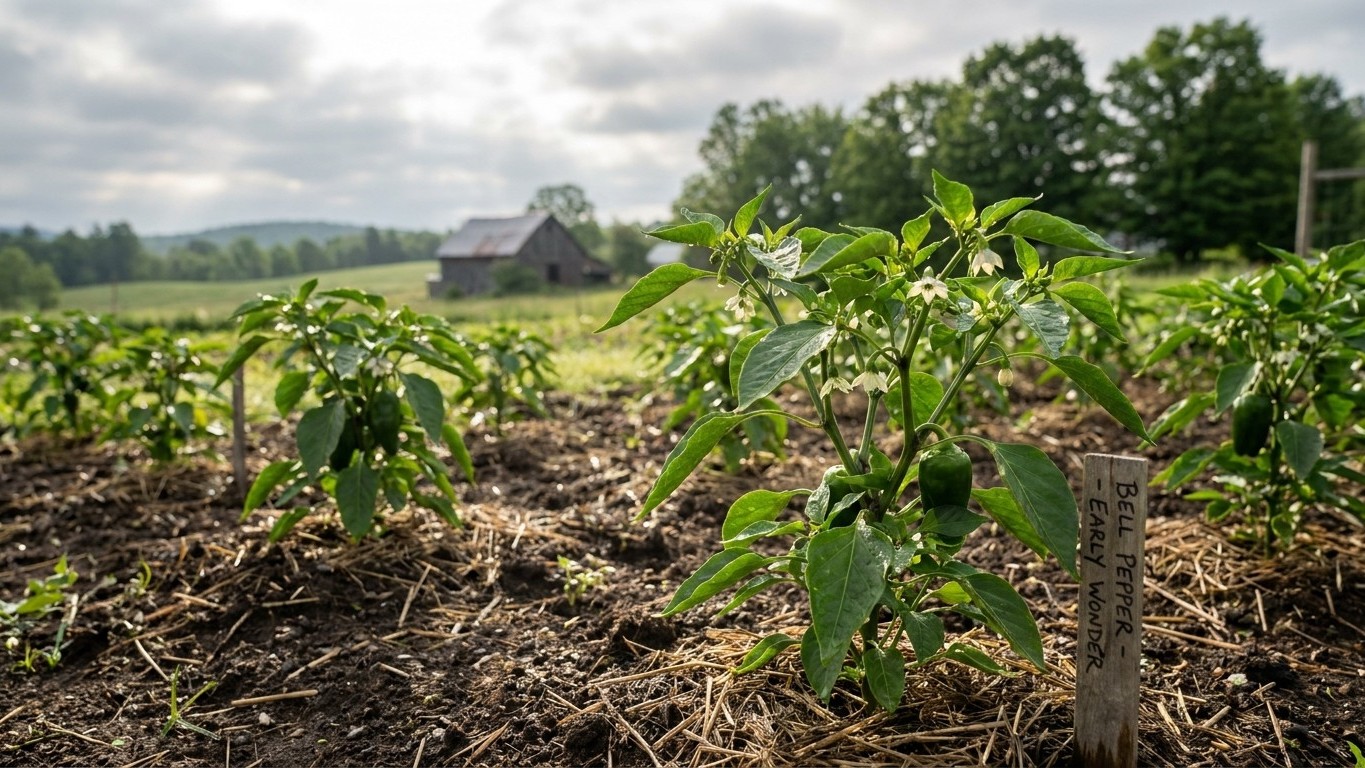

Vermont peppers face less heat stress than most of the country, but the growing season leaves little room for error. The Burlington reference station logs just 5.4 days a year at or above 90°F, so hot-end fruit drop is rare here. The bigger risk sits on the other end: cool nights that can stall pollination before summer even gets going, paired with a frost window that closes late and reopens early. Because that window is so tight, choosing among Pepper Varieties That Ripen in a Vermont Season matters just as much as managing temperature.
The short answer

Start with the number itself. NOAA’s 1991-2020 Climate Normals put Burlington at 5.4 days a year reaching 90°F or hotter. That’s a mean, not a hard ceiling, so some seasons run cooler and a rare one runs hotter, but on average a Vermont pepper plant spends less than a week fighting heat that’s actually dangerous to fruit set. For most growers here, the hot-end failure that plagues gardeners in Kansas or Georgia, where blossoms drop because daytime highs blow past 90°F for weeks on end, simply isn’t the main event. Peppers can still stall during a genuine hot stretch, but those stretches are short and infrequent enough that a gardener who waters consistently and gives plants some afternoon shade during the hottest run of days usually rides it out.
The other threshold matters more here, and it’s the one growers tend to overlook. Utah State University Extension notes that pepper fruit set fails at both ends: nights below 55°F stall pollen viability just as surely as days above 90°F do, a dynamic explored further in Why Peppers Fail to Set Fruit in Vermont. Vermont’s short season means plants often go into the garden while spring nights are still cool, and even midsummer can throw a chilly night after a cold front rolls through, especially in valley bottoms and low spots where cold air pools. Getting the timing right on the front end, covered in When to Start Pepper Seed in Vermont, helps plants reach bloom with enough size to shrug off an occasional cool night.
Here’s the limit of what can be said with real numbers: this site tracks days at or above 90°F by state, but it does not carry summer night minima. There’s no published figure here for how many nights in a Vermont July or August drop below 55°F, and guessing at that number from latitude or from the average January low would be worse than saying nothing. Elevation, local terrain and even which side of a hill a garden sits on change nighttime lows more than latitude does. A garden in a valley in the Northeast Kingdom can run several degrees colder overnight than one on a lakeside slope near Burlington, despite being roughly the same distance north.
The practical move is to watch your own nights directly. A simple outdoor thermometer left in the garden, checked over a week or two during bloom, tells you more than any regional average. If you’re seeing nights consistently below 55°F while plants are flowering, that’s the signal to expect fewer fruit than you planted for, not the day count above 90°F.
When to start seed here
Figuring out a sowing date is really just counting backward from two fixed points: when it’s safe to move plants outside, and how long they need indoors first. Here’s how that arithmetic works for Vermont.
- Find your local frost window. NOAA’s Climate Normals put the 32°F freeze probability window for the Burlington station between April 30 and May 10. That’s the mildest corner of the state, sitting right on Lake Champlain, so it marks an early edge, not a statewide rule. The Green Mountains and the Northeast Kingdom run substantially later, and a garden even a short drive from Burlington can carry a real frost risk into late May.
- Wait for soil, not just air. Frost passing doesn’t mean the ground is warm enough. Utah State University Extension recommends transplanting once soil temperature reaches 60°F, which in Vermont’s clay-heavy or shaded gardens can trail well behind the frost date by a week or two. A basic soil thermometer pushed a few inches into the bed, checked in the morning, is the only reliable way to know.
- Set your transplant date around whichever comes later. If your frost window closes around the start of May but your soil doesn’t hit 60°F until later in the month, the soil temperature is the limiting factor, not the calendar date. Peppers set out into cold soil sit and sulk rather than grow, even if the air feels warm.
- Count back 8 to 10 weeks for indoor sowing. That’s the window Utah State University Extension gives for raising pepper transplants indoors before they go in the ground. Counting back 8 to 10 weeks from a transplant date in mid to late May lands seed-starting somewhere in the second half of March for much of Vermont, though a gardener in a colder valley working from a June transplant date would push sowing into early April instead.
- Redo the math for your own address. Because the frost window and soil-warming pace both shift with elevation and local terrain, the safest approach is to plug in your own expected transplant date, then subtract 8 to 10 weeks, rather than borrowing a fixed calendar date from a source keyed to the Burlington lakeshore.
What goes wrong here
- Blossom drop from a cool night. Utah State University Extension identifies nights below 55°F as one of the two failure points for pepper fruit set. In Vermont this shows up most often early in the season, right after transplant, or during a cold front that drops overnight temperatures well below the daytime feel. The remedy is a floating row cover or a cold frame pulled over plants when a cool night is forecast, especially in the first few weeks after they go outside.
- Blossom drop from a hot spell. Even with only 5.4 days a year averaging 90°F or hotter at the Burlington station, a stretch of consecutive hot days can still push blossoms to drop, particularly if it lines up with dry soil. Deep, consistent watering through a hot run and light afternoon shade using a shade cloth over the hottest hours reduce the stress enough that flowering usually resumes once temperatures ease.
- Sunscald on exposed fruit. Fruit that develops with little leaf cover can blister or develop pale, papery patches on the side facing strong sun, especially once a plant has been pruned hard or has lost leaves to wind damage. Leaving foliage intact rather than trimming for tidiness, and avoiding heavy pruning during the hottest stretch of days, keeps fruit shaded naturally.
- Blossom-end rot. This shows up as a sunken, dark patch on the bottom of the fruit and traces back to uneven water delivery disrupting calcium uptake, not a lack of calcium in the soil itself. Consistent watering on a set schedule, rather than letting soil dry out and then soaking it, is the fix growers reach for first.
Checking this against your own county
Everything above is built from statewide and Burlington-specific figures, and Vermont’s terrain is varied enough that a garden in the Champlain Valley and one in the Northeast Kingdom can run on genuinely different clocks. Before locking in a sowing date, it’s worth checking those numbers against local guidance rather than treating the Burlington frost window as a statewide rule.
The University of Vermont Extension is the land-grant extension service for the state and the right place to confirm a frost date, local soil-warming timing, and any variety notes specific to your county. Extension staff and county-level publications typically carry finer detail on microclimates than a single reference station can capture, which matters most for gardeners working land away from the lakeshore.
Common questions
Do Vermont peppers really need less heat protection than peppers grown further south?
For the hot end of fruit set, yes. At 5.4 days a year averaging 90°F or hotter, Vermont sees far less sustained heat stress than warmer states. Cold nights, not heat, are the more frequent threat here.
How do I know if my nights are too cold for fruit set?
There’s no published night-minimum figure for Vermont on this site, so the only reliable check is a thermometer left in the garden during flowering. If nights are running below 55°F while plants are blooming, expect reduced fruit set, per Utah State University Extension’s fruit-set thresholds.
Is the Burlington frost date safe to use for the whole state?
No. Burlington sits on Lake Champlain, the mildest part of Vermont, so its April 30 to May 10 frost window runs earlier than most of the state. The Green Mountains and Northeast Kingdom typically see frost risk extend later into spring.
Why do my pepper transplants sit still after I put them in the ground?
Usually because the soil is still cooler than 60°F even though the air feels warm and frost has passed. Peppers transplanted into cold soil stall rather than grow, so checking soil temperature directly is more useful than going by the calendar date alone.