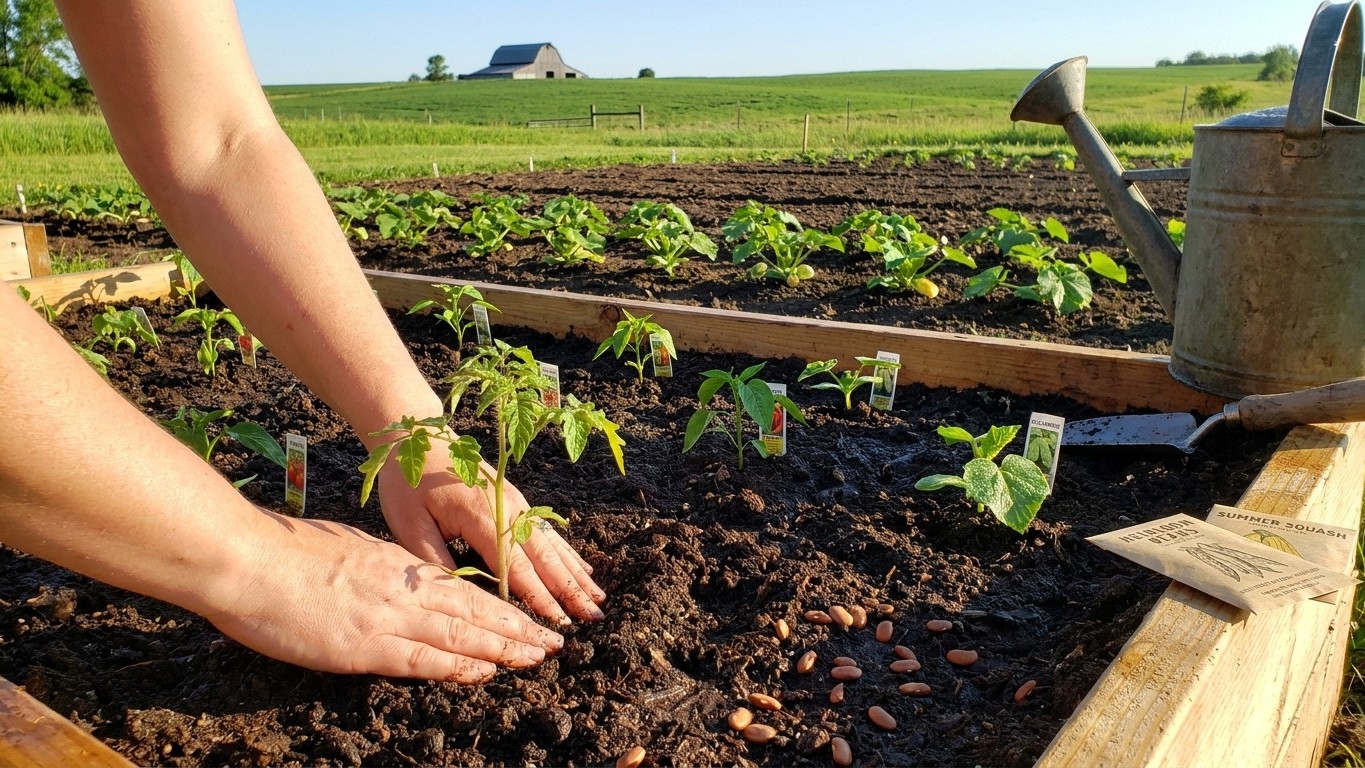

By June, Iowa’s growing season is wide open. The state’s last spring frost window, April 12 to April 24, is long past, and soil has warmed enough for nearly everything on the seed rack: beans, corn, squash, cucumbers, melons, and hardened-off tomato and pepper transplants all go in the ground this month across USDA Hardiness Zones 4b to 6a.
What goes in the ground in June

By the time June arrives, frost isn’t the gatekeeper anymore in Iowa gardens: the last spring frost window runs April 12 to April 24 at the reference weather station, and county-level figures from Iowa State University run about four days later than that. Either way, June opens weeks past that risk. What decides planting now is soil temperature and moisture, not the calendar page.
Warm-season crops that sat refusing to grow through cool May soil finally have what they need. Bean seeds germinate reliably once soil holds steady warmth, so dropping them in rows now brings faster, more even sprouting than a month earlier would. Sweet corn, summer and winter squash, cucumbers, and melons all go directly into the ground in June across the state; these are crops that stall or rot in cold, wet soil, so waiting this long is often the difference between a stand of seedlings and a failed row.
Tomato, pepper, eggplant, and basil transplants that spent May hardening off on a porch or in a cold frame move to their final spots early in the month. Get them in before the soil surface turns hot and dry, and water them in well; transplant shock hits harder once daytime highs climb.
June is also the last realistic window for a spring crop of lettuce, spinach, and other leafy greens before heat pushes them to bolt. Sow these in the shade of taller plants or under light row cover, and expect a shorter harvest window than a spring planting would give. Root crops like carrots and beets still go in early in the month for a summer harvest, though a second sowing later in summer will matter more for the fall garden.
Alliums are mostly finished as transplants by now, but scallion sets and quick-maturing bunching onions still work as direct-sown plantings. Peas put in this late race the heat; they can still work in the cooler north of the state or at higher sites, but across most of Iowa a June pea planting is a gamble once real warmth settles in.
What to start under cover
Counting backward from the first fall frost works better here than counting forward from any fixed date. That frost falls between October 14 and October 25 at the reference station, and roughly ten days earlier by Iowa State University’s county-level averages. Fall crops that need a long runway have to start now, indoors or in a shaded cold frame, to make that window with room to mature.
Broccoli, cabbage, and cauliflower grown for a fall harvest are the clearest case. These brassicas run roughly two to two and a half months from transplant to harvest depending on variety, so starting seed indoors in early June, then transplanting outdoors around midsummer, lands the harvest comfortably before frost risk arrives in October. Work backward from whichever fall frost date feels realistic for a particular county, subtract the days to maturity printed on the seed packet, and that arithmetic gives the sowing date rather than a fixed calendar day.
Started too early, brassica seedlings sit under lights for weeks past the point they’re ready to go outside, and they turn rootbound and leggy in small trays. Weak transplants like that struggle once they hit the garden and rarely catch up to seedlings started on time. Started too late, they run out of daylight and cool weather before heads form, and frost catches them with nothing to show for the season.
A second round of tomatoes or a fast basil crop can also start under cover in June, mainly as insurance against an early blight problem in the first planting, though this is optional rather than necessary for most home gardens.
What is ready to pick
June is when the spring garden finally pays off. Asparagus spears that have been cut steadily since spring taper off toward the middle of the month. Stop harvesting once spears thin out, and let the plant put energy into ferny growth for next season. Rhubarb stalks are at their thickest and most tender; snap or cut them at the base rather than pulling, to avoid damaging the crown.
Strawberries hit their peak in June across most of the state. A ripe berry pulls free from the stem with almost no resistance, while one that needs tugging isn’t ready yet. Peas planted in early spring are podding out now; check for pods that feel firm and full end to end, and pick every couple of days, since pods left too long turn starchy and tough.
Lettuce, spinach, and other spring greens are on borrowed time by June. Harvest whole heads or strip outer leaves before hot weather triggers bolting, which turns leaves bitter almost overnight. Radishes sown in early spring should already be pulled; any left in the ground through June heat turn woody and hollow.
Garlic scapes, where garlic was planted the previous fall, show up in June and are worth cutting. Removing the scape redirects the plant’s energy into bulb growth, and the scape itself is edible.
The jobs that matter this month
Staking and caging come first, and they come first because they’re nearly impossible to do well after the fact. Tomatoes, peppers, and vining cucumbers put on rapid growth in June; a cage or stake set now guides that growth upward before the plant sprawls across the bed and tangles with its neighbors. Caging a tomato that’s already three feet of floppy stem usually means broken branches.
Mulching matters more in June than in any earlier month, because this is when soil starts drying out fast under longer days and rising heat. A two-to-three-inch layer of straw, shredded leaves, or grass clippings around warm-season crops holds moisture, keeps soil temperature steadier, and suppresses the weeds germinating just as fast as the vegetables.
Watering rhythm needs attention now too. Deep, infrequent watering that soaks six inches down builds deeper root systems than a light daily sprinkle, which trains roots to stay near the surface where they dry out fastest. Water early in the day so foliage dries before evening, cutting down on the fungal issues that thrive on wet leaves overnight.
Succession sowing keeps the harvest coming instead of arriving all at once. A new short row of beans or a few more squash seeds every two to three weeks through June means fresh pickings well into late summer instead of one overwhelming glut followed by nothing.
Pest scouting starts in earnest in June. Squash bugs and their egg clusters show up on the undersides of squash and cucumber leaves, Colorado potato beetles chew through potato foliage, and Japanese beetles begin emerging toward the end of the month in parts of the state. Checking plants every few days and hand-picking or removing egg clusters early keeps a small problem from becoming an infestation by midsummer.
Weeding while weeds are small costs minutes; weeding once they’ve set seed costs whole afternoons for years afterward.
What not to do in June
The classic June mistake is trusting air temperature over soil temperature. A run of warm, sunny days can feel like summer while the soil six inches down is still cool and wet from spring rain. Planting heat-loving crops into that cold soil sets them back for weeks even though the calendar says they should be growing well. Check soil by hand or with a simple soil thermometer rather than going by how warm the afternoon feels.
Transplants that were hardened off, then left in a cold frame or garage during a stretch of chilly nights, sometimes get moved into the garden too early after what looked like a settled warm spell. A late cool snap or a single chilly night can stunt tender transplants that had no time to adjust. Ease them out gradually rather than moving them all at once after a few nice days.
Heavy nitrogen feeding on tomatoes and peppers in June is another common misstep. Nitrogen pushes leafy growth at exactly the point these plants should be shifting energy into flowering and fruit set. A tomato plant loaded with dark green foliage and no fruit in July is very often a plant that got too much nitrogen in June. A balanced or lower-nitrogen feed, or simply good compost, serves fruiting crops better at this stage.
Letting spring greens sit past their prime is a smaller but common error. Lettuce and spinach left in the ground through a hot stretch bolt and turn bitter within days, and there’s no reversing it once it starts.
Checking this against your own county
A statewide answer for June is a starting point, not an instruction for a specific yard. Iowa spans USDA Hardiness Zones 4b to 6a, and that range alone signals real differences in how early soil warms and how fast the season builds heat between the northern and southern thirds of the state. Elevation and local terrain shift these windows further. The frost dates cited here come from a single reference station; Iowa State University’s own county-level averages run about four days later in spring and ten days earlier in fall, which narrows the safe planting window on both ends.
Check both the frost data and current planting guidance for a specific county through Iowa State University Extension and Outreach before finalizing a June planting plan.
Common questions
Is it too late to plant tomatoes in Iowa in June?
No. Tomato transplants set out in early June still have a full season ahead before the first fall frost, which falls between October 14 and October 25 at the reference station. Get them in early in the month if possible, and make sure they were properly hardened off first.
What vegetables can I direct sow in Iowa in June?
Beans, sweet corn, summer and winter squash, cucumbers, and melons all go directly into the ground this month, along with a last quick round of lettuce and spinach grown in shade before heat sets in.
When should I stop harvesting asparagus in Iowa?
Most gardeners stop cutting asparagus spears around the middle of June, once new spears start coming up noticeably thinner. Letting the plant grow its ferny top growth after that point rebuilds the crown’s energy for next season’s harvest.
Can I still plant potatoes in June in Iowa?
Potatoes planted this late will still produce, but a late June planting pushes the harvest closer to the first fall frost window of October 14 to October 25, leaving less margin for a fall dig. Earlier plantings, from spring, give more reliable yields.