
October in Kentucky sits in the narrow window before the first fall frost, which lands anywhere from November 2 to November 12 depending on where you garden. That means this month is still for planting: garlic and shallots go into workable soil now, hardy greens can be sown for a fall harvest, and cover crops go down while the ground is still open. Tender vegetables are done for the season.
What goes in the ground in October

The calendar says October, but the soil doesn’t care what the calendar says. What decides whether something belongs in the ground this month is soil temperature and how many frost-free days remain before that first freeze arrives, somewhere between November 2 and November 12 across most of the state. That gives you roughly four to six weeks of open ground, sometimes less if you garden at higher elevation or in a low-lying spot where cold air pools.
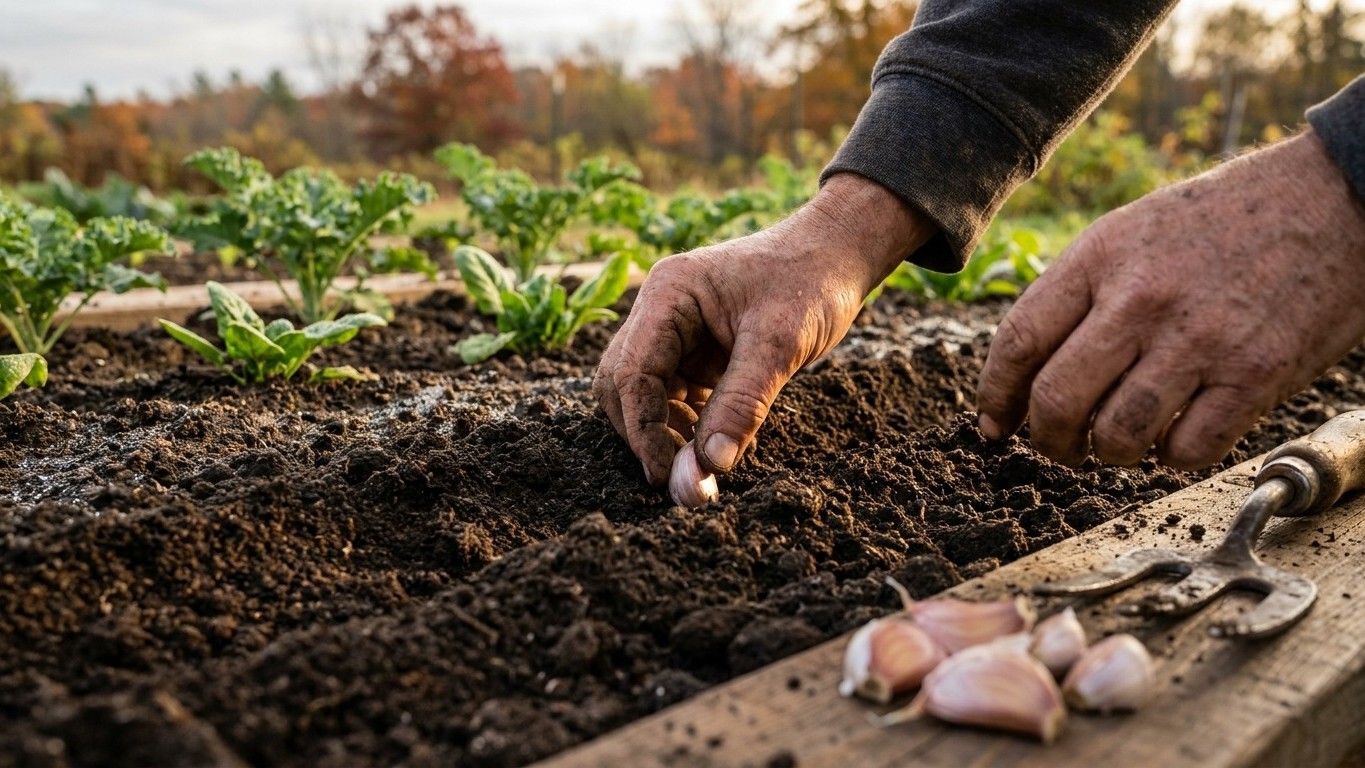
Garlic and shallots are the anchor crop for this month. Planted now, cloves root through the fall, sit dormant through the cold, then push up fast in spring for a summer harvest. This is close to the only crop in the garden calendar planted in one season and harvested in the next, so timing it to the current frost window rather than a fixed date matters more than usual.
Hardy greens still have room to work. Spinach, mache, and cold-tolerant lettuce varieties can go in as direct-sown seed early in the month, since they germinate in cool soil and tolerate a light frost once established. Kale and collard transplants set out now will often carry through several frosts and keep producing into the following weeks. Cover crops such as winter rye, crimson clover, or a vetch mix belong in any bed that’s finished producing for the season, protecting bare soil and adding organic matter before winter.
What doesn’t belong in the ground this month is anything tender: tomatoes, peppers, beans, squash, cucumbers. With frost arriving in the first half of November, a transplant set out in mid-October simply won’t have time to establish before the cold shuts it down. If you want to stretch a tender crop a little further, a low tunnel or cold frame over an existing bed buys extra weeks, but that’s protecting what’s already growing, not planting something new and tender.
What to start under cover
Starting seed under cover in October isn’t about spring crops, it’s about squeezing a last round of greens through the cold months. The math runs backward from the first frost window of November 2 to November 12: take the days-to-maturity listed on a lettuce or spinach seed packet, count back from that window, and that’s roughly your sowing date under a cold frame or row cover.
Lettuce, spinach, and mache sown in trays or a protected bed now often mature just as the outdoor season closes, giving you harvestable greens under cover well into the colder weeks. A cold frame adds enough insulation that many of these crops keep growing slowly even after the first light frosts hit the open garden, so the goal isn’t to beat winter outright, it’s to buy extra harvest weeks past the point when unprotected beds would be finished.
Two mistakes show up every year with this kind of fall sowing. Start too early in warm early-October weather and greens can bolt or turn bitter before the cold even arrives, especially lettuce, which reads long warm days as a signal to flower. Start too late, past the point where the plant can size up before growth slows in the shortening daylight, and you end up with seedlings that stall out small and never really produce a harvest. There’s a narrow band in between, usually the first two weeks of the month, that gives cover-grown greens enough runway to actually pay off before winter really settles in.
What is ready to pick
October is one of the fuller harvest months in the Kentucky garden, mostly because it’s the last chance to bring in anything that can’t handle a hard freeze. Winter squash and pumpkins should already be off the vine or close to it, sweet potatoes need digging before the first frost damages the tubers underground, and any tomatoes or peppers still hanging on need picking the moment frost is forecast, ripe or not.
Brassicas tell a different story. Broccoli, cabbage, and Brussels sprouts actually improve with a light frost, converting starches to sugars and coming out sweeter than anything picked in warm weather. Apples on later-ripening varieties are typically ready this month as well.
| Crop | Sign it’s ready |
|---|---|
| Winter squash | Rind resists a fingernail; stem has dried and corked |
| Sweet potatoes | Foliage yellows and begins to die back |
| Pumpkins | Deep, even color; hollow sound when tapped |
| Brassicas (broccoli, cabbage) | Firm heads; sweeter after light frost exposure |
Stored crops from earlier harvests need a check-in too. Go through stored winter squash, onions, and potatoes and pull out anything showing soft spots or mold before it spreads to the rest of the bin. One rotting squash left in a crate of good ones will take down its neighbors within days.
The jobs that matter this month
Harvest timing is the job that costs the most if it slips. Once frost is forecast in that November 2 to November 12 window, anything tender left in the garden, tomatoes, peppers, basil, needs to come in that day, not the next morning. A single hard freeze ends the season for those crops overnight.
Garlic planting has its own deadline. Cloves need several weeks of root growth before the ground goes truly cold, so pushing this job into late fall means weaker plants come spring. Cleaning up spent beds matters just as much: pulling finished plants, clearing dropped fruit, and raking out diseased leaves now denies overwintering pests and fungal spores a place to sit through the cold months.
Soil testing pays off precisely because nothing is growing to disturb the results. Amendments like lime take months to change soil pH, so a test done now, with results applied over the fall and winter, sets up next spring’s beds far better than a test run in April under time pressure.
- Turn and top off compost piles before cold slows the breakdown
- Clean, oil, and sharpen tools before winter storage
- Repair raised bed frames, trellises, and fencing while beds are empty
- Order garlic and cover crop seed early, since good varieties sell out over winter
- Mulch perennial beds and any overwintering crop once the ground starts to cool
None of this is filler work. A tool put away rusty, a bed left unrepaired, a soil test skipped: each one turns into a slower start or a bigger problem come spring.
What not to do in October
The classic mistake this month is trusting a warm afternoon over the calendar. A run of 70-degree days in early October can feel like summer isn’t over, and gardeners sometimes set out tender transplants on the strength of that warmth. Soil temperature and the approaching frost window haven’t changed, and those transplants will be gone within the month regardless of how pleasant the air felt.
The reverse mistake shows up with cold frames and row covers: uncovering them too early after a mild stretch, only to lose the crop underneath to a frost that arrives days later. Once protection is in place for the season, leave it, checking forecasts rather than guessing from how the afternoon feels.
Nitrogen timing trips people up too. Feeding a high-nitrogen fertilizer to garlic, perennials, or fruit trees late in the fall pushes soft new growth right before a freeze, and that new growth is exactly what frost damages first. If anything, this is the month for balanced or phosphorus-leaning amendments that support root development, not top growth.
Composting diseased plant material is another quiet error. Blighted tomato vines or mildewed squash leaves tossed into a home compost pile often survive the pile’s heat and reinfect next season’s beds. Bag and trash that material instead, or burn it where local rules allow.
Checking this against your own county
A state-wide frost window is a starting point, not an instruction for your particular garden. Kentucky’s terrain runs from river-bottom lowlands in the west to mountain elevation in the east, and the USDA Plant Hardiness Zone Map places the state across zones 6a to 7a, a range built on a single measure, average annual extreme minimum temperature, that shifts noticeably with elevation and local geography. The frost dates cited here come from a Louisville-area weather station, and the National Weather Service office covering that area has noted this particular station tends to read later in spring and earlier in fall than the surrounding rural county, meaning many rural gardens should plan around a tighter window than the numbers above suggest.
For a window matched to your own county, the Kentucky Cooperative Extension Service is the right next stop, with county offices that track local frost data and planting calendars built for their specific area.
Common questions
Is it too late to plant garlic in October in Kentucky?
No. October is generally the prime month for it, since cloves need several weeks of root growth before the soil turns cold, and frost typically doesn’t arrive until November 2 to November 12.
Can I still start lettuce or spinach in October?
Yes, especially in the first half of the month, and especially under a cold frame or row cover, which extends the harvest well past what open ground allows.
Will a light frost ruin my broccoli or cabbage?
No, brassicas typically handle a light frost well and often taste sweeter afterward, unlike tomatoes or peppers, which need to be harvested before any freeze.
What’s the single most important job in the garden this month?
Watching the frost forecast and clearing tender crops before it hits, since the window between November 2 and November 12 can arrive earlier in some counties than others.
Gardeners who plant by the Moon can check the October 2026 moon planting calendar, a tradition rather than a proven method.
Related guides
- What to Plant in Kentucky in April
- What to Plant in Kentucky in August
- What to Plant in Kentucky in March
- What to Plant in Kentucky in November
Elsewhere? See what to plant in October in every state and province.