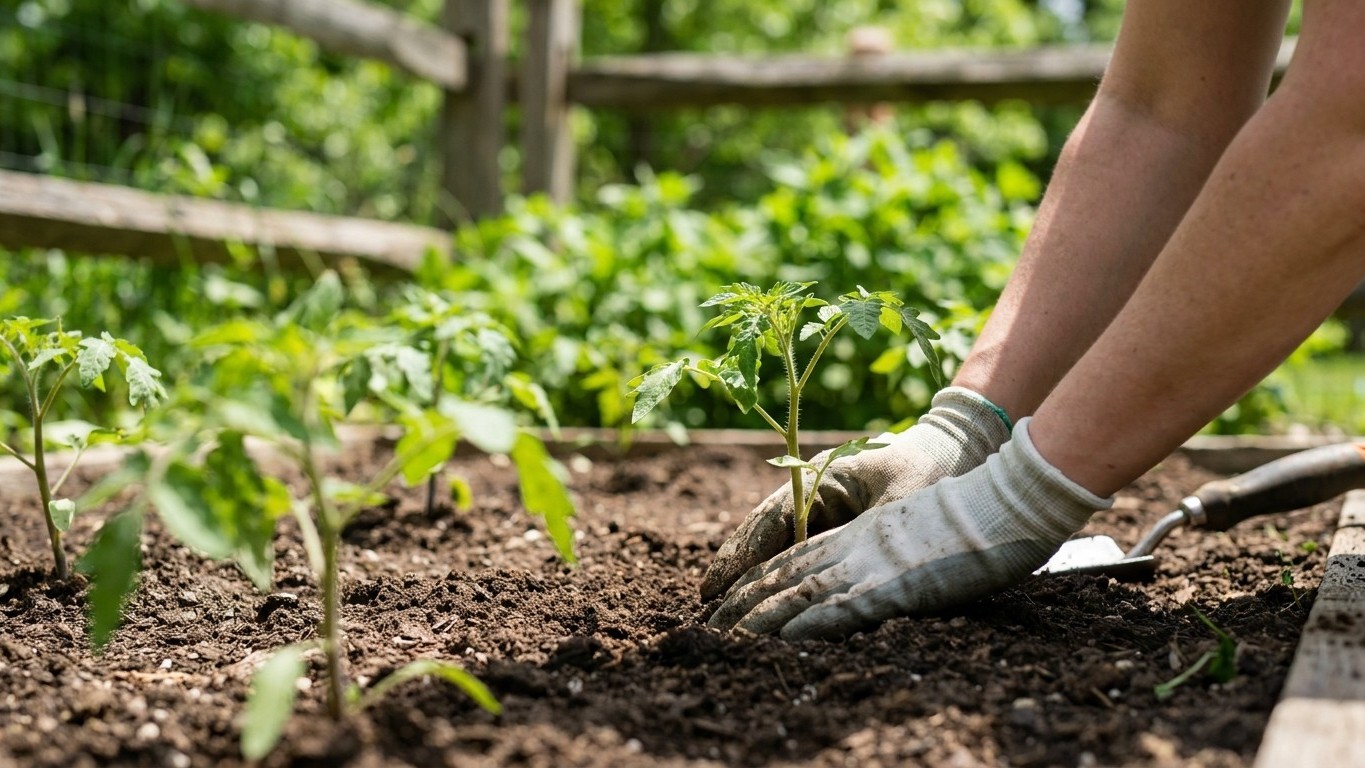

June is the month Prince Edward Island gardens really open up. The average last spring frost at Charlottetown falls on May 16, so by June most of the province is past its frost risk and the warm-season crops, tomatoes, beans, squash, corn, can go into open ground alongside the cold-hardy plantings already growing.
What goes in the ground in June

The decision this month is not the calendar, it’s soil temperature. A warm afternoon in early June can still sit over ground that’s barely 55°F a few inches down, and beans, squash and corn seed will simply rot rather than germinate in that. Wait for the soil itself to warm, not just the air, before direct-sowing anything in the squash or bean family.
That said, June is genuinely the province’s busiest planting month. Direct-sow snap beans, pole beans, summer squash, cucumbers and sweet corn once the soil has warmed. Potatoes, if not already in the ground from May, should go in early in the month at the latest. Succession sowings of lettuce, spinach, radish and peas can continue through the first half of June, spaced a week or two apart so the harvest doesn’t all land at once.
Transplants are where the real risk sits. Tomatoes, peppers, eggplant and melon starts can go outside once they’ve been properly hardened off, but remember that May 16 is a mean frost date at the Charlottetown A station, not a guarantee. Environment and Climate Change Canada’s own definition means that in roughly half of all years, frost arrives later than that average. A tender tomato transplant set out on June 1 has already survived two weeks past the mean date, but “past the mean” isn’t the same as “safe.” Keep a few sheets or row cover on hand through the first week or two of the month, especially inland or away from the coast, where the moderating water effect is weaker.
Garlic and shallots planted the previous fall are well up by now and need nothing more than weeding. If any garlic wasn’t planted in fall, June is too late for a full-size bulb crop, but shallot sets can sometimes still be tucked in for a smaller harvest.
What to start under cover
Most of the province’s tender transplants, tomatoes, peppers, the early cabbage family, were started indoors back in March and April, counting backward six to eight weeks from that mid-May frost window. By June, the indoor-starting job shifts to fall crops.
Work backward from the average first fall frost of October 17. A fall cabbage or broccoli crop needs roughly 60 to 80 days from transplant to harvest, plus four to six weeks as a seedling before it goes outside. Counting back from mid-October puts the transplant date in late July or early August, which means starting those seeds indoors or in a shaded cold frame in June gives them enough size to go out on schedule.
The two ways this goes wrong run in opposite directions. Start too early, say, sowing fall broccoli in a hot, bright window in early June, and by transplant time the seedlings are rootbound, leggy and stalled before they’ve even faced the garden. Start too late, waiting until July because the season still feels young, and the same crop runs out of daylight and warmth before it matures, leaving small heads or none at all. Somewhere in the middle of June is usually the workable window for that first round of fall brassicas, with a second sowing two to three weeks later for a staggered harvest.
Cucumbers and summer squash destined for a late planting can also be started in cell trays under cover in June rather than direct-sown, which buys a week or two of head start for gardeners on the cooler north side of the province.
What is ready to pick
June is a lean month for the harvest basket compared to what’s coming, but it isn’t empty. Asparagus beds established in previous years are in full production, and the general rule holds: stop cutting spears once they start coming in thin, usually by mid to late June, so the plant can rebuild its energy for next year.
Rhubarb is at its best early in the month. Pull rather than cut the stalks, twisting gently at the base, and leave at least a third of the plant standing so it keeps producing through summer.
Radishes and the earliest lettuce and spinach sown back in April or early May should be filling out and ready through June, picked young before radishes go woody or lettuce bolts in a warm stretch. Green onions sown early are usually pullable by month’s end. Peas planted in April can start yielding pods toward the very end of June, depending on the variety and how warm the month runs. Nothing else, tomatoes, squash, corn, is anywhere near ready yet; those crops are still putting on leaf and root growth this month, and the payoff comes later in summer.
The jobs that matter this month

Hilling potatoes is the job with the shortest deadline. Once plants reach six to eight inches, mound soil up around the stems to protect developing tubers from sun exposure, which turns them green and inedible, and to smother emerging weeds at the same time. Skip it for a few weeks and the window closes as the foliage sprawls.
Staking, mulching and watering
Tomatoes, peas and pole beans need their stakes or trellises in place now, before the plants get large enough to make the job a fight. Mulch goes down once the soil has warmed through, straw or shredded leaves around tomatoes and squash to hold moisture and keep soil-borne disease from splashing up onto leaves during rain. Establish a watering rhythm early: an inch of water a week, applied deeply and infrequently rather than a light daily sprinkle, trains roots to grow down rather than staying shallow and vulnerable to drought later in summer.
Pest scouting and succession sowing
Colorado potato beetle and flea beetle both show up on the Island through June, and checking the undersides of potato and brassica leaves weekly catches an infestation while hand-picking or row cover still works, before it needs anything stronger. Keep succession-sowing quick crops, more lettuce, radish, beans, every couple of weeks so the garden doesn’t hit a harvest gap in August. Thin direct-sown carrots, beets and lettuce as soon as seedlings are large enough to handle; crowded roots stay small no matter how good the soil is underneath them.
What not to do in June
The classic mistake is trusting the air temperature over the soil. A run of warm, sunny days in early June feels like permission to set out every tomato and pepper start at once, but if that warm spell follows a cool spring, the ground underneath can still be cold enough to stall root growth or invite rot. Check the soil with a hand, not a thermometer for the air, before committing tender transplants.
Uncovering too early after a mild stretch is the second trap. Row covers, cold frames and any winter protection left on strawberries or overwintered crops should come off gradually, not all at once on the first warm afternoon, since a cold night can still follow even well into June on the Island, particularly away from the coast’s moderating effect.
Nitrogen timing trips up a lot of tomato and pepper growers. A heavy dose of high-nitrogen fertilizer right after transplanting pushes leafy, vigorous top growth at the expense of flowering and fruit set. It’s better to get plants established with a balanced feed and save the nitrogen boost, if needed at all, for later once fruit is forming. And resist the urge to plant the whole garden the same week; staggering plantings by variety and by a couple of weeks spreads both the workload and the harvest, and gives some insurance if a late cold snap catches the earliest transplants out.
Checking this against your own county
Everything above is built around the Charlottetown A weather station, and Prince Edward Island, small as it is, doesn’t share one climate. Coastal areas benefit from the moderating effect of the surrounding water, while inland and north-shore districts run cooler and see frost linger later into the season. The Canadian hardiness zone rating for the reference city, 5b in the Canadian system, is not a USDA zone and shouldn’t be compared directly to figures used elsewhere in the United States; Natural Resources Canada builds its zones from seven climate variables rather than one.
For a planting calendar tuned to specific PEI conditions, check the Prince Edward Island agriculture resources from the provincial government.
Common questions
Is it safe to plant tomatoes outside in early June in Prince Edward Island?
Early June sits past the average last frost of May 16, but that date is a mean, meaning frost arrives later in roughly half of all years. Keep row cover on hand for the first couple of weeks of the month rather than treating the average as a guarantee.
What can still be direct-sown in the garden in June?
Beans, squash, cucumbers, corn and successive rounds of lettuce, radish and spinach can all go in once the soil has warmed, along with any remaining potato or shallot plantings.
Why are Colorado potato beetles a concern this month?
June is when adult beetles emerge and lay eggs on potato foliage. Checking leaf undersides weekly allows hand-picking or early intervention before larvae numbers build up later in summer.
How does the Canadian hardiness zone for this area compare to a USDA zone in the United States?
It doesn’t convert directly. The Canadian system rates zone 5b for the reference city using seven climate variables, while the USDA system uses only winter minimum temperature; Natural Resources Canada notes the two scales cannot be mapped onto each other on a simple one-to-one basis.
Gardeners who plant by the Moon can check the June 2027 moon planting calendar, a tradition rather than a proven method.