
September in Prince Edward Island still has room for quick greens, garlic near the end of the month, and cover crops on any bed that’s finished producing. What decides the calendar isn’t the date on the wall but how many weeks stand between now and the average first fall frost of October 17, and whether a crop can mature, cure, or get tucked under cover before that window closes.
What goes in the ground in September

The math here is simple once you strip away the calendar habit: count the days a crop needs to mature, then check that against the average first frost of October 17 at the Charlottetown station. That date is a mean, not a guarantee. In one year out of two, the actual frost lands later than October 17, but it can also arrive earlier, especially away from the coast. Treat it as the midpoint of a window, not a safe deadline.
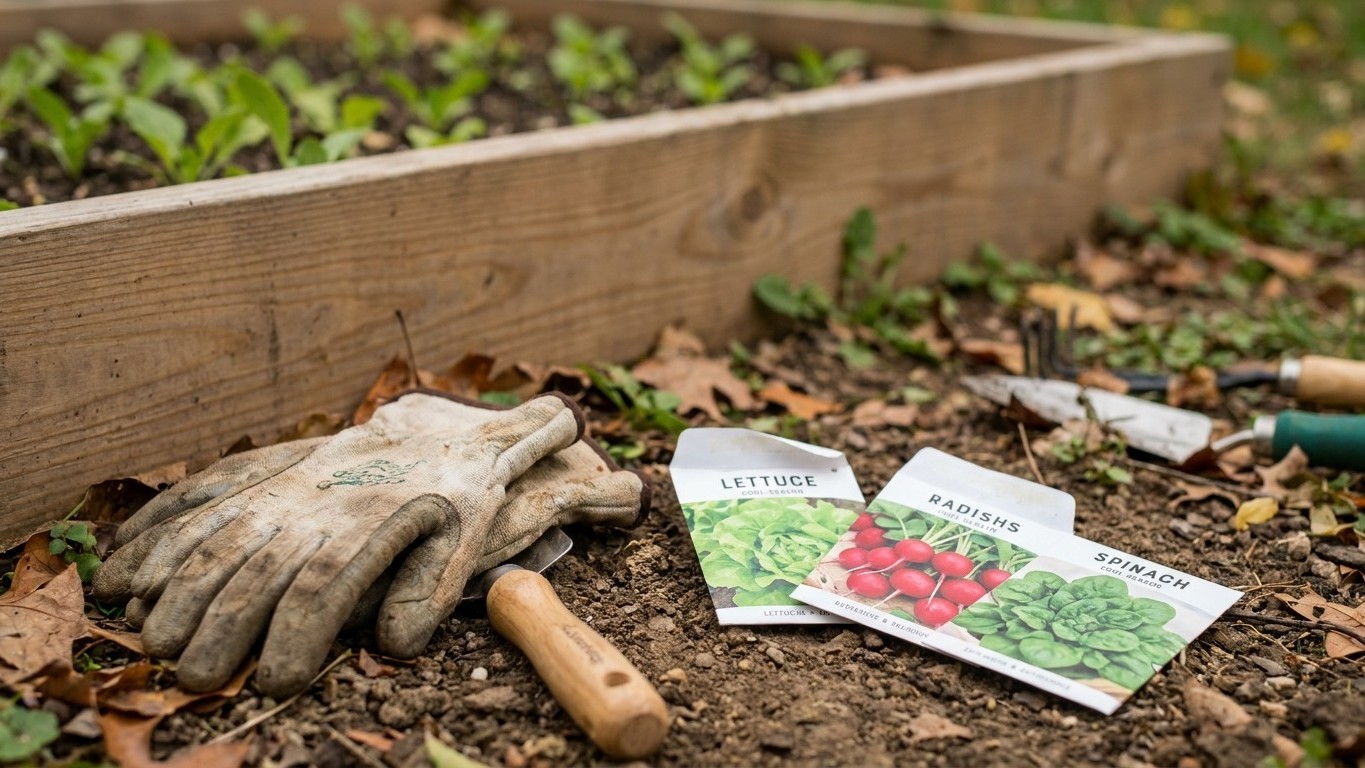
With that window in mind, quick-maturing greens are the safest bet for direct sowing early in the month: spinach, radishes, mesclun mix, arugula, and corn salad can all go from seed to table in three to five weeks, leaving margin even if frost arrives a bit ahead of schedule. Turnips and baby beets sown in the first half of September have a reasonable shot at a harvest too, particularly if the soil is still warm from summer.
Garlic is the other big player, though timing it in September is a judgment call rather than a rule. Many island growers wait until late September or into October to plant cloves, aiming for enough time to root before hard freeze but not so much that green shoots push up before winter. If the ground is workable and you’d rather get it done early, late September plantings under a straw mulch generally do fine.
Beyond that, any bed cleared of summer crops is a candidate for a fall cover crop. Winter rye or fall oats sown now will hold soil through winter, suppress weeds, and add organic matter back in spring. This is not a consolation prize for a slow month. It is one of the higher-value plantings you can make right now, and it costs almost nothing in seed or labor.
What to start under cover
Under cover in September means two different things, and both are worth doing. The first is extending the harvest window for greens using a cold frame or a low poly tunnel. A 30-to-40-day lettuce or spinach crop sown in early September, protected by even a simple row cover, can push its effective harvest date two to four weeks past what open ground would allow, because the cover buys several degrees of protection on the nights when frost first threatens.
Count backward from that October 17 average to check your own arithmetic: a spinach variety needing 35 days, sown September 10, matures around October 15, right at the edge of the frost window. Add a row cover and that margin gets more forgiving. Sow the same spinach on September 25 without protection and you’re gambling against a date that, again, arrives earlier than average in half of all years.
The second use of “under cover” this month is indoors: potting up bulbs for forced winter bloom. Hyacinths, tulips, and paperwhite narcissus started now, given a cool dark spell of roughly twelve to fifteen weeks before bringing them into warmth and light, will flower indoors through the darkest months. This is a genuinely useful September job for anyone who wants color on a windowsill in January.
The two failure modes are the same ones that trip up gardeners every month. Start greens too early in warm September soil and heat can push lettuce straight to bolting before it ever sizes up. Start bulbs too late and they won’t get their full chilling period, which means weak stems and disappointing blooms. Both mistakes come from skipping the count-back step and going by feel instead.
What is ready to pick
September is one of the busiest harvest months on the island, and there’s a lot coming out of the ground at once. Maincrop potatoes are ready once the vines yellow and die back, and digging them before a hard frost damages the tops matters for storage quality. Onions and garlic planted earlier in the season should be curing or just finishing their cure, tops fully browned and necks dry.
Root crops like carrots and beets can stay in the ground longer, sweetening with the cooler nights, but should be watched for the point where continued growth stops paying off. Summer squash and zucchini are winding down, while winter squash and pumpkins are hardening their skins and should come off the vine before the first real frost hits them.
Late corn, cabbage, and broccoli are typically at or near peak in September, and tomatoes still on the vine benefit from row cover on cool nights to buy a few more weeks of ripening. Wild lowbush blueberries are finishing their season by this point, and early apple varieties are starting to come off the trees.
For anything already in storage from earlier harvests, this is a good month to check bins and bags for the first signs of soft spots or mold. Catching one rotting onion or potato before it spreads to its neighbors saves the rest of the batch.
The jobs that matter this month

Harvesting and curing sit at the top of the list, because a potato left in wet ground too long or an onion pulled with a green neck won’t store the way a properly cured one will. Curing onions and garlic means a week or two in a warm, dry, airy spot out of direct sun before trimming and storing.
Soil left bare after harvest should get a cover crop or at minimum a heavy mulch. Bare soil through a Maritime winter erodes, compacts, and loses structure, while a rye cover crop holds it together and feeds it. This is also the month to pull a soil sample if you haven’t tested in a few years, since amendments applied in fall have all winter to work into the ground before spring planting.
Tender bulbs like dahlias and gladiolus need lifting before a hard frost blackens their foliage, then a dry cure before winter storage indoors. Garden cleanup matters too, but selectively: pull and discard anything showing disease or blight rather than composting it, since home compost piles rarely get hot enough to kill off pathogens.
Order garlic and spring bulbs now if you haven’t, since the better varieties tend to sell out by the time everyone else remembers in October. It’s also a sensible month to sharpen and clean tools before they go into winter storage, and to walk fence lines and raised bed frames looking for repairs that are easier to make now than in frozen ground.
What not to do in September
The most common mistake is treating the October 17 average as a fixed deadline rather than a midpoint. Leaving tomatoes, peppers, or squash unprotected on the assumption that frost is still weeks away can backfire hard in a year when the freeze comes early, which happens about as often as it comes late. Keep row cover or old sheets on hand and use them the first cool, clear night the forecast turns sharp.
Planting garlic too early is the opposite error. Cloves put in the ground while soil is still warm can push up green shoots before winter, and that top growth gets damaged by hard freezes, weakening the bulb’s spring performance. Waiting until the ground has cooled, generally later in the month or into October, gives roots time to establish without premature top growth.
Heavy nitrogen feeding this late in the season is another trap. Nitrogen pushes soft, leafy growth that has no time to harden off before frost, making plants more vulnerable rather than more resilient. If anything, fall feeding should lean toward phosphorus and potassium to support root development and overwintering, not lush new leaves.
Finally, resist the urge to do major structural pruning on fruit trees or canes this month. Cuts made now can stimulate a flush of new growth right when the plant should be shutting down for winter, leaving tender tissue exposed to frost. Dormant pruning belongs later, once the plant is fully asleep.
Checking this against your own county
A province-wide frost average is a starting point, not a personal forecast. Prince Edward Island is small, but coastal areas warm and cool more slowly than inland pockets, and low-lying or higher central districts can run a week or two behind Charlottetown’s numbers. If your garden sits in a frost pocket or well away from the moderating effect of the water, build in extra margin on both ends of the season.
For local specifics, the Prince Edward Island government’s agriculture resources are the right place to check current advisories and provincial planting guidance before locking in a date.
Common questions
Can I still plant garlic in September in Prince Edward Island?
Yes, though many growers prefer waiting until late in the month or into October so the ground has cooled enough to prevent premature top growth before winter.
When does the first frost typically hit Prince Edward Island?
The average first fall frost at the Charlottetown station is October 17, but that’s a mean date. In roughly half of all years the actual frost arrives earlier than that, so treat it as a midpoint rather than a safe cutoff.
Is it too late to plant vegetables in September?
Not for quick crops. Spinach, radishes, mesclun, and other fast growers can still mature before frost, especially with a cold frame or row cover extending the window by a few weeks.
What hardiness zone is Prince Edward Island in?
The reference city of Charlottetown sits in Canadian hardiness zone 5b, based on Natural Resources Canada’s system. This is a Canadian zone built on seven climate variables, not a USDA zone, and the two systems don’t convert directly onto one another.
Gardeners who plant by the Moon can check the September 2027 moon planting calendar, a tradition rather than a proven method.