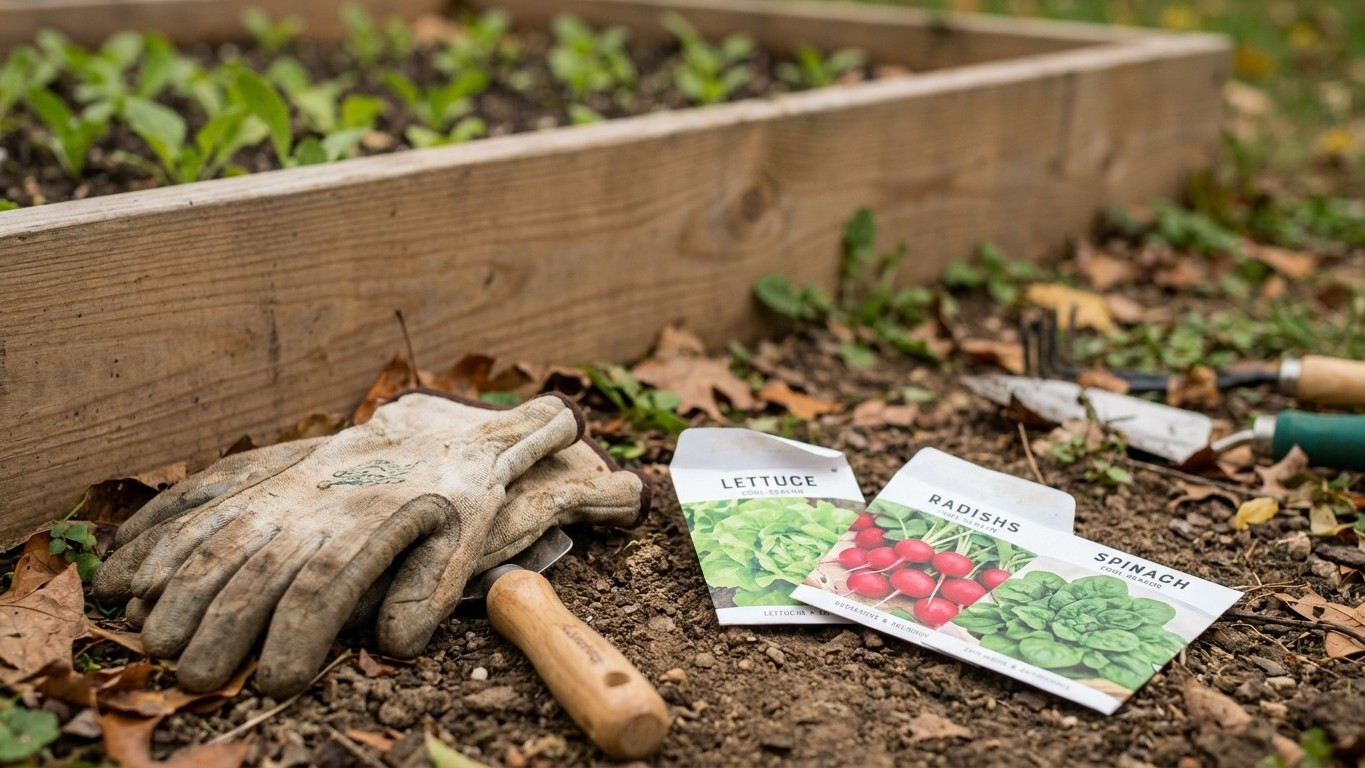

Early September in Saskatchewan still has some growing days left, but the average first fall frost lands on September 18, right in the middle of the month. That single fact reshapes everything: this is not a month for starting new crops that need a full season to mature. It is a month for closing out the garden, tucking in a few frost-hardy exceptions, and getting the ground ready for winter.
What goes in the ground in September

The frost window is the whole story here. Environment and Climate Change Canada’s climate normals for the Saskatoon SRC station put the mean first fall frost at September 18, and that is an average, not a guarantee. In roughly half of all years, frost arrives even earlier. So the question for anything you plant this month is simple: will it mature, or at least survive, before the cold hits?
Warm-season vegetables are off the table entirely. Beans, squash, tomatoes, corn: none of these will produce anything useful started now, and a light frost will finish them fast. What does make sense is a short list of genuinely cold-hardy plantings.
- Garlic and shallots — go in as fall-planted cloves once the soil is workable, timed so roots establish before hard freeze-up but the tops stay dormant. Many Saskatchewan gardeners push this into the tail end of the month or later.
- Spring-flowering bulbs — tulips, daffodils, and crocus need to go into the ground while it is still diggable, well ahead of the freeze that locks the soil for winter.
- Cover crops — fall rye is the standard choice for protecting bare soil over winter and adding organic matter back in the spring.
Outside of those, treat direct-sown greens as a gamble unless they are under some kind of cover. A cold frame or a low tunnel changes the math completely, because it buys several extra weeks past that average frost date. Without protection, anything sown in open ground this month is racing a clock that is already running out.
What to start under cover
Starting seed under cover in September is not about the next spring’s tomatoes. It is about squeezing a last harvest of fast, cold-tolerant greens out of the season that is closing, and about timing bulbs for an indoor bloom later in winter.
Count backward from that September 18 average frost, not forward from a fixed date. Baby-leaf spinach, mache, and arugula can go from seed to harvest in three to five weeks. Sown under a cold frame or unheated hoop house in the first week or two of the month, they can still be cut in October, well after the open garden has shut down, because the cover buys the plants four to six extra weeks of protected growth. Sown later than that, there simply is not enough daylight or warmth left to finish a crop before growth stalls.
The other under-cover project this month is forcing bulbs for indoor bloom. Paperwhites and amaryllis are typically potted eight to twelve weeks before a target bloom date, so if you want flowers around the holidays, September is close to the last practical window to get bulbs into pots.
The two failure modes to watch for run in opposite directions. Start too early under cover and you get leggy, rootbound seedlings with nowhere to go, since the outdoor transplant window has already closed for the season. Start too late and the greens never size up before short days and cold nights stop growth altogether. Splitting the difference by sowing in small batches a week or two apart hedges against both.
What is ready to pick
September is one of the heaviest harvest months of the Saskatchewan garden year, and most of the work now is about timing the harvest to beat that mid-month frost, not extending it.
| Crop | Sign it is ready |
|---|---|
| Potatoes | Vines yellowing and dying back; a light frost on the tops is actually a useful cue to dig soon after |
| Winter squash and pumpkins | Skin resists a thumbnail scratch and the stem has started to dry and corky |
| Onions | Tops have fallen over and begun to dry at the neck |
| Carrots and beets | Shoulders showing at soil level, roots sized to preference; both tolerate light frost well |
| Tomatoes | Pick green fruit ahead of any frost warning to finish ripening indoors |
Kale, Brussels sprouts, and other brassicas are the exception to all the urgency: a touch of frost actually sweetens them, so there is no rush to pull those before the first cold nights. Everything tender, on the other hand, needs to be in before frost, since even a brief dip below freezing can turn a storable crop into a rotting one within days.
The jobs that matter this month

The garden calendar in September is less about planting and more about protecting what is already grown and preparing ground that will sit idle for months.
Harvest and storage work
Curing matters as much as digging. Winter squash needs one to two weeks in a warm, dry spot to harden its skin before it goes into storage, and onions need a similar drying-down period with their tops intact. Skipping this step is the most common reason stored crops rot early. Check anything already in storage from earlier in the season for soft spots, since one rotting onion or potato can spread to its neighbors fast.
Ground and plant preparation
Clear spent plant material out of beds promptly, since diseased leaves and stems left in place over winter give pests and pathogens a head start next season. This is also the month to take a soil sample if you have not done one recently, order seed for crops that sell out of popular varieties by late winter, and plan next year’s rotation while this season’s results are still fresh. Dividing overcrowded perennials can happen now too, while the ground is still workable and roots have time to settle before freeze-up. Hold off on heavy mulching of perennials until the ground has actually frozen; mulching too early traps warmth and moisture that invite rot and rodents rather than protecting the plant.
None of this is filler work. A cured squash lasts months longer than an uncured one, and a bed cleared of disease this month is a healthier bed next spring.
What not to do in September
The most common mistake is trusting a warm afternoon over the calendar. A run of mild days late in the month does not mean the frost risk has passed; the September 18 average is a midpoint, and plenty of years run colder than that. Direct-sowing squash or beans because the air feels like summer wastes seed and garden space that could go to something that will actually mature.
Uncovering cold frames or removing row covers too early after a mild stretch is the same mistake in reverse. Hardy greens under protection can handle a cold snap that would kill exposed plants, but only if the cover stays on through the whole risky stretch, not just the coldest-looking nights.
Fertilizing with nitrogen late in the season is another trap, especially around trees, shrubs, and perennials. Nitrogen pushes soft new growth, and that growth has no time to harden off before freezing temperatures arrive. The result is winter injury that would not have happened if the plant had been allowed to slow down naturally going into fall.
Leaving mature crops in the ground too long is the last one. Potatoes and winter squash sitting out past their ready point, especially through a freeze-thaw cycle, are far more prone to rot in storage than crops harvested and cured promptly.
Checking this against your own county
A province-wide frost date is a starting point, not a forecast for your yard. Saskatoon SRC’s mean first frost of September 18 comes from one weather station, and elevation, proximity to lakes, and simple north-versus-south position across Saskatchewan can shift real frost timing by weeks in either direction. The Canadian hardiness zone rating of 3a, from Natural Resources Canada, also applies to the reference city in these normals, not the whole province, and it is built on a different set of climate variables than the USDA system used elsewhere on this site, so the two are not interchangeable. For local guidance, check the Saskatchewan agriculture and agribusiness resources.
Common questions
Is it too late to plant vegetables in Saskatchewan in September?
For anything needing a full season, yes. Warm-season crops will not mature before the average frost. Cold-hardy greens under a cold frame or tunnel, and fall-planted garlic, are the realistic exceptions.
When should garlic go in the ground in Saskatchewan?
Garlic is typically planted in fall once the soil is workable but before hard freeze-up, often toward the end of September or into the following month, so the cloves can root without pushing top growth before winter.
Should I harvest tomatoes before the first frost?
Yes. Since the average first frost falls around September 18, pick green tomatoes ahead of any frost warning and let them ripen indoors rather than risk losing the fruit overnight.
Does a light frost hurt kale or carrots?
No, and it often helps. Kale, Brussels sprouts, carrots, and beets tolerate light frost well, and cold exposure tends to improve their flavor rather than damage the crop.
Gardeners who plant by the Moon can check the September 2027 moon planting calendar, a tradition rather than a proven method.