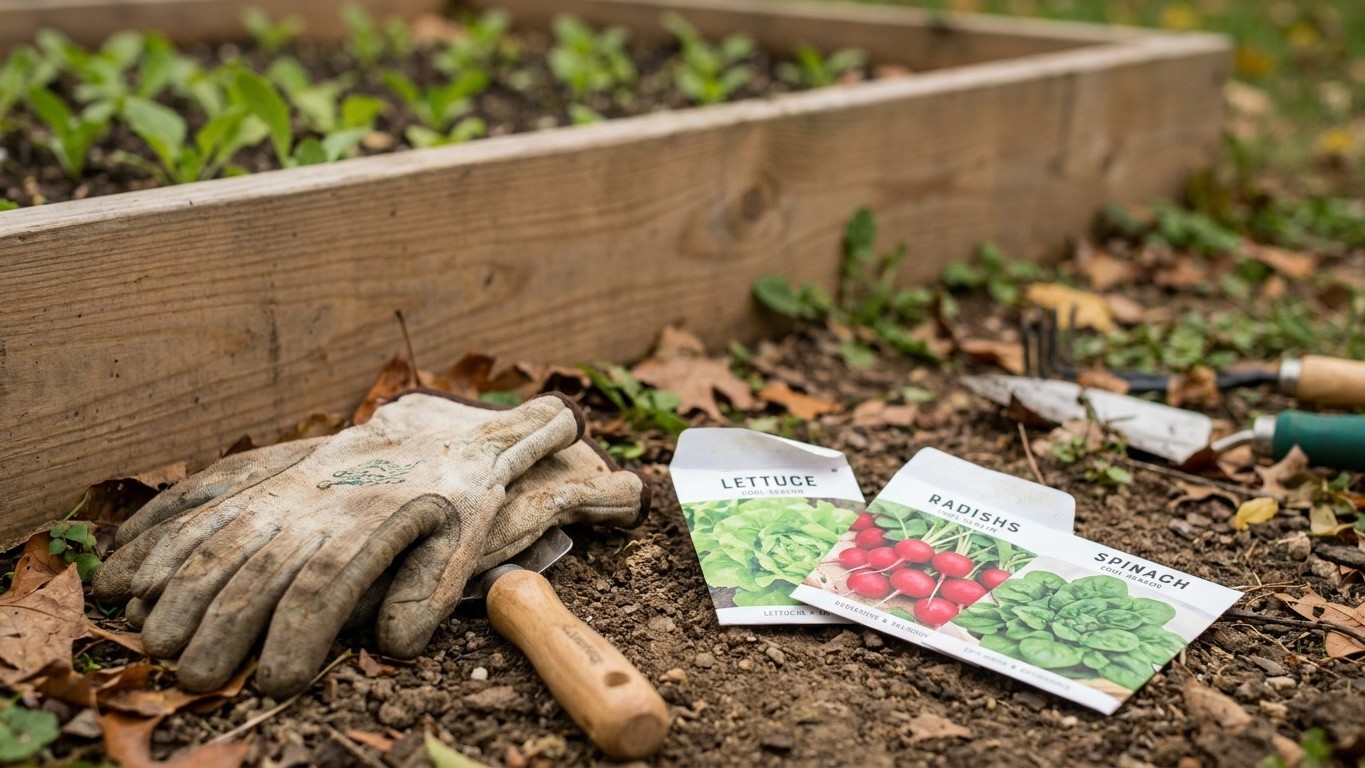

September in South Carolina means fall vegetable season, not a slowdown. With the first fall frost still eleven to thirteen weeks away across most of the state (November 20 to December 5, per NOAA), there’s a wide window to get cool-season crops established while the soil is still warm enough to germinate seed reliably. The trick is choosing crops whose days-to-maturity actually fit inside that window.
What goes in the ground in September

Soil temperature, not the calendar, decides what germinates this month. Even as air temperatures start easing off their August peak, South Carolina soil stays warm well into fall, which is exactly what fast-germinating fall crops need. That warmth is an asset here, not a risk, because the frost window (November 20 to December 5, NOAA NCEI 1991-2020 normals for station USW00013880) is still comfortably far off for anything with a reasonable maturity date.
Direct sowing works well this month for beets, carrots, turnips, radishes, collards, kale, mustard greens, and Swiss chard. Bush beans can still go in during the first half of September in the Midlands and Coastal Plain, but that’s a tighter call since beans need roughly 50-60 frost-free days and a late-month sowing starts cutting it close against the earliest frost dates. Spinach and lettuce do better sown from mid-to-late September, once the worst of the heat has broken, since both crops germinate poorly in hot soil and bolt if they come up too early.
Transplants earn their keep this month too. Broccoli, cabbage, cauliflower, and Brussels sprouts started as seedlings in August under shade go into the ground now, giving them a head start that direct-seeding can’t match before frost arrives. Garlic and shallots are not a September crop in South Carolina; they typically go in during October and November once soil temperatures drop further, so hold that seed stock rather than rushing it into warm ground.
The upstate corner of the state runs on a noticeably tighter calendar than the coast. Zone 7a conditions near the mountains mean a shorter runway to frost than Zone 9a conditions near Charleston, so gardeners in Oconee or Pickens counties should treat the earlier end of any maturity window as the safer target, while Lowcountry gardeners have a bit more slack to work with.
What to start under cover
Working backward from the frost window is the only arithmetic that matters here. If first frost lands somewhere between November 20 and December 5, and a crop needs 70 days to reach harvest size, that seed needs to be in the ground (or in a cell tray) by early September at the latest to have any real margin. Push it later and you’re gambling on a mild, late frost that the normals don’t promise.
Starting seedlings under cover, whether in trays on a porch, in a cold frame, or under shade cloth, buys protection from both ends of the problem. Early September afternoons in South Carolina can still hit the high 80s, hot enough to stress newly germinated brassica and lettuce seedlings if they’re started in open sun. A few weeks under light shade lets them establish roots before they face full exposure in the garden bed.
Two mistakes show up every year. Starting too early, chasing the first hint of cooler weather, leaves transplants sitting in trays too long; they get rootbound, stunted, and never fully recover once transplanted. Starting too late, waiting for that first truly crisp morning, eats into the maturity window until there isn’t enough time left before frost. The safer approach is to seed cabbage, broccoli, cauliflower, and kale under cover now, harden them off over a week or two, and set them into the garden by early-to-mid October at the outside edge.
Onion seed for spring bulb transplants can also go into trays late this month in cooler upstate counties, timed so seedlings reach pencil thickness before winter dormancy sets in.
What is ready to pick
Summer crops are winding down, not finished. Tomatoes, peppers, eggplant, and okra planted back in spring are still producing through September, and this is the month to keep picking okra pods young, at two to three inches, before they turn woody. Southern peas planted in early summer are usually ready for shelling now, and a dry, brittle pod is the clearest sign they’ve matured on the vine.
Sweet potatoes deserve particular attention this month. They’re typically dug before the first frost damages the vines and while soil is still workable, so late September through October is the window to check a test hill and see whether the tubers have sized up. Pulling them too early sacrifices yield; leaving them too long into cold, wet soil invites rot.
Summer squash and cucumbers still bearing should be harvested promptly and often, since letting fruit oversize on the vine signals the plant to stop producing. If powdery mildew has taken hold on squash leaves, as it often does by late summer, that’s a sign the plant’s productive window is closing regardless of how many green fruit remain.
For stored crops from earlier in the season, this is also a good month to check garlic and onions curing in storage for any that have gone soft at the neck, a sign they won’t keep and should be used first.
The jobs that matter this month

Soil preparation for the fall garden pays back directly. Beds that held spring tomatoes or squash have been drawing down nutrients all summer, and working in compost before transplanting fall brassicas gives them the fertility boost they need to size up before cold weather slows growth. This is also the last comfortable window to test soil pH before fall planting, since amendments like lime take weeks to shift pH and won’t help much if applied after transplants are already in the ground.
Mulching serves double duty now. A layer of straw or shredded leaves around new fall transplants holds moisture during what can still be a dry, hot stretch, and later in the season that same mulch will buffer root zones against the season’s first cold snaps. Watering rhythm matters just as much: newly transplanted brassicas need consistent moisture to establish, and a missed week during a September dry spell can stunt them permanently in a way they won’t outgrow later.
Succession sowing keeps the harvest coming rather than arriving all at once. Radishes, lettuce, and turnips sown every two to three weeks through September stagger maturity dates, which matters more than most gardeners assume, since a single sowing date means a single, brief harvest window.
Pest scouting shouldn’t slip this month either. Fall armyworm and cabbage looper populations often peak on new brassica transplants in September, and catching an infestation early, while plants are small, is far easier than fighting it once caterpillars have shredded half a row of kale. Checking the undersides of leaves twice a week during establishment catches problems before they spread.
What not to do in September
The most common mistake is treating warm afternoons as permission to plant heat-loving crops. A run of 85-degree days in mid-September doesn’t extend the tomato or pepper planting season; those crops need 60 to 90 days to fruit, and starting them now leaves no realistic path to harvest before frost arrives between November 20 and December 5. Save that impulse for spring.
Pulling shade cloth off young fall transplants too soon is another recurring error. Gardeners see a mild, overcast week and assume the heat stress is over, then a return of full sun scorches seedlings that hadn’t finished hardening off. It’s safer to remove shade gradually over several days than all at once.
Heavy nitrogen applications on root crops like carrots and beets also backfire this month. Nitrogen pushes leafy top growth at the expense of root development, so a carrot bed fed like a leafy green crop ends up with lush foliage and disappointing roots underneath. Root crops do better with balanced or lower-nitrogen feeding once the tops are established.
Finally, leaving disease-prone summer crops in the ground past their productive life invites trouble. Squash vines succumbing to powdery mildew or vine borers should come out promptly rather than lingering as a source of spores and overwintering pests near the new fall bed.
Checking this against your own county
A state-wide September calendar is a starting point, not a fixed instruction. South Carolina’s hardiness zones range from 7a to 9a under the USDA system, and that spread means elevation and distance from the coast can shift both the first fall frost and the last spring frost by several weeks in either direction. A Lowcountry garden near Charleston runs on a milder, longer calendar than an upstate garden near Greenville or in the mountains, where frost arrives sooner and lingers later.
For planting dates tuned to a specific county, Clemson Cooperative Extension publishes region-specific guidance that accounts for these local differences far than any state-wide average can.
Common questions
Is September too late to plant tomatoes in South Carolina?
For most of the state, yes. Tomatoes need 60 to 90 days to fruit, and with first frost falling between November 20 and December 5, a September planting leaves little realistic margin to reach harvest before cold weather ends the season.
Can garlic go in the ground in September?
Not typically. South Carolina garlic is usually planted in October and November, once soil temperatures cool further. Planting in September puts cloves into ground that’s still too warm for the dormancy period garlic needs before active root growth.
Why are my fall lettuce seeds not germinating?
Lettuce germinates poorly in hot soil, and early September soil in South Carolina can still be warm enough to inhibit it. Waiting until mid-to-late September, or germinating seed in a cooler spot before transplanting, usually solves the problem.
How much difference does location make within the state?
Considerably. USDA hardiness zones across South Carolina span 7a to 9a, and upstate counties can see frost weeks earlier than coastal areas near Charleston, so a planting date that works in the Lowcountry may be too late for the Upstate.
Gardeners who plant by the Moon can check the September 2027 moon planting calendar, a tradition rather than a proven method.