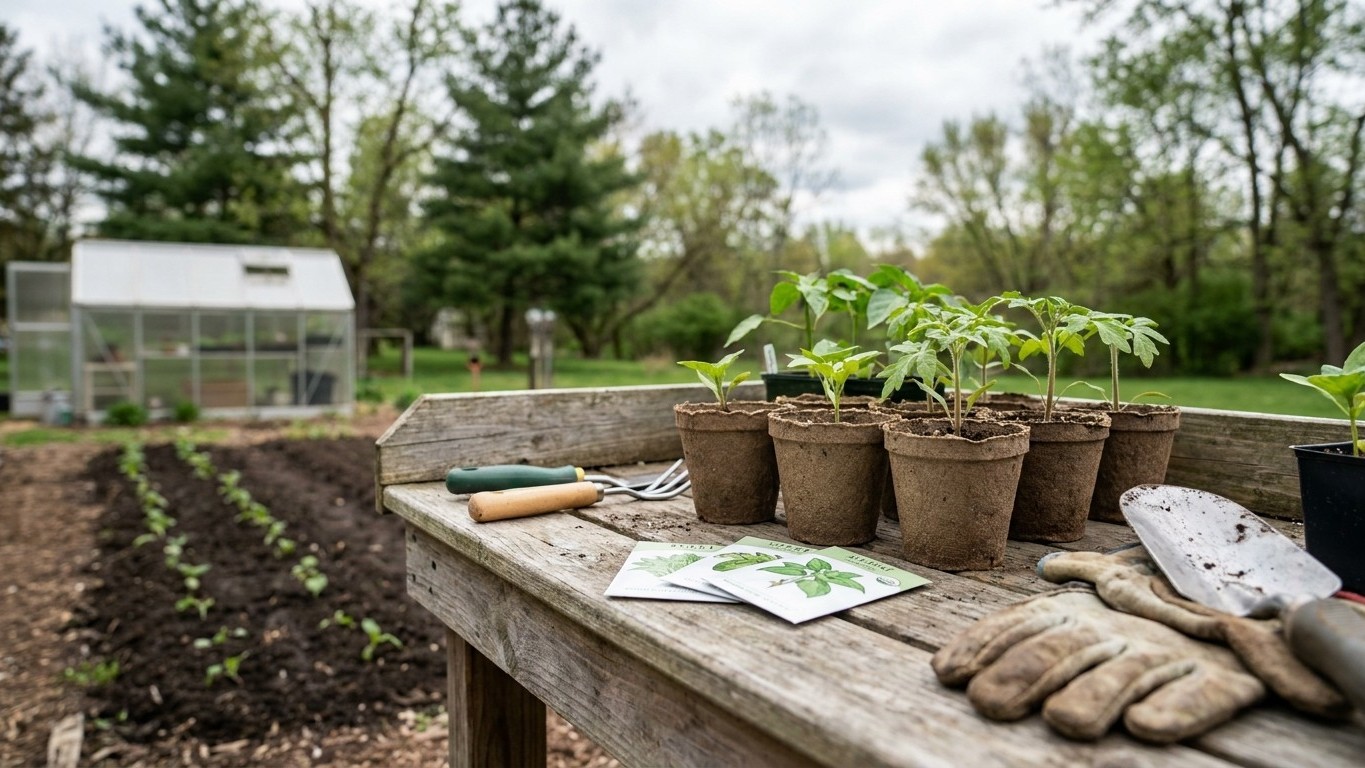

By April, most of Virginia can go ahead with cold-hardy crops outdoors: peas, lettuce, spinach, carrots, beets, radishes, onion sets, and potatoes all tolerate the frost risk that lingers into this month. Cold-hardy transplants like broccoli and cabbage can follow once hardened off. Tomatoes, peppers, and other warm-season crops still need to wait, especially away from the coast.
What goes in the ground in April

The decision this month hinges on one thing: where your county sits relative to the last spring frost, not what the calendar says. At the coastal reference station used for Virginia’s climate normals, the 1991-2020 data puts the last spring freeze somewhere between March 20 and April 3. That means early April in the Virginia Beach area often still carries a real frost risk, and by the back half of the month that risk has mostly cleared. Move inland or up in elevation and the math changes fast. The Blue Ridge and southwest Virginia run weeks behind the coast in spring, so treating the whole month as frost-free there is a mistake.
That single fact splits April’s planting list into two groups: what shrugs off a light frost, and what a frost kills outright.
| Category | Examples | April status |
|---|---|---|
| Frost-hardy, direct sow | Peas, spinach, lettuce, radishes, carrots, beets, mustard greens, arugula | Safe statewide, even before the last frost clears |
| Alliums and roots | Onion sets, seed potatoes, shallots | Safe as soon as soil is workable |
| Hardened cold-tolerant transplants | Broccoli, cabbage, cauliflower, kale starts | Fine once hardened off, even ahead of the final frost |
| Warm-season crops | Tomatoes, peppers, squash, beans, corn | A gamble in early April, still risky in the mountains through the month |
Soil temperature matters as much as air temperature. Peas and spinach will germinate in cold, damp soil that would rot a bean seed. Onion sets and potatoes tolerate a frost on the foliage and keep growing from below. Broccoli and cabbage transplants, hardened off over a week of increasing outdoor exposure, shrug off a light freeze that would flatten a tomato seedling overnight. If you’re gambling on warm-season crops this early, know that a late cold snap inside the March 20 to April 3 window (or later, inland) can undo weeks of head start in one night.
What to start under cover
Work backward from your local last-frost window instead of a fixed date. Tomatoes and peppers typically need six to eight weeks indoors before they’re ready to go into the ground after the frost risk passes. If your area’s last frost falls in early April, those seeds should already be up and growing by now, ideally started in mid-to-late February. In the mountains, where frost lingers into May, there’s still time in April to start tomato and pepper seed indoors for a May transplant date.
Cucumbers, summer squash, and melons run on a shorter clock. Three to four weeks before your expected transplant date is enough. Starting them too early leaves you with rootbound, leggy vines sitting in trays waiting for warm soil, a common failure that stunts the plant before it ever reaches the garden. Starting too late means you miss the stretch of warm weather these crops need to size up before the shorter fall days slow them down.
Cool-season crops are more forgiving under cover. A second and third round of lettuce, spinach, and brassica transplants started indoors or in a cold frame this month keeps a steady supply coming as the earlier sowings mature and get planted out. That succession habit, rather than one big planting, is what keeps a harvest going instead of arriving all at once and then stopping.
What is ready to pick
April rewards whoever planted in fall or late winter. Overwintered kale, collards, and spinach sown the previous autumn are usually at their peak now, sweeter after exposure to cold than they were in fall. Asparagus beds that are three years old or older start sending up spears this month, and the rule for picking is simple: snap or cut spears once they reach about 6 to 8 inches, before the tips loosen and start to fern out. Rhubarb stalks thicken enough for a first light harvest, though it’s worth leaving at least a third of the plant’s stalks standing to keep the crown strong for later.
Cold frame greens, if you kept one running through winter, are usually bolting or close to it by now, so this is the window to clear them rather than let them go to seed. Radishes sown in early March are often ready within three to four weeks of sowing, so check the shoulders of the roots pushing up through the soil; pull a test one before committing to the whole row.
In storage, this is also the month things start to turn. Winter squash held since fall can develop soft spots near the stem end. Potatoes may start sprouting eyes if they’ve been kept somewhere too warm. Stored onions occasionally go soft at the neck. Check bins now and pull anything showing rot before it spreads to the rest of the batch.
The jobs that matter this month

Soil preparation done now sets up everything that follows. Working compost or aged manure into beds before the bulk of spring planting gives it time to integrate rather than sitting as a raw layer next to root systems. Mulching follows close behind, both to hold moisture as temperatures climb and to get ahead of the first flush of weeds before they establish.
Staking, watering, and pest scouting
Peas and any early climbing crops need their supports in place now, before the vines sprawl and tangle. Trying to retrofit a trellis around established vines damages more roots and stems than it’s worth. Watering rhythm matters more than volume at this stage: deep, infrequent watering on new transplants encourages roots to grow down rather than staying shallow and dependent on frequent light watering.
Pest scouting pays off disproportionately this month because early populations are small and easy to knock back. Check the undersides of brassica leaves for the first aphid clusters or cabbage moth eggs, and look at emerging asparagus spears for asparagus beetle. A few minutes now, catching pests while numbers are low, beats a heavier response in six weeks.
Finishing winter jobs before the window closes
If dormant pruning of fruit trees, grapes, and berry canes hasn’t happened yet, April is close to the last practical window before buds break fully and pruning cuts into this season’s fruiting wood. Tool cleaning and sharpening, bed repairs, and fencing checks all belong on the list before the garden fills in and there’s no time to step back and do maintenance. Soil testing, if it hasn’t been done, still gives useful results now, though amendments recommended by the test take longer to act if applied late.
What not to do in April
The most common mistake is planting warm-season crops into cold soil because the air felt warm for a stretch. A run of 70-degree afternoons doesn’t mean the soil eight inches down has caught up, and tomatoes or peppers set into cold, wet soil often sit and sulk rather than grow, becoming more vulnerable to root disease in the process. Wait for the soil itself to warm, not just the air.
Uncovering cold frames, row covers, or hardened transplants too early after a mild spell is the second trap. The last frost window (March 20 to April 3 at the coastal reference point, later inland) is a range built from decades of data, not a guarantee that a single warm week means frost season is over. A cold night can still follow a warm one inside that window.
Applying nitrogen fertilizer at the wrong point also causes trouble this month. Heavy nitrogen on young transplants before their root systems are established encourages soft, leafy growth that’s more attractive to aphids and more vulnerable to a late cold snap. It’s better to feed lightly at transplanting and build up as the plant establishes, rather than front-loading fertilizer before the plant can use it.
Working wet soil is the quieter mistake. Stepping into a bed that’s still saturated from spring rain compacts the soil structure for the whole season, and that damage is hard to reverse without a full season of amendment. If soil sticks to your boot in a solid clump rather than crumbling, it’s too wet to work.
Checking this against your own county
A statewide answer for April is a starting point, not an instruction for your yard. The frost data comes from one coastal Virginia Beach station, the mild end of the state’s range. Elevation change in the Blue Ridge and the generally later spring across southwest Virginia can push these planting windows back by two to four weeks compared to the coast. The USDA hardiness zone range for Virginia, 5a to 8b, spans that same gap, and it’s built on one variable, extreme minimum winter temperature, not spring timing.
For a planting window matched to your county, check the Virginia Cooperative Extension service, which maintains local planting calendars and frost data by region.
Gardeners who plant by the Moon can check the April 2027 moon planting calendar, a tradition rather than a proven method.
Common questions
Is it too late to plant peas in April in Virginia?
No. Peas tolerate cold soil and light frost, and April sowings across most of the state still have time to mature before summer heat shuts pea production down.
Can tomatoes go outside in April in Virginia?
Only in the mildest coastal areas once the last frost window (March 20 to April 3 at the coastal reference station) has passed, and only with hardened-off transplants. In the mountains and southwest, wait longer.
What vegetables are ready to harvest in April in Virginia?
Overwintered kale, collards, and spinach, plus early asparagus spears once beds are established, and a first light rhubarb harvest. Early radishes sown in March may also be ready.
Why is my region different from the statewide April planting advice?
The frost dates behind statewide guidance come from a single coastal station. Elevation and the north-to-south spread of the state shift real frost timing by weeks, so local Extension data is more accurate than a statewide average.