
Pink Lady is a brand name stamped on fruit at the register. The tree a grower actually plants, and the variety a nursery catalog lists, is Cripps Pink. One horticultural reference writes it out plainly as “Cripps Pink (Pink Lady®),” putting the registered trademark symbol on the second name and leaving the first untouched. That distinction decides what you order: search for “Pink Lady tree” at most nurseries and you may come up empty, because the variety on the tag is Cripps Pink.
What Honeycrisp actually is

Before the color and the naming confusion, here’s what actually lands in the picking bin. Some apple varieties travel under two names the same way this one does: Mutsu sold at retail as Crispin, and this variety sold under the trademark Pink Lady while its horticultural name stays Cripps Pink. A grower ordering a tree, or a shopper checking a nursery tag, needs the second name to find the right stock.
- Ripens late October to early November, after Fuji
- Flavor: tart and distinctive, with firm, somewhat dry flesh
- Best suited for fresh eating as a late dessert apple
- Keeps well, with a long shelf life
Fruit and flavor
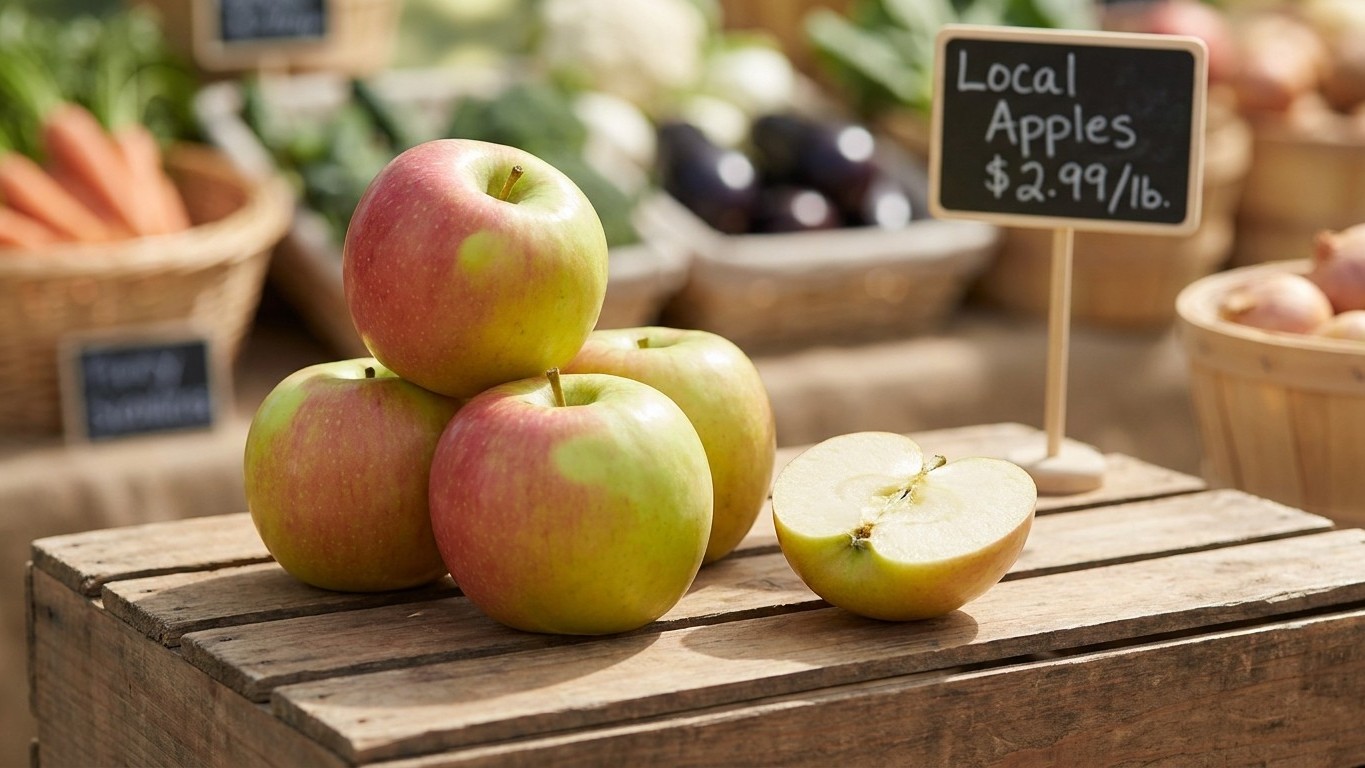
The fruit itself runs small to medium, with a blush that covers anywhere from 25 to 70 percent of the skin in pink-red over a lime-green to yellow background. That range matters at the orchard gate: two apples off the same tree can look noticeably different depending on sun exposure and how long they hung, and neither one is a defect.
The flesh texture sets it apart from typical supermarket dessert apples. Rather than the wet crunch of a Honeycrisp or the soft give of a Golden Delicious, this variety runs firm and somewhat dry, with a tartness that reads more assertive than sweet. That combination, tart plus firm plus dry, is a large part of why it holds up so well after picking: there’s less moisture to lose and less sugar to ferment.
Classified simply as a dessert apple, it’s built for the fruit bowl and the lunch box rather than the pie dish, though the firm flesh means it won’t turn to mush if someone bakes with it anyway.
Will it grow where you are
Hardiness
The published facts available for this variety profile don’t carry a specific USDA hardiness zone range for Cripps Pink (Pink Lady®). What they do carry is the harvest date, and that alone tells you something about site selection: fruit that ripens late October to early November, after Fuji, needs a long, frost-free autumn to finish properly. In a region where the first hard freeze arrives in early October, this tree may never get the season it needs to develop full color and flavor.
Winter chill
Winter chill, the number of cold hours a tree needs during dormancy before it will break bud reliably in spring, isn’t published in the facts available for this variety either. That’s worth flagging rather than guessing at, because chill requirement is one of the biggest reasons a tree planted in the wrong climate underperforms: too little winter cold and the tree flowers unevenly or late; too much simply adds to bloom delay without harm. Where a specific number isn’t published, the safer move is to ask a local nursery or extension office whether the variety has performed reliably in your county before planting.
What the harvest window does confirm is that this is a long-season apple. It needs frost-free days stacked up through late October into November, which puts it more at home in regions with mild, extended falls than in short-season climates where the growing year wraps up by mid-October.
Site selection matters more than any zone chart for a late-ripening apple like this one. A south-facing slope that holds afternoon sun into October, air drainage that lets cold settle away from the trunks rather than pooling around them, and distance from frost-prone low ground all buy extra weeks that a tree squeezed into a short growing season simply doesn’t have.
What to plant beside it
This is the question most readers bring to a variety page, and it deserves a straight answer: the facts available for this profile don’t name specific pollination partners for Cripps Pink (Pink Lady®). Rather than guess at compatible varieties, the honest answer is that pairing needs to be worked out with a local nursery or extension office that can confirm bloom timing for your specific climate.
The general rule still applies
What can be said with confidence is the principle that governs nearly every apple tree in a home orchard: nearly all varieties crop better with a compatible partner. A lone tree may set some fruit off its own pollen or from a distant flowering crabapple, but yields run thin and inconsistent compared with an orchard carrying two or more varieties blooming at the same time.
Bloom timing, not just harvest timing
Because this variety ripens so late in the season, its bloom timing the following spring is worth checking against any partner tree before planting both. Two trees that flower two or three weeks apart effectively can’t pollinate each other no matter how many bees visit, so matching bloom windows matters more than matching harvest dates.
In practice, many home growers solve the matching problem by planting a crabapple nearby instead of tracking down a second full-size variety. Ornamental crabapples bloom over a long stretch and produce abundant pollen, which makes them a reliable backup when a specific late-season partner isn’t stocked at the local nursery.
For a full rundown of which varieties bloom together, which pollen is sterile, and which combinations are excluded because one variety is a parent of the other, see our apple pollination guide, which covers exactly the exclusions and partner charts a single variety profile can’t responsibly guess at.
Growing it well

Fire blight
Cripps Pink (Pink Lady®) carries a fire blight rating of susceptible, and no additional disease resistances are claimed in the published catalog data for this variety. Susceptible doesn’t mean doomed: it means the grower needs to pay attention, especially during bloom and the weeks of soft new growth that follow, when the bacteria that causes fire blight spreads fastest through wet, warm weather. A susceptible variety planted where fire blight has already shown up in nearby orchards or ornamental pears is taking on real risk; the same tree planted in a region with no local history of the disease is a much safer bet. Cutting out any blackened, wilted shoot tip as soon as it appears, well below the visible damage, and disinfecting tools between cuts is the standard response once symptoms show.
Habit and thinning
The source material for this profile doesn’t publish figures on growth habit or biennial bearing tendency for this variety, so nothing here should be taken as confirmed on those points. What can be said generally is that dessert apples with a heavy, tightly clustered fruit set, common in varieties bred for retail-size uniformity, tend to benefit from thinning down to single fruits spaced several inches apart along the branch. Thinning reduces limb strain, improves finish color and size on the fruit that remains, and lowers the odds of a tree overproducing one year and resting the next.
Because this variety’s small-to-medium fruit size and colorful blush are part of what makes it marketable, growers aiming for that retail look have extra reason to thin. Less crowding on the spur means better sun exposure on each remaining apple, which is what pushes that pink-red blush toward the higher end of its 25 to 70 percent range rather than the lower end.
Picking it and keeping it
The harvest window for Cripps Pink (Pink Lady®) runs late October into early November, after Fuji has already come off the tree. That’s a rough calendar marker, not a date to circle. The tree itself gives better signals than any calendar once the color starts filling in.
- Lift and twist: cup a fruit in your hand, lift it gently upward, and give it a slight twist. A ripe apple separates from the spur with almost no resistance; one that clings and needs force to pull free isn’t ready yet.
- Seed color: cut one test apple open. Pale or greenish seeds mean more time is needed; seeds that have turned brown to dark brown are a strong sign the batch is ready.
- Ground color: look past the pink-red blush at the background skin color, the part that never sees direct sun. As the apple matures, that background shifts from a hard green toward a softer yellow or lime-green.
Storage
Where this variety earns its reputation is after picking. Described as a late dessert apple that keeps well and holds a long shelf life, it’s built to be one of the last apples still in good shape from an early-season harvest, well after softer, earlier varieties have gone soft or mealy. That durability lines up with the fruit’s firm, somewhat dry flesh: less moisture on hand means less to lose over months in storage.
Common questions
Is Pink Lady the same apple as Cripps Pink?
Yes. Cripps Pink is the variety name; Pink Lady is a trademark used on fruit sold at retail. The tree a nursery ships is labeled Cripps Pink.
Why does Pink Lady carry a trademark symbol?
The mark applies to the retail name, not the horticultural variety. That’s why one guide writes it as “Cripps Pink (Pink Lady®),” with the symbol on the second name only. Nothing further about licensing is published here.
Can I grow a Cripps Pink apple tree at home?
It depends on your climate. Since the variety needs a long, frost-free fall to ripen in late October or early November, and both hardiness zone and chill hour figures aren’t published for it, checking with a local nursery about performance in your area is the safer step before ordering.
What does a Cripps Pink apple taste like?
Tart and distinctive, with firm, somewhat dry flesh rather than a juicy crunch. It’s a dessert apple built for fresh eating and long storage rather than baking.
How long does a Cripps Pink apple keep in storage?
No specific storage duration in days or weeks is published for this variety, but it’s described as keeping well with a long shelf life, making it one of the longer-lasting late-season dessert apples.
Related guides
- Idared Apple: Worth Growing, If Fire Blight Is Not Your Problem
- Jonagold Apple: A Fine Apple That Cannot Pollinate Anything
- Jonamac Apple: Ripening Late September, and What to Plant Beside It
- Red Delicious Apple
- Paula Red Apple
- Jerseymac Apple
- Yellow Transparent Apple: Ripening Late July, and What to Plant Beside It