
Coastal and Southern California don’t have a frost date to sow around. NOAA records show zero freezing days in an average year across these regions, so the sowing question turns entirely on soil temperature, not frost risk. Northern California, the Central Valley and the Sierra foothills are a different story: they do freeze, and the timing math there depends on local frost dates this page doesn’t cover.
The short answer
Start with what NOAA actually records for coastal and Southern California: no freeze occurs in an average year. The 1991-2020 Climate Normals list a frost-free season of 365 days, and thirty years of daily records show zero days at or below 32°F. That’s not a rounding error or a mild-winter fluke, it’s the climate baseline for stations along the coast and through the southern basins. If you garden in Los Angeles, San Diego, the Bay Area’s milder pockets, or similar frost-sheltered spots, there is no fall frost date to count backward from.
That changes how you think about timing. Utah State University Extension’s guidance on pumpkins is built around a 45 to 55 day window measured from the moment a flower opens, not from the day you drop a seed in the ground. In a place with a hard frost deadline, you’d count back 45 to 55 days from that date to find the latest flower that still has time to finish. In frost-free coastal and Southern California, that backward count doesn’t hit a wall. Instead, the deadline becomes whatever date you actually want ripe pumpkins in hand, usually late October for carving pumpkins tied to Halloween, or earlier if you’re growing for a farm stand or a fall table display.
Work it out from that target date instead. If you want pumpkins colored and hardened by late October, the last flowers that can still make it need to open by roughly 45 to 55 days before that, depending on the variety and how warm the stretch runs. Push flowering later than that window and you’re gambling on fruit that sets color slowly, sits underripe, or simply runs out of warm days before the rind hardens, even without frost forcing the issue.
Northern California, the Central Valley and the Sierra foothills freeze in an ordinary year, and this page doesn’t carry a frost date for those regions. If you garden there, the 45 to 55 day flowering window still applies, but you need a local frost date to count backward from, and that’s not a figure to guess at or borrow from a coastal station. Check regional frost data before finalizing a sowing date if you’re inland or at elevation. Treating Sacramento or Redding like Los Angeles is the single most common timing mistake in this state, and it runs in both directions: gardeners in the Central Valley sometimes assume they have coastal California’s frost-free luxury, and get caught out.
When to sow here
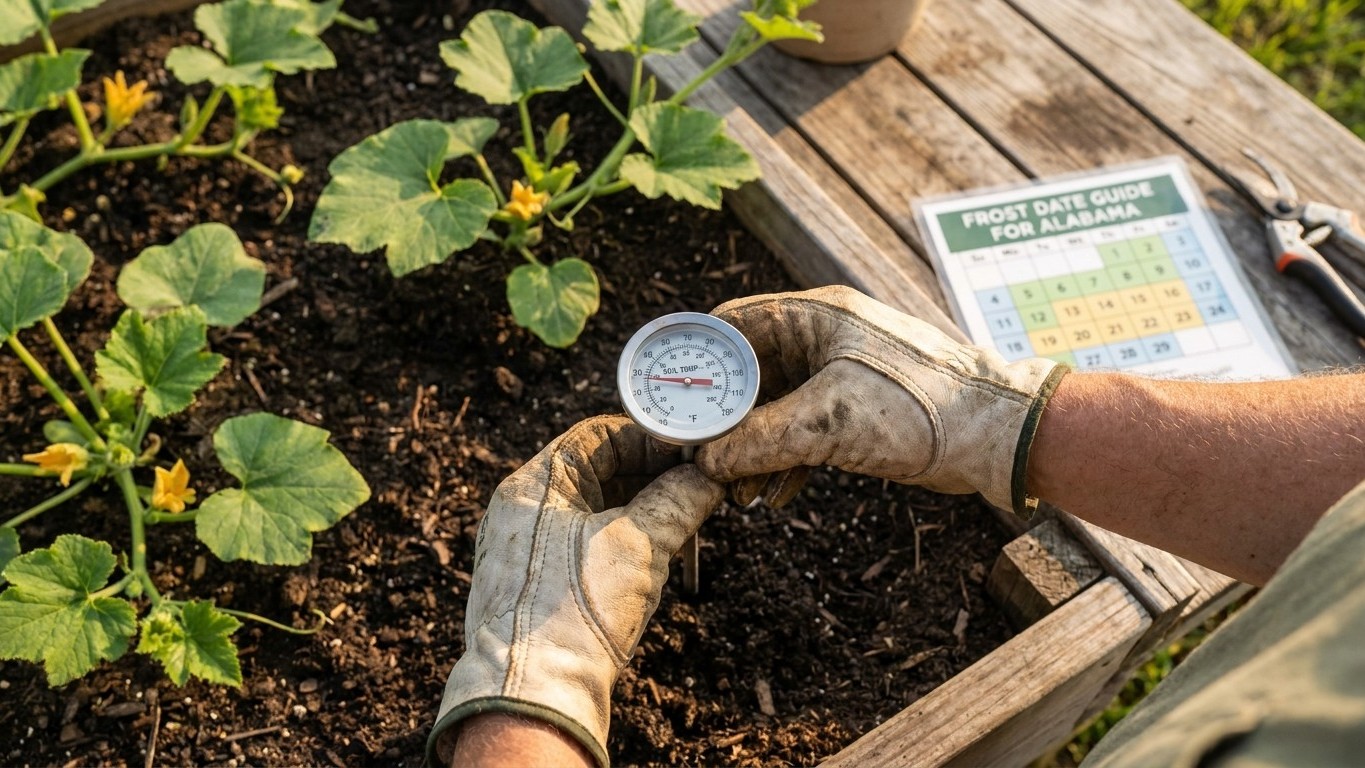
Soil temperature, not frost, is the trigger for coastal and Southern California, and it’s a number worth actually checking with a thermometer rather than guessing from the calendar.
- Push a soil thermometer two to three inches into the bed in the morning, before the sun has warmed the surface, and look for a steady 65°F reading over several days rather than a single warm afternoon.
- Don’t treat this as tied to any frost date. In frost-free coastal and Southern California there’s no last-frost marker to measure from in the first place, and even where frost does occur, soil lags well behind air temperature, sometimes by weeks, because ground holds cold long after the air has warmed.
- If you want to nudge that date earlier, laying row cover or plastic mulch over the bed traps heat and can bring soil up to sowing temperature roughly two weeks sooner than bare, uncovered ground.
- Sow once the 65°F threshold holds, then count forward to your expected flowering window and check that against your target harvest date, working the 45 to 55 day flowering-to-maturity figure in from there.
- Variety choice doesn’t change the sowing rule. Whether you’re growing Connecticut Field, Jack Be Little, Big Max, Howden, Atlantic Giant, Casper, Baby Bear, Lumina or Cinderella, the soil still has to hit 65°F before seed goes in the ground.
- In Northern California, the Central Valley and the Sierra, add a second check: confirm your local last-frost date has passed before relying on soil temperature alone, since a late cold snap can undo an early planting even if the soil briefly warmed.
What goes wrong here
- A late flower that never colors. Flowers that open too close to your harvest target don’t get the full 45 to 55 days to mature, and the fruit stalls out green or pale. In coastal and Southern California, count back from your actual harvest goal, not from a frost date that doesn’t exist here, and hold off sowing later varieties past the point where flowering would push past that window.
- A fruit caught by frost. This risk belongs to Northern California, the Central Valley and the Sierra, not the coast or the south. Where freezing does occur, harvest with the stem attached before a frost is forecast, since a frozen rind breaks down fast even if the flesh looks fine at first. Coastal and Southern California gardeners can mostly set this worry aside and focus on getting fruit off the vine before fall rains soften the soil.
- A vine that dies back before the skin hardens. In much of California this comes from heat and water stress rather than cold: a vine pushed through a dry, triple-digit stretch, or hit by watering restrictions during a drought year, can collapse before the rind has fully cured. Keep irrigation consistent through fruit set and curing, mulch to hold soil moisture, and give plants some afternoon shade cloth if a heat spike lines up with the ripening stretch.
Squash bugs and cucumber beetles complicate all three of these failures by weakening vines mid-season. This site covers both pests on their own California pages: squash bugs in California and cucumber beetles in California.
Common questions
Does frost limit pumpkin planting in California?
Not along the coast or through Southern California, where NOAA records show no freeze in an average year. It does limit planting in Northern California, the Central Valley and the Sierra, where local frost dates should guide your schedule instead.
What soil temperature do I need to sow pumpkins in California?
65°F, checked a couple inches down with a soil thermometer, ideally in the morning before surface heat skews the reading.
Can I grow pumpkins in coastal California without worrying about frost?
Yes. Coastal and Southern California show zero freeze days in thirty years of records, so the real limits are heat, drought and water restrictions, not cold.
When should I harvest pumpkins in California?
Harvest with the stem attached once the rind has hardened and colored, generally 45 to 55 days after the flower opened. In frost-prone Northern California, the Central Valley or the Sierra, get fruit in before a frost is forecast rather than waiting for a perfect finish.