
Sweet corn can ripen in South Dakota, but the calendar works against it more than most gardeners expect. The soil has to warm well past the last frost before you can even plant, and that delay eats into the 60 to 90 days the crop needs before the first fall freeze arrives. An early variety usually finishes with room to spare. A full-season one is a much closer call.
The short answer
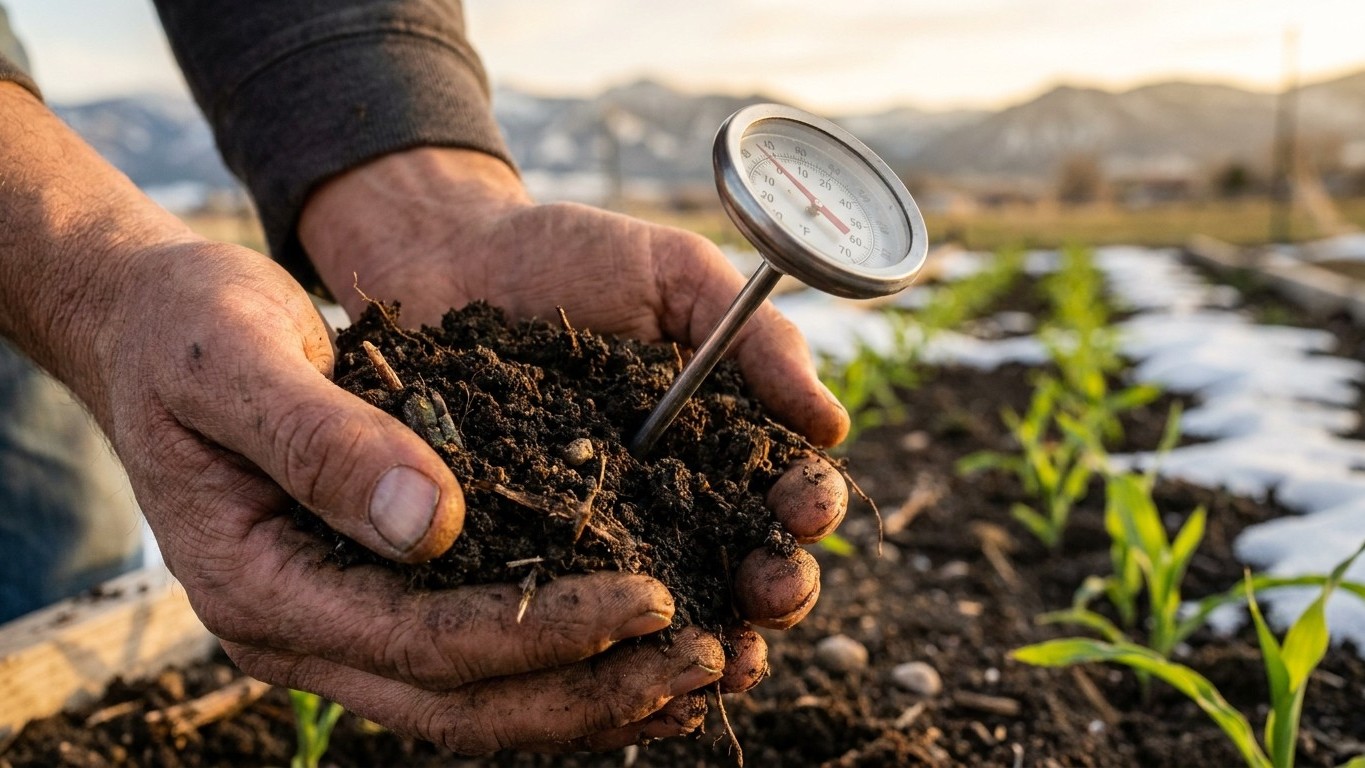
Corn seed does not care about frost once it’s in the ground, because it hasn’t been planted yet. What it cares about is soil temperature, and sweet corn needs that soil to sit above 60°F before germination is reliable, according to Utah State University Extension. That threshold has nothing to do with the last spring frost date. It comes later, sometimes considerably later, because bare or lightly mulched garden soil warms more slowly than the air above it.
At the reference weather station used for South Dakota climate normals, the last spring frost falls between April 29 and May 9. But soil rarely holds at a steady 60°F that early in the season. In most years it’s the very end of May before South Dakota gardens can count on it, and in a cool spring, or in soil that’s shaded, heavy, or still holding winter moisture, it can run into early or mid-June. That gap of three to five weeks between the last frost and workable planting soil is the first thing that changes the answer to “will it ripen.”
On the other end of the season, the first fall frost at that same reference station arrives between September 24 and October 4. That gives you a frost-to-frost window of roughly 140 to 160 days on paper. Once you subtract the weeks it takes the soil to reach planting temperature, the corn’s actual growing window shrinks to something closer to 105 to 120 days, depending on how late spring soil warm-up runs in a given year.
That’s still enough for the 60 to 90 day range sweet corn needs, at least on paper. But the margin isn’t generous, especially at the long end. South Dakota also averages 13.8 days a year at 90°F or hotter, based on NOAA Climate Normals for the Sioux Falls reference station. That heat load matters less for whether the crop ripens and more for how much water it needs while it’s doing it. Corn under heat stress during tasseling and silking can stall, which eats into the days you thought you had banked.
So the short version, and the full answer to Will Sweet Corn Ripen in South Dakota?, is yes, sweet corn ripens here, but only if you plant once the soil is actually ready, not on the frost-free date, and only if the variety’s day count leaves a real cushion before the end of September. For more detail on timing your planting date correctly, see When to Sow Sweet Corn in South Dakota.
Does a late variety fit here?
The 60 to 90 day figure isn’t a single number, and the two ends of that range behave very differently once you lay them against South Dakota’s season.
A 60-day variety
Say your soil hits 60°F by the first week of June, a reasonable expectation across most of the state in a normal year. A variety that matures in 60 days from planting would be ready to pick by roughly the first week of August. Measured against a first fall frost that doesn’t arrive until September 24 at the earliest, that leaves seven weeks of open season on top of the harvest window. Even accounting for a cool spring that delays planting into mid-June, an early variety still finishes with a month or more to spare before frost risk sets in. This is the safest bet for most South Dakota gardens, and it’s the category that removes almost all of the season-length worry.
A 90-day variety
Run the same math with a full 90-day variety and the cushion disappears. Planted in the first week of June, it matures around the first week of September, which still sits ahead of the earliest fall frost date. But push planting to mid-June, which happens in plenty of South Dakota springs when soil stays cool longer than usual, and that same variety matures closer to mid-September, right up against the September 24 start of the frost window. Add in the fact that gardens away from town, at higher elevation, or in low-lying spots often see frost one to two weeks earlier than the reference station, and a 90-day variety can be caught with ears still filling out when the first freeze hits. It isn’t that a late variety is impossible in South Dakota. It’s that the margin for a cool spring, a late planting, or a garden colder than the reference station is thin to nonexistent. For most growers here, a 90-day variety is not a safe default choice.
What goes wrong here
Three separate problems show up in South Dakota sweet corn, and only one of them has anything to do with the climate at all.
- Soil sown too cold. Seed planted before the ground holds steadily above 60°F either rots in place or germinates weakly and unevenly. The fix is patience: wait for the soil itself to reach that mark, not the calendar date of the last frost, and if you need to be sure, check it directly rather than guessing from the air temperature.
- A variety too late for the season. A 90-day type planted after a slow, cool spring can still be filling ears when the first fall frost lands. The remedy is matching the variety’s day count to how late your soil actually warmed that year, leaning toward the 60 to 75 day range whenever planting slips past the first week of June.
- Sweetness lost because two types tasselled together. This one has nothing to do with frost dates or soil temperature. Utah State University Extension notes that su, se, and sh2 sweet corn types lose their sweetness if they tassel at the same time, because cross-pollination between types changes the sugar content of the kernels. There’s no published isolation distance to fall back on here. What matters is timing: stagger plantings of different types so they don’t shed pollen in the same window, and keep each variety planted in its own block of three or more rows rather than a single thin row, since that block shape is what gives sweet corn reliable pollination in the first place.
Checking this against your own county
Every figure above comes from one reference weather station, and South Dakota is too large and too varied, from the river valleys in the southeast to the higher, colder ground further west and north, for one station to speak for the whole state. Soil warms at different rates depending on drainage, sun exposure, and elevation, and frost can arrive a week or two earlier just a few miles outside town.
Before you commit to a planting date or a variety’s day count, check those numbers against your own county. South Dakota State University Extension tracks local frost data and variety performance by region, and can tell you how your specific area compares to the reference figures used here.
Common questions
Can I speed up soil warming to plant sweet corn earlier?
Black plastic mulch or raised beds can nudge soil temperature up faster than bare, flat ground, which is useful in a state where the gap between last frost and workable soil already runs three to five weeks.
Is a 75-day variety a safer middle ground?
It splits the difference between the two extremes covered above, and generally fits South Dakota’s season with a more comfortable margin than a full 90-day type, though the same rule applies: plant once the soil is actually warm, not on the frost-free date.
How do I know sweet corn is actually ripe?
Check three signs together: the silks have turned dry and brown, the husk is still moist and green, and a punctured kernel releases milky juice rather than clear liquid or a dry paste. Any one sign alone can mislead you.
Does picking time relate to the 60 to 90 day figure?
No, and mixing the two up causes confusion. The 60 to 90 day count runs from planting and tells you whether the crop fits the season at all. A separate window, roughly 17 to 24 days after silks first appear, tells you which week to actually pick. They answer different questions and shouldn’t be merged into one number.