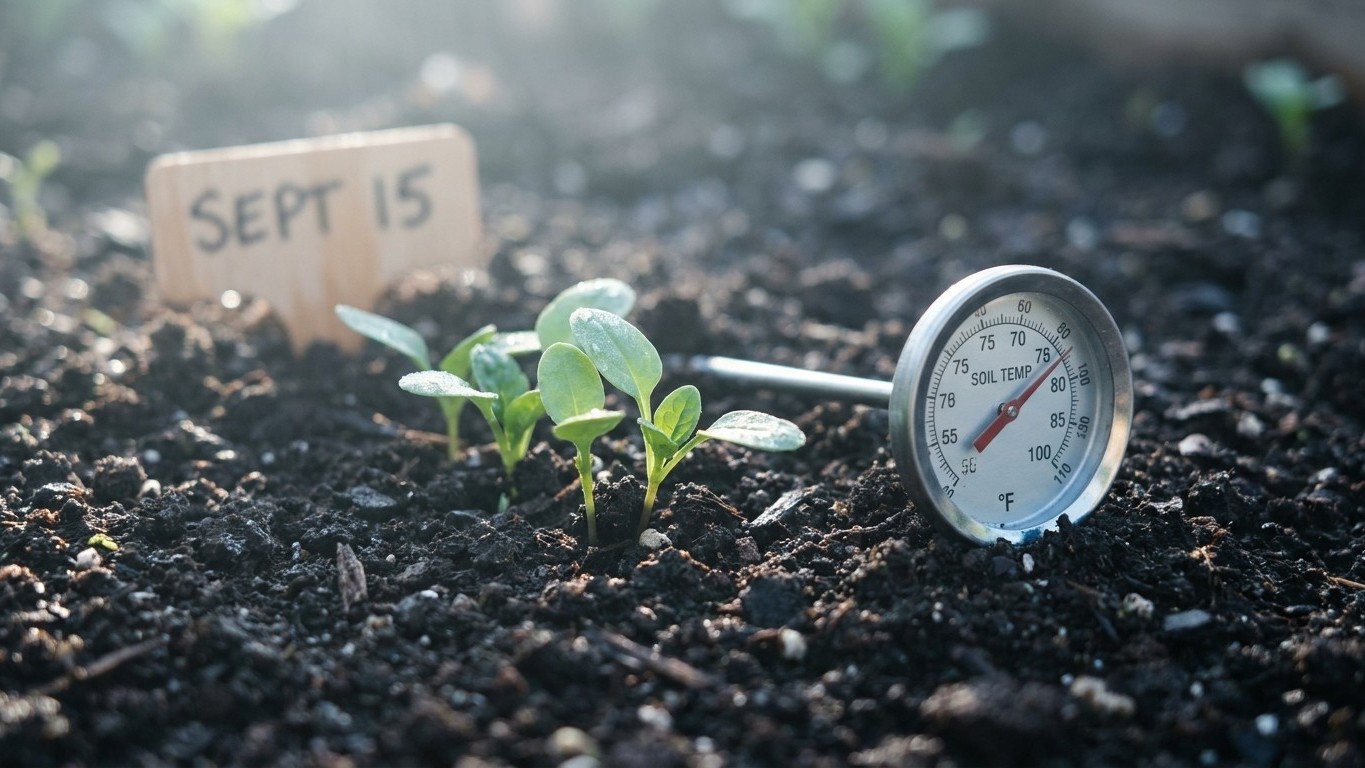

Autumn spinach in South Carolina goes into the ground once soil temperatures drop out of the 80s, which for most of the state lands somewhere between early September and mid-October. Count backward 50 to 75 days from the frost date you want to harvest before, and that soil-cooling window becomes the real trigger, not the calendar.
The short answer
On the longest day of the year, South Carolina sees 14 hours and 10 minutes of daylight. That number matters more than most gardeners realize, because spinach doesn’t wait for heat to start flowering. Long days alone push the plant toward a seed stalk, and once that clock starts, no amount of shade or mulch reverses it. A cooler-than-average summer here would not buy extra weeks of harvest, because the day length, not the thermometer, is doing the work.
That’s the first piece. The second is heat, and South Carolina supplies plenty of it. The reference station averages 55.1 days a year at 90°F or hotter, a heat load that stacks directly on top of the long-day problem. Utah State University Extension notes that spinach grows best where temperatures stay under 75°F, and once you’re above that mark, growth quality drops and the plant turns bitter before it bolts outright. In South Carolina, both mechanisms are working against a spring or summer crop at the same time: the days are long enough to trigger flowering, and the air is hot enough to push quality downhill even before flowering starts.
So the honest answer to “what’s limiting spinach here” is both. Day length sets the bolting clock. Heat sets the bitterness and germination clock. Neither one is negotiable through variety choice alone, though seed catalogs do offer options bred for some tolerance. Four spinach varieties commonly discussed for garden use, Bloomsdale, Melody, Teton, and Olympia, are worth knowing by name if you’re comparing seed packets, but Utah State University Extension publishes no days-to-maturity figures or bolt-resistance ratings for any of them, so there’s no authoritative number to lean on here. What’s published is the mechanism, not a variety-specific escape from it.
This is why South Carolina gardeners lean so heavily on the shoulder seasons. Spring offers a short window before the days lengthen and the heat arrives. Autumn offers a longer, gentler stretch because the days are shortening even as the soil is still cooling down from summer. Neither window is generous, but the fall one is more forgiving, which is why so much of the state’s spinach ends up sown in September rather than February.
How long the spring window really is
- Start with the last frost. NOAA’s 1991-2020 climate normals put the last spring freeze at the reference station between February 28 and March 17. That’s the anchor date for everything that follows.
- Back up two to three weeks for sowing. Spinach seed goes in before that frost date, not after, so the sow window falls roughly between February 7 and February 24, depending on how close to the coast or how far upstate you’re gardening. Peninsular Charleston runs milder than the airport station these dates are measured from, while the Upstate runs several weeks tighter on both ends.
- Track forward to the 75°F ceiling. Once daytime highs start pushing past 75°F and staying there, growth quality drops and the long days start doing their bolting work in earnest. In a state that averages more than 55 days a year above 90°F, that threshold typically arrives by mid-spring, well before the summer solstice even shows up on the calendar.
- Add it up. From a sowing date in early-to-mid February to a bolting threshold reached sometime in April, the usable spring window in South Carolina runs somewhere around eight to ten weeks, and that’s an optimistic estimate. It shrinks fast in a warm spring and stretches only slightly in a cool one, because the day-length clock keeps ticking regardless of temperature.
That’s a narrow harvest season for a leafy crop that likes to be picked over multiple times. It’s one reason spinach growers in this state often treat spring as a bonus crop and put their real effort into autumn, where the same mechanisms work in the plant’s favor instead of against it.
The autumn crop, and when the soil lets you sow
Fall spinach in South Carolina has two obstacles standing between the gardener and a good stand, and neither one is frost. The first is warm soil that won’t let seed germinate properly. The second is the eventual arrival of a killing freeze that ends the harvest window. Working around both means starting with the frost date and working backward, rather than starting with a sow date and hoping for the best.
When the soil finally cools below 80°F
Utah State University Extension is specific on this point: spinach seed germination drops once soil temperatures climb above 80°F. That’s the real gatekeeper for a fall sowing here, not any date on a calendar. With a summer that racks up an average of 55.1 days at 90°F or hotter, South Carolina soil holds onto heat well into early autumn, particularly in raised beds or anywhere with full afternoon sun. Gardeners who sow too early, while soil is still baking from summer, often get spotty germination or none at all. The practical move is to check soil temperature directly rather than trust the month on the calendar, since a shaded bed and a south-facing one can differ by a wide margin even on the same afternoon in September.
Counting back from first frost
The first fall frost at the reference station falls between November 20 and December 5, again running milder on the Charleston peninsula and tighter upstate. Utah State University Extension gives a simple rule for fall crops: sow 50 to 75 days before the date you want to harvest, since no days-to-maturity figure is published for spinach specifically. Counting back from that November-to-December frost window puts the sow date somewhere between early September and mid-October, a span wide enough to account for both the soil-cooling problem and the harvest timing a gardener has in mind.
Someone hoping to harvest right around the first frost date, essentially riding the season as far as it goes, would sow closer to the 75-day mark, which lands in early-to-mid September. Someone planning an earlier harvest, maybe wanting to pick spinach through October before the coldest nights arrive, would sow closer to the 50-day mark, pushing into late September or even into October. Either way, the window only opens once soil temperatures have dropped out of that 80°F germination-blocking zone, which in most of South Carolina means waiting past the hottest stretch of summer even if the calendar says early September has arrived.
Common questions
Can I sow spinach in South Carolina during the summer months?
No. Summer combines the two worst conditions for spinach at once: day length long enough to trigger bolting and soil heat above the 80°F threshold that blocks germination in the first place. Seed sown in June or July is unlikely to come up reliably, and any that does germinate will bolt quickly once temperatures push past 75°F.
Why does South Carolina’s fall window work better than spring?
In autumn, day length is shrinking rather than growing, which removes the bolting trigger that dominates spring plantings. The remaining obstacle is soil heat left over from summer, which is a temporary condition that resolves itself as the season cools, rather than a clock that keeps ticking against the plant the way long spring days do.
Does the Upstate have a different schedule than the coast?
Yes, though exact dates for Upstate stations aren’t part of the data here. What’s established is that the reference frost dates come from a coastal-area station and that Upstate South Carolina runs its frost dates several weeks tighter at both ends, meaning an earlier fall frost and a later spring one. Gardeners there should shift both the spring sow window and the fall sow window earlier accordingly.
Do any spinach varieties resist bolting better in South Carolina’s climate?
Bloomsdale, Melody, Teton, and Olympia are commonly available varieties, but no bolt-resistance data, days-to-maturity figures, or climate suitability ratings for any of them appear in the sourced climate and extension data used here. Choosing among them comes down to seed packet descriptions and personal preference rather than a documented performance advantage in this state’s conditions.