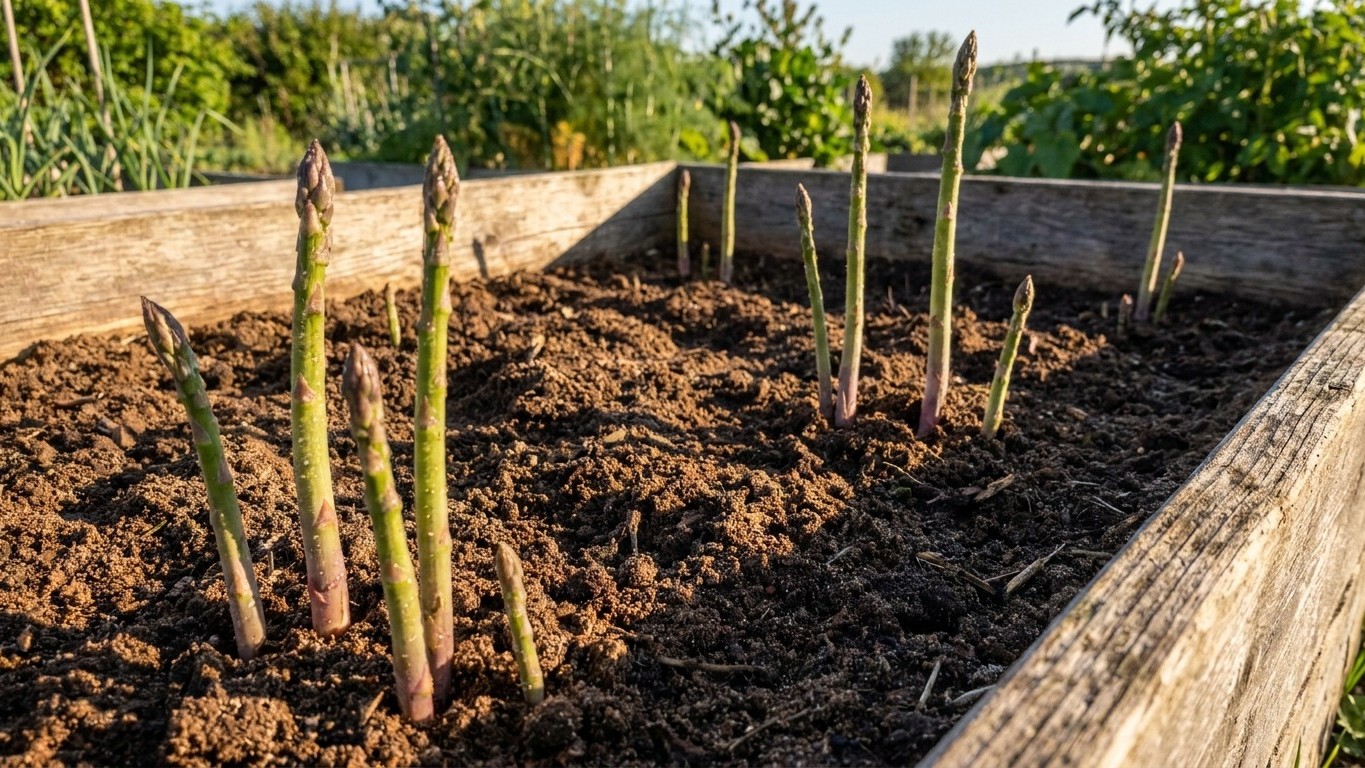

Wyoming’s benchmark soil, the Forkwood series, drains well, and that’s the only requirement Utah State University Extension sets for a bed that has to hold its ground for 10 to 15 years. So the short answer is yes, at least on paper. But “on paper” is doing real work in that sentence, because a soil survey describes a typical profile, not the compacted clay behind a subdivision or the gravel fill left by a builder.
The short answer
Forkwood is an Aridisol, the kind of soil that forms under low rainfall and tends to run alkaline. The surface pH sits at about 7.2, which is close to neutral rather than the harsh alkalinity some dry-climate soils carry. Texture-wise it’s a loam leaning toward silt: 42 percent sand, 38 percent silt, and 20 percent clay, with organic matter around 1.5 percent. None of those numbers scream trouble for a long-lived crop. The sand fraction keeps water moving through the profile, the silt holds a bit of moisture between waterings, and the modest clay content isn’t enough to seal the soil shut the way a 40-percent-clay soil would.
That combination is why USDA NRCS lists Forkwood as representative of Wyoming’s soils in the first place, a designation the agency makes as part of its State Soils program rather than something written into state law. It’s a snapshot of what tends to happen across the state’s dry, wind-scoured plains and basins, not a guarantee about any single backyard. A garden two miles away, sitting on river-bottom silt or on soil a contractor scraped and re-graded during construction, can behave completely differently.
That’s the real test for asparagus. The crop doesn’t need rich soil, doesn’t need a particular pH, and the source is silent on both fertility targets and chilling requirements, so neither should be invented here. What it needs is drainage, because a crown that sits in standing water for fifteen years will rot long before it ever reaches its tenth harvest. If a gardener digs a test hole, fills it with water, and finds it still full an hour later, that spot isn’t a bed, it’s a swamp waiting to happen. The fix isn’t complicated: build a raised bed, work in coarse organic matter to open up a tight soil, or simply pick different ground on the property. None of that requires guessing at the Forkwood numbers, because a home soil test, not a state series, is what tells a gardener whether their own dirt drains.
What the numbers don’t tell you
Organic matter at 1.5 percent is low but typical for a dry-climate soil that hasn’t been heavily cultivated. It means a new bed will likely benefit from added compost at planting, less for fertility than for structure, since a little organic matter helps sandy-silty ground hold moisture a few days longer between waterings. That matters more in this climate than almost anywhere else, for reasons the next section covers.
Will the summer here water it for you?
An asparagus bed asks for 1 to 2 inches of water every other week during its first two years, then eases to every three weeks once the crowns are established. Wyoming’s reference station puts summer rainfall at about 5.8 inches total across June, July, and August, with June the wettest at 2.16 inches, July close behind at 2.11, and August dropping to 1.52, the driest month of the growing season. Laid against the bed’s actual schedule, the gap is easy to see once it’s broken into steps.
- Weeks 1-8 (June): the bed wants roughly 4 to 8 inches total across four biweekly waterings. June’s normal rainfall of 2.16 inches covers a fraction of that, leaving a shortfall of at least 2 inches even in an average year.
- Weeks 9-13 (into July): July’s 2.11 inches arrives the same way, in scattered storms rather than steady soaking rain, so much of it runs off a silt-heavy surface instead of reaching root depth. The bed still needs its every-other-week inch or two regardless of what fell.
- August, the driest month: at 1.52 inches of normal rainfall against a continuing every-other-week or every-three-week demand, this is the point in the season where supplemental watering stops being optional and becomes the main water source for the bed.
- Year three onward: once watering eases to every three weeks, the total summer demand drops, but it still outpaces the 5.8-inch summer normal in most years, especially given how concentrated Wyoming rainfall tends to be in short bursts rather than gentle, soil-penetrating rain.
The practical upshot: a Wyoming asparagus bed cannot rely on summer rain to meet even half of its water budget in a typical year, and August is the month a gardener is most likely to forget to check. A rain gauge on the actual plot, not the 30-year normals, is what settles how much a specific bed needs in a specific week, since elevation, slope, and local storm tracks all shift the number in either direction.
When to put the crowns in
Crowns go into the ground in early spring, and in this territory that means planting around the last spring frost window, which the reference station puts at May 7 to May 18. That’s a mean date built from three decades of freeze probabilities, not a promise, so “around” is the operative word: at elevations near 6,000 feet, frost can still show up outside that window, and the region only counts roughly 130 frost-free days in an average year. A gardener working from seed rather than crowns needs to start indoors well ahead of that date, since seed-grown asparagus takes a full season just to produce a transplantable crown, pushing the eventual harvest clock back by a year compared with starting from purchased crowns.
Planting itself follows an 8-inch furrow, with the crown set at the bottom and the furrow filled in gradually rather than all at once, roughly 2 inches of soil added back every other month across the first year as the new shoots grow taller. That slow backfill protects the emerging fern from being buried too deep too fast.
Then comes the part every new asparagus grower underestimates: patience. There’s no harvest at all in year one or two. Year three brings a first cutting of about 4 weeks, year four extends to roughly 6 weeks, and by year five the bed can be cut for about 8 weeks each spring. The season doesn’t end on a calendar date either; it ends when most of the spears coming up are thinner than a pencil, a sign the crown’s stored energy is running low and needs to go back into growing fern for the rest of the summer instead of spears.
On variety, Utah State University Extension names four options and nothing more: Jersey Giant and Jersey Knight are all-male varieties, while UC 157 F1 and Purple Passion are male/female. No flavor comparison, no yield claim, and no stated reason to prefer one over another appears in that source, so none is invented here.
| Variety | Sex type |
|---|---|
| Jersey Giant | All-male |
| Jersey Knight | All-male |
| UC 157 F1 | Male/female |
| Purple Passion | Male/female |
Common questions
Does Wyoming soil need lime or sulfur before planting asparagus?
Neither is addressed by the source. The Forkwood series runs close to neutral at pH 7.2, and Utah State University Extension’s guidance for asparagus doesn’t set a soil pH target, so no amendment recommendation is made here.
Can asparagus survive a hard freeze after the crowns are planted?
The source doesn’t publish a hard-freeze or light-frost threshold separate from the general last-frost window. What’s known is the region’s last spring frost normally falls between May 7 and May 18, and frost remains possible at higher elevations outside that window.
How long until the first real harvest?
No spears are cut in years one or two. Year three allows about 4 weeks of harvest, year four about 6 weeks, and year five about 8 weeks, with harvest ending each season once most spears turn thinner than a pencil rather than on a fixed date.
Is the Forkwood series the actual soil in every Wyoming garden?
No. It’s the series USDA lists as representative of the state’s soils overall, drawn from measurements across 105 mapped components. An individual yard, especially one near a river, on a hillside, or reshaped by construction, can differ substantially, which is why a home soil test remains the only reliable check on drainage and texture for a specific bed.