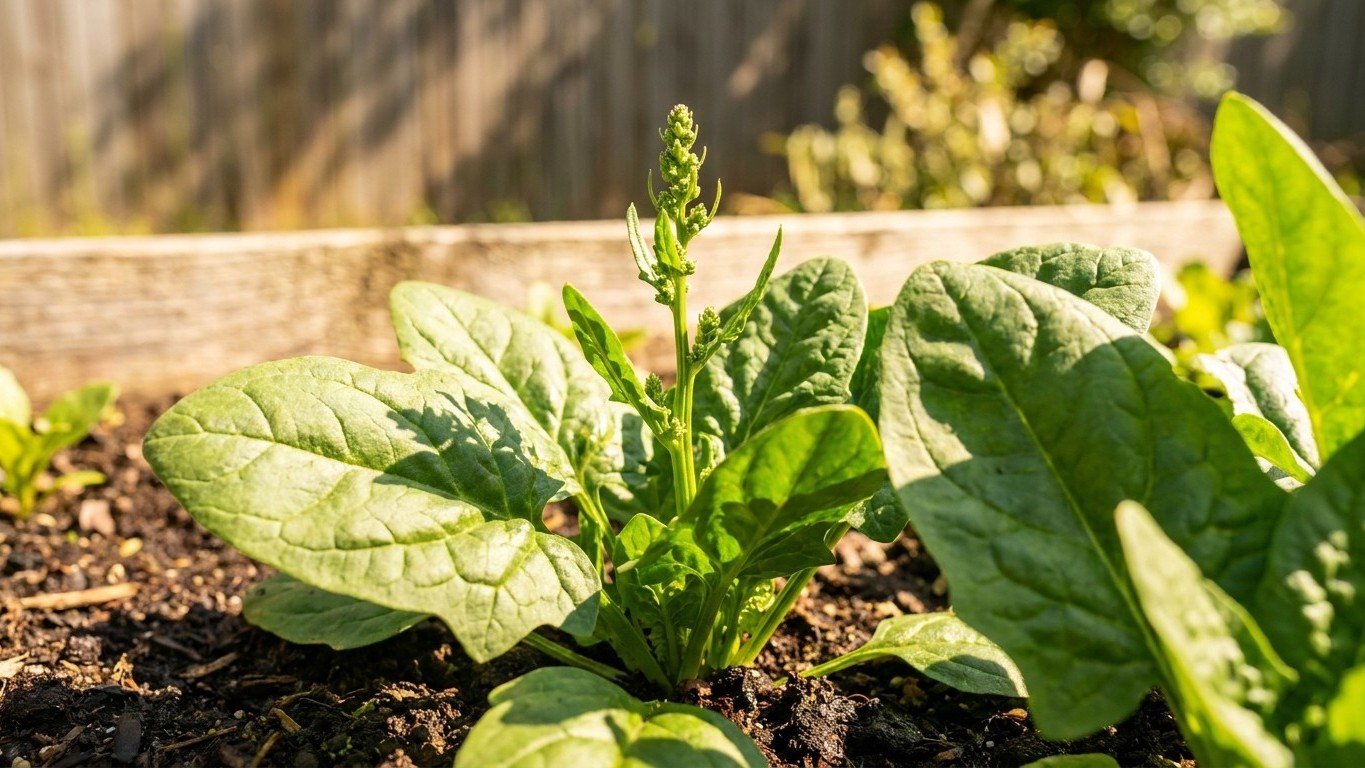

Alabama gardeners lose spinach to two kinds of feeders: the ones that suck sap from the leaves, and the heat and day length that push the plant to bolt before any insect gets a bite. Of the pests the state actually tracks on vegetable crops, only a couple have real business on a spinach leaf. The rest belong to squash, beans, corn, and cabbage relatives growing in the next row over.
Which pests attack spinach in Alabama

The Alabama Cooperative Extension System documents ten pests on vegetable crops in this territory: aphids, corn earworm (tomato fruitworm), cowpea curculio, imported cabbageworm, Leaffooted bug, Mexican bean beetle, spider mites, spotted cucumber beetle, squash vine borer, and stink bugs. That is the full list for this state. Nothing beyond it belongs on a spinach page here.
Sorting out who actually shows up on spinach
Most of that list has nothing to do with a spinach bed. Corn earworm goes after corn ears and tomato fruit, not a leaf crop with no ear or fruit to bore into. Cowpea curculio and Mexican bean beetle track legume pods and leaves, a different plant family entirely. Squash vine borer and spotted cucumber beetle stay with cucurbits, cucumbers, squash, melons, because that is what their larvae and adults are built to feed on. Imported cabbageworm targets the cabbage family, and spinach is not a brassica, so its caterpillars have little reason to linger there. Leaffooted bug and stink bugs are piercing feeders that prefer developing pods and fruit, again not a leaf-only crop.
That leaves two: aphids and spider mites. Both are generalist feeders, meaning they do not specialize in one plant family, and both will settle on spinach leaves when conditions suit them. The extension service documents just these two as relevant to a spinach planting in this state, and padding the list with the other eight would be inventing a problem that isn’t there. Every other name on the original list is real, and worth watching on other crops in the same garden, but not on spinach.
When each one shows up, and what it does first
Spinach in this territory goes into the ground close to the last spring frost window, March 19 to April 3 at the reference station near Huntsville, and it grows best while soil and air stay under the 75°F ceiling that Utah State University Extension sets for this crop. That short cool stretch, before day length and heat push the plant to bolt, is also when both pests get active.
Aphids arrive first, usually while spinach is still putting out its early rosette of leaves in the cool weeks right after planting. The first sign is rarely the insect itself. It’s curled or puckered new growth, a faint stickiness on the leaf surface (the honeydew aphids leave behind), and sometimes a scattering of tiny pale or green specks clustered on the underside of young leaves near the crown.
Spider mites move in later, as the season warms and pushes toward the region’s heat load of 58.5 days a year at 90°F or higher. Warmth and dry conditions favor them, so they tend to show up as spring turns toward early summer, often on plants already stressed by heat or inconsistent watering. Their first sign is a fine stippling or bronzing across the leaf, a dusty look on the underside, and in a bad infestation, faint webbing between leaf veins.
Because long summer days (the reference city sees 14 hours 19 minutes of daylight on the longest day) trigger bolting in spinach regardless of temperature, the window when the plant is even present to be fed on is short. A fall planting, timed 50 to 75 days before the intended harvest date once soil temperatures drop back down (spinach seed germination drops above 80°F soil), gives aphids a second cool-weather opening, while spider mite pressure usually fades as the days shorten and heat eases before the first fall frost, November 2 to November 16 at the reference station.
Telling the damage apart from Everything else
Spinach beds run into plenty of trouble that has nothing to do with insects, and mixing them up wastes the short growing window this crop gets. The single biggest mix-up is blaming a pest for damage that is actually the plant reacting to heat or day length, since both push toward the same 75°F ceiling that governs growth and the bitterness of the leaf.
| What you see | Possible cause | What sets it apart |
|---|---|---|
| Curled, puckered new leaves with a sticky film | Aphids | Check the underside near the crown for small soft-bodied insects clustered together |
| Fine stippling or bronze cast, dusty underside | Spider mites | Look for faint webbing between veins; damage spreads outward from a few plants first |
| Pale, yellowing older leaves, slow overall growth | Nutrient deficiency or poor soil | Symptom is uniform across the bed, not clustered on new growth |
| Wilting despite damp soil, leaf edges crisping | Heat or water stress | Tracks with days near or above the 75°F growth ceiling, not with a pest population |
| Plant sends up a central seed stalk, leaves turn bitter | Bolting | Driven by long days and warmth together, not by feeding damage |
| Torn or ragged leaf edges with no insects present | Mechanical damage (wind, hail, foot traffic) | No stippling, no honeydew, no clustering pattern |
A gardener who is not sure which of these is at play in a given bed shouldn’t guess from a description alone. A local extension agent can look at an actual leaf sample and rule out the causes a photo or a symptom list can’t settle.
What actually works here, and what is a waste of time
On a crop with this short a window between planting and bolting, timing beats almost anything else. A floating row cover set over the bed right at planting, before either aphids or spider mites have found the young leaves, does more than any treatment applied after damage is already visible. It keeps flying and crawling pests off the plant during the exact stretch when spinach is most worth protecting, the cool weeks before day length and heat end the crop anyway.
Consistent watering matters more than most gardeners expect, specifically because spider mites thrive on drought-stressed plants. Keeping soil evenly moist through the hotter stretch of spring, rather than letting it dry out between waterings, removes much of the condition that draws mites in the first place. Knocking aphids off with a strong spray of water, checked every few days once they’re spotted, also works without reaching for anything else.
What wastes time is treating for a pest after the plant has already started bolting, since a plant running up to seed under long days is done producing usable leaf regardless of what’s feeding on it. It’s also a waste to plant a spring crop late, expecting cooler weather to buy extra time, since the 75°F ceiling and the day length trigger arrive on their own schedule, not on the gardener’s. Naming or applying any specific pesticide is outside what this article covers; that decision, including what’s actually labeled for use in Alabama, belongs with the local extension office.
Where to check this for your own county
The Alabama Cooperative Extension System is the authority for what’s actually present on vegetable crops in a given county, and pest pressure inside this one state varies a lot between the Tennessee Valley in the north, the Black Belt, and the Gulf Coast counties in the south. A pest documented statewide does not mean it is active, or active at the same intensity, in a specific backyard.
The single most useful next step is calling the county extension office before treating anything, since an agent there can confirm what’s actually on a leaf sample and know what pressure looks like locally that season. Frost dates, heat load, and day length used in this article come from a single reference station near Huntsville; a garden further south, further north, or at different elevation can see its own last frost, first frost, and pest timing shift by a week or two in either direction.
Anyone with a spinach bed showing unclear damage this season should bring or photograph an actual leaf sample and get it in front of a county agent, rather than matching symptoms against a list alone.
Common questions
Do imported cabbageworms ever attack spinach in Alabama?
They’re documented on vegetable crops in this state, but they target the cabbage family. Spinach isn’t part of that family, so cabbageworm isn’t considered a spinach pest here.
Can stink bugs damage a spinach bed?
Stink bugs are documented pests in Alabama, but they favor pods, fruit, and seeds on other crops. They aren’t tracked as a spinach-specific problem.
Is it worth planting spinach again once summer heat sets in?
No. Once temperatures push consistently toward the 75°F ceiling and days lengthen past the point that triggers bolting, the plant moves toward seed regardless of pest pressure. A fall planting, timed once soil cools below the 80°F germination limit, is the better bet.
Which spinach varieties are grown in Alabama gardens?
Bloomsdale, Melody, Teton, and Olympia are commonly grown names, though no specific performance or pest-resistance data for any of them is published in the sources behind this article.