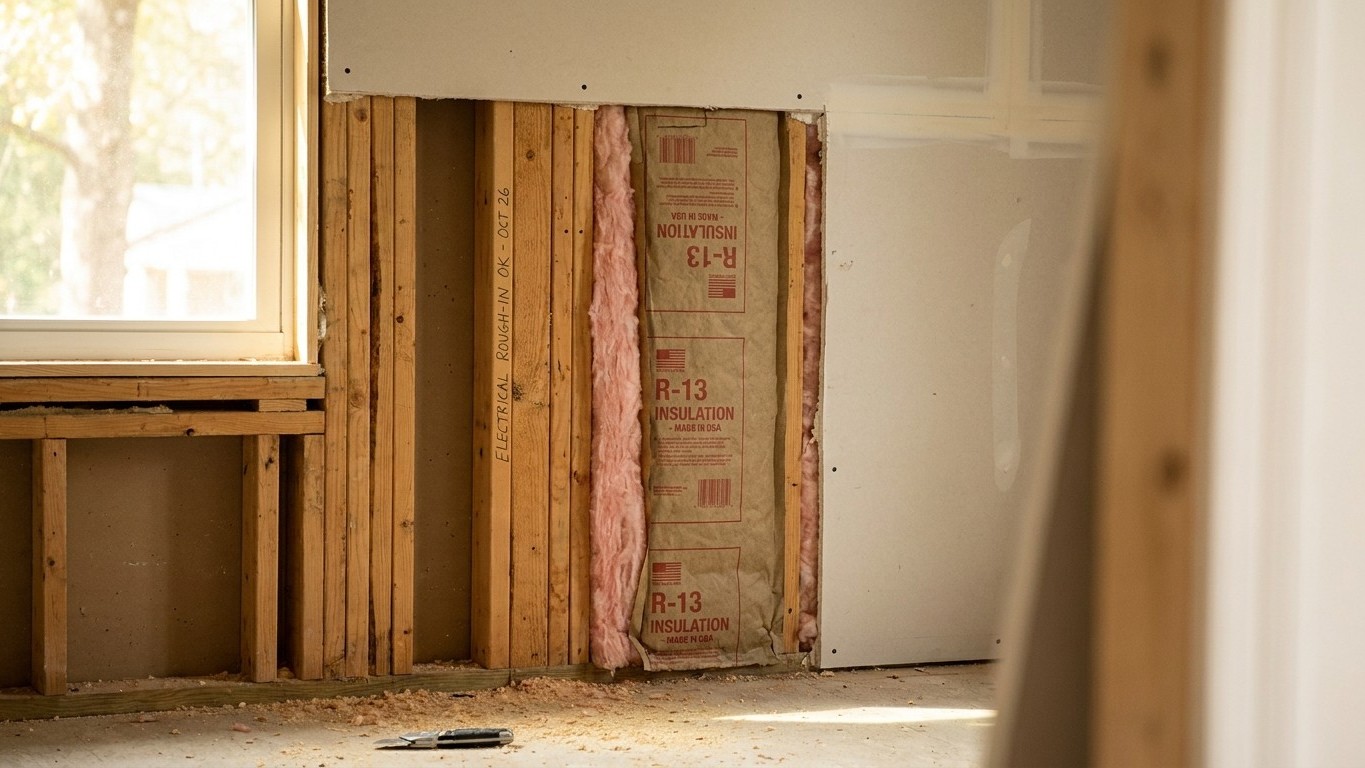

In Oregon, the answer splits with the state itself. Eighteen counties sit in IECC climate zone 5B, where the 2021 International Residential Code requires an interior vapor retarder on frame walls. The other eighteen sit in zone 4C, the marine zone, where that same requirement still applies, because the code’s exemption only reaches zones 1, 2 and 3. Neither Oregon zone qualifies for that exemption.
What the code asks for in Oregon

Section R702.7 of the 2021 IRC states it plainly: a vapor retarder of the class listed in Table R702.7(2) “shall be provided on the interior side of frame walls.” That’s the baseline rule for the whole country, and it applies unless a specific exception says otherwise. The only climate-based exception in the code reads: “A vapor retarder shall not be required in Climate Zones 1, 2 and 3.” Oregon’s eighteen 5B counties and eighteen 4C counties both fall outside that list, so the exemption simply doesn’t reach either half of the state.
That’s a different situation from, say, Florida or coastal Texas, where large populations sit inside zones 1 through 3 and the code drops the requirement entirely. Oregon doesn’t get that pass. Whether a homeowner is in Portland’s Multnomah County (5B) or somewhere along the milder coastal strip that falls into 4C, the model code still asks for a vapor retarder on interior-side frame walls, unless one of the four separate exceptions (covered further down) applies to that particular wall.
Where the two zones do diverge is on the Insulation side of the ledger, not the vapor retarder side. Under the ENERGY STAR and IECC insulation tables, 4C is grouped with zones 5 and 6 rather than with 4A and 4B, because its moisture regime is marine, not humid or dry. That grouping affects R-value targets, not the vapor retarder requirement itself, but it’s a reminder that “zone 4” isn’t one thing across the country, and Oregon’s marine counties are treated on their own terms even within the state.
None of this tells an individual homeowner what to nail up inside a specific wall. The class of retarder, and whether a particular assembly qualifies for an exception, is a call the local building department makes when it reviews the plans, because the code in force is whatever edition that jurisdiction has adopted and amended, not the model code sitting on a shelf in Chicago. A wall assembled with the wrong vapor control doesn’t announce the mistake. It sits there looking fine for years while moisture works on the framing from the inside, and the discovery usually comes during a remodel or a sale, long after it would have been an easy fix.
Why the answer is the opposite in a warm climate
The reason the code splits the country this way comes down to which direction the water vapor is moving. In a cold climate, the warm, moisture-laden air sits inside the house all winter, pushed by indoor heating and human activity (cooking, showers, breathing). That vapor wants to migrate outward, through the wall, toward the cold, dry exterior air. An interior vapor retarder blocks it before it reaches the cold sheathing, where it would otherwise condense.
Flip the climate, and the physics flips with it. In a warm, humid region, the moisture load arrives from outside, not inside, especially where air conditioning keeps interior air cooler and drier than the exterior. The U.S. Department of Energy’s Building America program lays out what happens if a builder still installs a Class I retarder on the interior in that setting: “If the wall contains a vapor retarder on the interior side of the insulation, the water vapor will condense on this cool, impermeable surface.” The retarder that protects a wall in Minnesota becomes the cold surface the vapor lands on in a hot, humid climate, and the DOE names the result without softening it: “ruined insulation, mold, and structural rot of framing members.”
That single mechanism is the entire reason the code writes different rules for different zones. It isn’t bureaucratic inconsistency or a compromise between lobbying interests. It’s a direct response to which way the water is traveling through the wall assembly at that latitude. A rule that protects a Minneapolis wall would actively damage a Miami one, so the code can’t use one sentence for the whole country. Oregon’s two zones both land on the “vapor moves outward, protect against it” side of that line, which is exactly why neither gets the zone 1-2-3 exemption. It’s also worth remembering the exemption removes an obligation. It doesn’t forbid a retarder in a warm zone. It just stops requiring the kind of impermeable layer that can trap moisture where it doesn’t belong.
The three classes, and why the word matters
“Vapor barrier” is the phrase most people reach for, but the code doesn’t recognize a single, all-purpose material by that name. It defines three classes by how much moisture they let pass, measured in perms, and the class is the whole point of the disagreement between builders in different regions.
| Class | Example materials | Perm rating |
|---|---|---|
| Class I | Sheet polyethylene, nonperforated aluminum foil | 0.1 perm or less |
| Class II | Kraft-faced fiberglass batts, vapor retarder paint | Above 0.1 up to 1.0 perm |
| Class III | Latex or enamel paint | Above 1.0 up to 10.0 perm |
Polyethylene sheeting is a real product, but calling it “a vapor barrier” without noting it’s a Class I material misses the point. A Class I layer stops nearly all vapor movement, which is exactly what a cold-climate wall wants and exactly what can trap moisture in the wrong assembly. Class III materials, on the other hand, still let a meaningful amount of vapor through while slowing it down.
Most homeowners already own a Class III vapor retarder without thinking of it that way: ordinary latex paint on interior drywall falls squarely in that range. It’s not a dedicated product, it’s not sold as a “vapor barrier,” and it’s already on the wall in nearly every American home built in the last several decades.
One distinction is easy to blur and worth separating cleanly. A vapor retarder controls the slow diffusion of moisture through a material over time. An air barrier stops bulk air movement, drafts, leaks around outlets and framing gaps, which carries far more moisture, far faster, than diffusion ever does. The two jobs sometimes get done by the same sheet of material, but they’re not the same requirement, and meeting one doesn’t automatically satisfy the other.
Where the rule stops
Section R702.7 doesn’t apply everywhere a frame wall exists. Four situations sit outside the requirement entirely:
- Basement walls
- The below-grade portion of any wall
- Construction where accumulation, condensation, or freezing of moisture will not damage the materials
- Construction in Climate Zones 1, 2 and 3 (not applicable to Oregon, as covered above)
The basement exception is the one most homeowners actually run into, because so many Oregon houses have at least a partial basement or crawlspace foundation. A poured concrete or block wall below grade sits in constant contact with damp soil, and that moisture doesn’t stop arriving just because a homeowner finishes the basement. The wall needs to be able to dry toward the interior when conditions allow it. An impermeable sheet on the interior side would trap that moisture inside the wall assembly instead of letting it escape, which is the same mold-and-rot outcome described earlier, just triggered by groundwater instead of a warm climate.
This site’s basement wall guide covers that assembly in more detail, since the logic there runs differently from an above-grade frame wall and deserves its own treatment rather than a quick footnote here.
Who actually decides, in Oregon
Model codes like the IRC set a baseline, but they aren’t self-enforcing. Each state adopts a code edition, sometimes with amendments, sometimes years behind the national release cycle, and Oregon’s local building departments are the ones applying whatever version is currently in force for a given jurisdiction. That’s the office that can say, for a specific address, which class of retarder satisfies the requirement and whether a particular wall assembly qualifies for one of the four exceptions.
The stakes are real here because of how much winter Oregon actually carries. Portland’s reference station logs roughly 4,104 heating degree days a year against about 508 cooling degree days, a lopsided ratio that measures heating demand, not a single temperature, but adds up daily how far the average temperature sits below 65°F across the year. That’s a heating-dominated climate by a wide margin, which is consistent with both of Oregon’s zones falling outside the 1-2-3 exemption and both requiring a retarder under the base rule.
None of that turns into a specific instruction for any one wall in any one house. The right move for a homeowner planning new construction or a remodel is the same one across every zone in every state: call the local building department, ask which code edition and which amendments apply to that jurisdiction, and get the class confirmed before the drywall goes up. A wall built with the wrong vapor control won’t show a problem on move-in day. It shows up years later, from the inside out, after the framing has already paid the price.