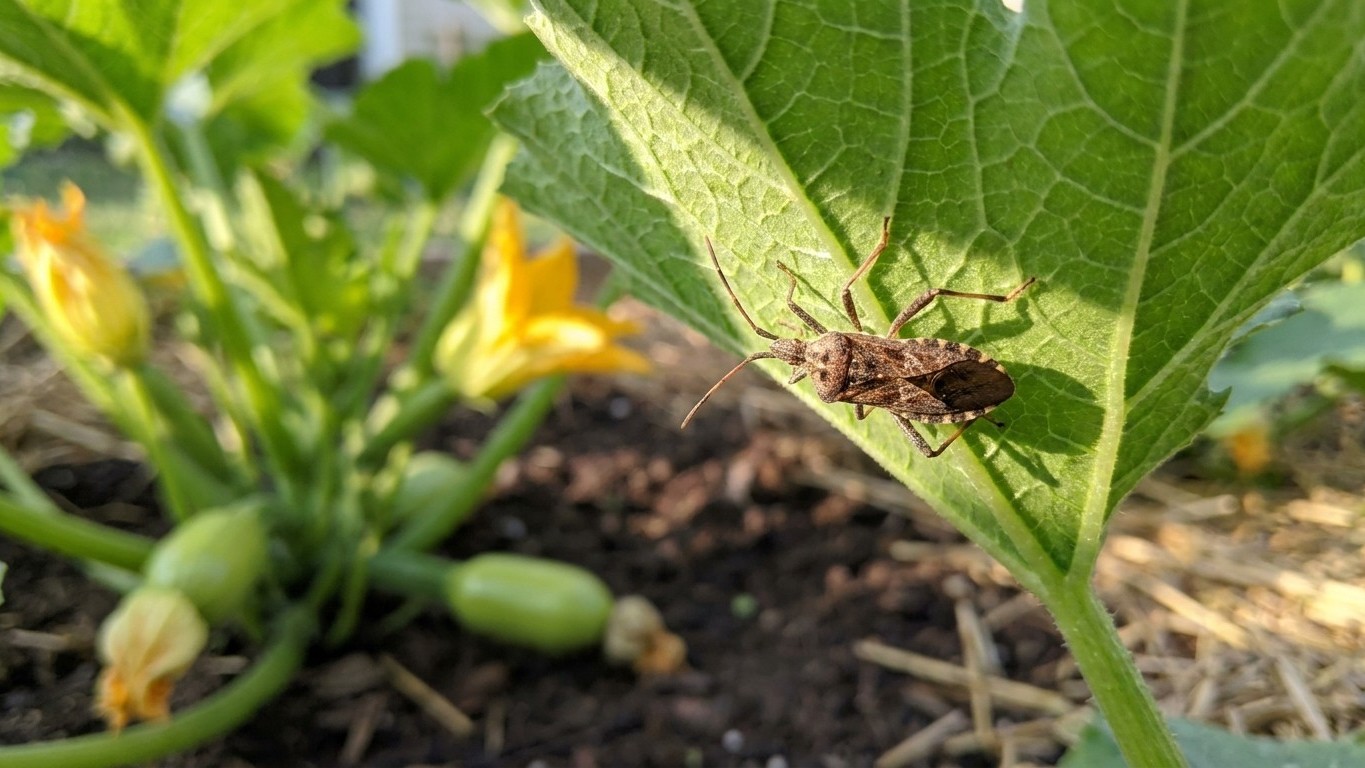

Squash bugs show up in Kansas gardens right around late May to early June, once overwintering adults crawl out from leaf litter, mulch, and old fence rows where they’ve spent the cold months. By July, when Kansas summers turn into that thick, humid stretch most gardeners just call “squash bug season,” populations peak and a second generation can hatch before frost. Stopping them means catching eggs and young nymphs early, since mature squash bugs are tough, fast, and largely immune to most home garden sprays.
When Squash Bugs Actually Show Up in Kansas

Squash bugs (Anasa tristis) don’t migrate into Kansas each year. They overwinter right here, tucked under garden debris, wood piles, and dead cucurbit vines left in the field over winter. As soil temperatures climb into the 60s, usually sometime in May depending on how far east or west you garden, those adults wake up and go looking for host plants: squash, pumpkins, cucumbers, and melons.
In eastern Kansas, where the growing season runs a bit longer and humidity stays higher, gardeners often see squash bugs establish by the last week of May. Out in western Kansas, drier air and cooler spring nights can push that emergence into early June. Either way, once adults find a squash or pumpkin patch, mating starts almost immediately, and egg-laying follows within days.
A single Kansas growing season typically supports one full generation, with a partial second generation possible in warmer years or in the southern tier of counties near the Oklahoma border. That’s the window that matters most: if you miss the first wave of egg-laying in June, you’re fighting nymphs and adults simultaneously by August, which is a much harder battle.
Egg-Laying Patterns Kansas Gardeners Should Watch
Females lay clusters of bronze to copper-colored eggs on the undersides of leaves, usually wedged into the V formed by leaf veins. A single female can lay several hundred eggs over her lifetime, spread across multiple clusters. Kansas State University’s cooperative extension network, which tracks cucurbit pests statewide, notes that egg masses hatch in about one to two weeks depending on temperature, meaning a hot Kansas June can compress that timeline even further.
Why Kansas Cucurbit Patches Take a Heavy Hit
Kansas sits squarely in squash bug territory because the state grows a lot of what this insect loves. Pumpkin production for fall markets, backyard zucchini and yellow squash, and commercial cucumber operations all give squash bugs plenty of hosts across a growing season that stretches from late spring through the first fall frost, often in October.
The bigger issue is climate rhythm. Kansas summers deliver long stretches of 90-degree days with periodic humidity spikes from Gulf moisture pushing north. Squash bugs thrive in that heat. Unlike some garden pests that stall out when temperatures climb too high, squash bugs keep feeding and reproducing straight through the hottest part of the Kansas summer, which is exactly when most home gardens are trying to push out their biggest squash and pumpkin harvest.
Drought years compound the problem. Stressed plants wilt faster under squash bug feeding pressure, and Kansas has had its share of dry summers in recent years. A plant that might tolerate moderate squash bug feeding in a wet year can collapse much faster when it’s already short on soil moisture.
Spotting the Damage Before It Spreads
Squash bug damage looks like sudden wilting, starting with individual leaves and spreading to entire vines within days. That’s not just mechanical injury from feeding. Squash bugs inject saliva while they pierce plant tissue, and that saliva disrupts the plant’s ability to move water and nutrients through its vascular system. A heavily infested plant can go from healthy green foliage to blackened, crispy leaves in under a week.
There’s also a disease connection worth knowing. Squash bugs can transmit cucurbit yellow vine decline, a bacterial disease caused by Serratia marcescens, which causes yellowing and eventual collapse of the whole plant, sometimes right as fruit is sizing up. This isn’t the same organism that causes human illness under the same species name; it’s a plant pathogen strain, but it’s a real yield threat in Kansas cucurbit fields and something extension entomologists watch closely during outbreak years.
Telling Nymphs From Adults
Adult squash bugs run about five-eighths of an inch long, brownish-gray with flat backs and a distinctive shield shape. Nymphs look completely different at first: newly hatched nymphs are gray with black legs and cluster tightly together near the egg mass. As they molt through five instar stages, they gradually darken and take on more of the adult’s shape, which means a Kansas gardener checking plants in mid-July might see three different life stages on a single leaf.
What Actually Stops Squash Bugs in Kansas Gardens
Adult squash bugs are notoriously resistant to most contact insecticides, largely because their tough outer shell sheds spray residue and they’re quick to scatter when disturbed. That means the real control window is the egg and early nymph stage, before that shell hardens.
Row covers put on at planting and left in place until flowers appear keep early-season adults from reaching young plants at all. Since Kansas squash bugs typically don’t show up in force until late May, covering transplants or direct-seeded cucurbits through most of that month blocks the first wave of egg-laying entirely. Covers need to come off once flowers open, though, since squash and pumpkin blossoms need pollinator access.
Trap cropping works surprisingly well against this particular pest. Blue hubbard squash is far more attractive to squash bugs than most other cucurbits, so planting a small border of it around a main squash or pumpkin patch pulls adults and egg-laying activity toward the trap plants. Kansas gardeners running this strategy typically pull or treat the trap crop aggressively once it’s loaded with bugs, sacrificing those plants to protect the main harvest.
Manual egg removal remains one of the most effective tactics for a home garden, tedious as it sounds. Checking leaf undersides every few days from late May through July and scraping off egg clusters with a piece of tape or a fingernail prevents entire generations from ever hatching. It’s not glamorous work, but it’s the single most reliable non-chemical method Kansas extension specialists recommend.
Timing Insecticide Applications for Real Results
If chemical control is necessary, timing matters more than product choice. Applications aimed at newly hatched nymphs, before they’ve molted past the second instar, hit the insect at its most vulnerable point. Waiting until adults are visible on the plant almost guarantees disappointing results, since sprays that don’t penetrate the adult’s shell just push the population to scatter and regroup elsewhere in the garden.
Evening applications also help, since squash bugs are most active and exposed on leaf surfaces during cooler parts of the day. Midday spraying in Kansas heat often just catches bugs already hiding in the shaded crown of the plant, where spray coverage is weakest.
Sanitation and Prevention Between Seasons
Because Kansas squash bugs overwinter locally rather than migrating in each spring, fall cleanup has an outsized effect on next year’s population. Pulling and destroying old squash and pumpkin vines right after harvest, rather than leaving them to break down in place over winter, removes a major overwintering shelter. Piles of straw mulch left in place through winter offer the same kind of protection, so gardeners dealing with chronic squash bug pressure often switch to removing mulch in fall and reapplying fresh material in spring instead.
Crop rotation helps too, though it’s less powerful against squash bugs than against soil-borne diseases, since adults are strong enough fliers to find new cucurbit plantings even a good distance from last year’s patch. Still, moving squash and pumpkin beds to a different part of the yard each year, combined with aggressive fall cleanup, tends to lower the starting population each spring rather than letting it build year over year.
Natural predators offer some backup, though not enough to rely on alone. Tachinid flies parasitize adult squash bugs across much of the Midwest, including Kansas, and gardeners who avoid broad-spectrum insecticides tend to see slightly better natural suppression over a full season. It’s not a fast fix, but a garden that’s been managed with fewer chemical inputs for a few seasons often carries a small standing population of these parasitoids that takes some pressure off without any extra work.
One detail that surprises a lot of first-time Kansas squash growers: variety choice matters more than most seed catalogs let on. Butternut and other Cucurbita moschata varieties show noticeably less squash bug damage than zucchini or yellow summer squash, likely due to tougher stem tissue that resists the insect’s feeding. Gardeners who’ve struggled year after year with wilting zucchini sometimes get a much better outcome just by shifting more of the patch toward butternut or other moschata types, without changing a single control tactic.