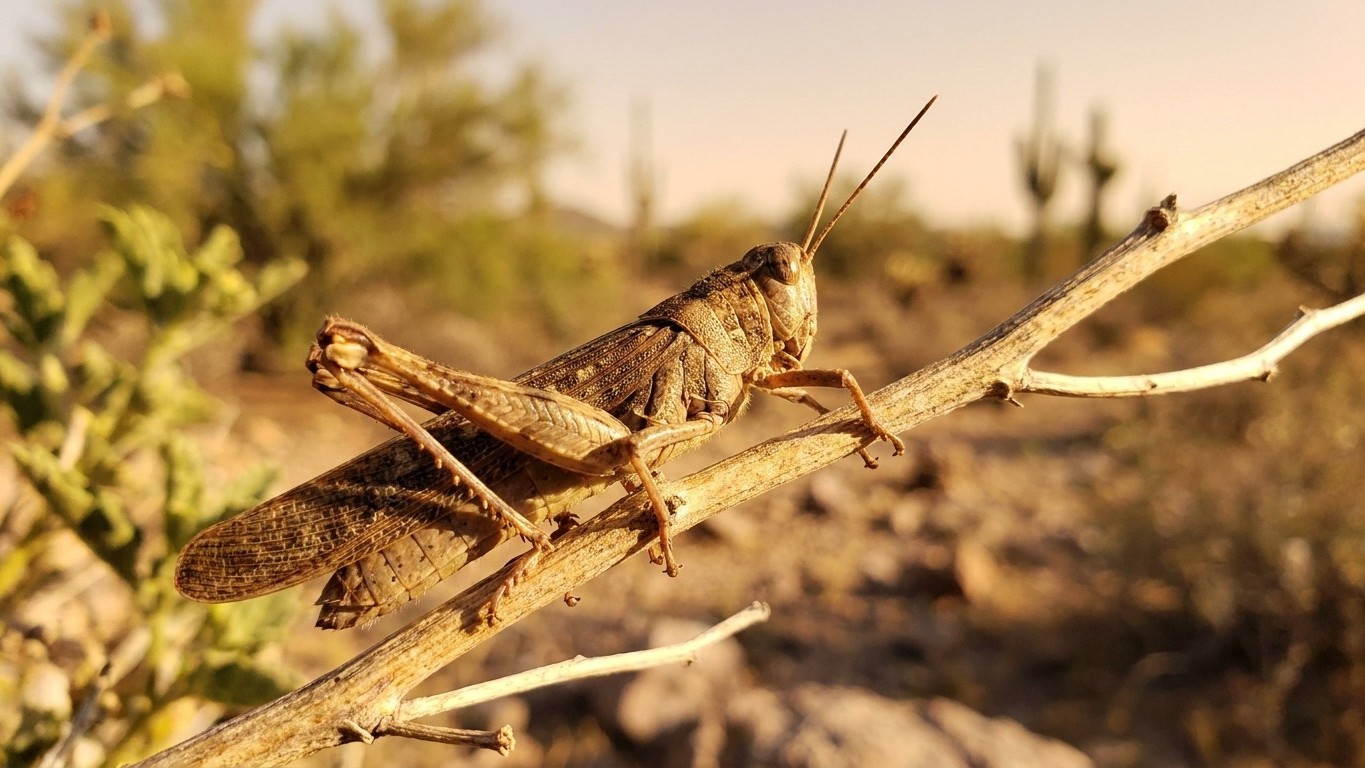

Grasshoppers show up in Arizona in two predictable waves each year: a spring hatch of nymphs from overwintered egg pods, and a much bigger surge from late July through October once monsoon rains green up the desert. Stopping them comes down to timing, not luck. Treating young nymphs in May and June, before wings develop and they disperse, works far better than spraying adults in August after they’ve already stripped a garden bare.
When Grasshoppers Actually Show Up in Arizona

Female grasshoppers lay egg pods in the soil in late summer and fall, and those pods sit through the winter waiting for warm, moist soil to trigger hatching. In most of Arizona, that means nymphs start appearing between March and May, depending on elevation. Low desert areas around Phoenix and Tucson see hatches earlier; higher-elevation spots like Flagstaff or Prescott lag by several weeks because the soil takes longer to warm.
The bigger population spike, the one homeowners actually notice, tracks the monsoon season. Rain from July through September fuels a burst of tender vegetation, and grasshopper numbers climb right along with it. By August, nymphs have molted into winged adults capable of flying and traveling much farther than they could as flightless juveniles. That’s when swarms start showing up on porches, garage doors, and stucco walls in numbers that feel almost biblical some years.
Outbreak years tend to follow a specific weather pattern: a wetter-than-average winter that boosts spring vegetation, followed by a hot, dry stretch that dries out the desert floor. Grasshoppers that hatched in good numbers during the wet spell then get pushed toward irrigated lawns, gardens, and buildings once their natural food sources dry up. Arizona has seen several of these boom cycles over the past two decades, with visible upticks in urban Phoenix and Tucson neighborhoods following unusually wet winters.
The Grasshopper Species Behind Arizona’s Swarms
Not every grasshopper in the state behaves the same way, and knowing which one you’re dealing with changes the response.
Pallid-Winged Grasshopper
This is the species most Phoenix-area residents actually encounter, and it’s a bit of an oddball. Rather than targeting garden plants, pallid-winged grasshoppers (Trimerotropis pallidipennis) feed heavily on algae, lichen, and mildew growing on stucco walls, block fences, and pool decks. That’s why swarms cluster on the sides of houses at dusk, drawn in by porch lights and the faint green film that builds up on north-facing walls after monsoon humidity. They’re a nuisance more than a crop threat, but heavy infestations can leave visible etching on painted surfaces and stain stucco.
Differential and Two-Striped Grasshoppers
These are the species that actually go after vegetable gardens, alfalfa fields, and ornamental landscaping. Differential grasshoppers (Melanoplus differentialis) and two-striped grasshoppers favor broadleaf plants, and they can strip young tomato, bean, and squash plants down to bare stems in a matter of days once populations build. Rural and agricultural parts of Arizona, particularly along the Colorado River Valley and in Pinal County farmland, see the most economic damage from these species.
Desert Clicker
Common in grassland and scrubland areas, the desert clicker makes a distinct clicking sound in flight. It’s mostly a rangeland species and rarely causes serious damage to residential yards, but large populations can show up near foothill developments bordering open desert.
Why Some Years Bring Real Damage
Grasshoppers are opportunistic feeders, and a small population rarely does noticeable harm. The trouble starts when nymph survival rates spike, which happens most often after a mild winter that doesn’t kill off enough egg pods combined with a wet spring that gives hatchlings plenty of food early on. Under those conditions, a modest population can multiply several times over compared with a dry year, and that difference shows up fast in a backyard garden.
Grasshoppers also don’t need much encouragement to move toward irrigated landscaping. Desert vegetation dries out by early summer, but a watered lawn or vegetable bed stays green and appealing, essentially acting as an oasis. Homes bordering undeveloped desert, golf courses, or agricultural fields tend to see the heaviest pressure because there’s a constant source population nearby with nowhere else attractive to go once the surrounding land dries up.
There’s also a structural cost that gets overlooked. Heavy pallid-winged grasshopper activity has been documented chewing on window screens, car wiper blades, and even rubber seals, likely drawn by residual salts or the material itself rather than nutritional value. It’s not common, but it’s well enough documented in the Phoenix metro area that pest control companies list it as a seasonal service issue.
What Actually Stops Grasshoppers
Control works best as a layered approach, and the single biggest factor is timing treatment to the nymph stage rather than waiting for adults.
Cultural and Physical Controls
Tilling soil in fall or winter disrupts egg pods before they can hatch, which is one of the few control methods that addresses the problem before it even starts. Clearing weedy field edges and removing tall grass near garden beds also eliminates the cover young nymphs rely on. For active infestations, floating row covers over vegetable beds physically block adult grasshoppers from reaching plants, and fine mesh screening on windows and vents helps keep pallid-winged grasshoppers off stucco walls and out of garages during peak swarm weeks.
Biological Options
Birds, praying mantises, and certain parasitic flies all prey on grasshoppers naturally, and a yard with diverse plantings tends to support more of these predators. A more targeted biological tool is Nosema locustae, a naturally occurring protozoan sold as a bait product that infects grasshoppers when they ingest it. It works slowly and mainly affects young nymphs, so it needs to go down early in the season, typically May or June in Arizona’s low desert, to have real impact before adults disperse.
Chemical Treatment, Timed Right
Insecticides labeled for grasshoppers, including spinosad-based products approved for edible gardens and carbaryl for ornamental areas, work far more efficiently against clustered, flightless nymphs than against scattered adults. Once grasshoppers reach the winged adult stage in July and August, they can simply fly away from a treated area and return later, making broad spraying far less cost-effective. Spot-treating hot spots, like the base of a block wall where nymphs congregate, gets more value out of any product than blanket applications across an entire yard.
For homeowners dealing with garden damage on a small scale, hand removal in the early morning, when grasshoppers are sluggish from cooler overnight temperatures, is a surprisingly effective and free option. A five-gallon bucket with a little soapy water at the bottom works fine for this.
When the Problem Is Bigger Than a Backyard
Homeowners near agricultural land, golf courses, or large stretches of undeveloped desert sometimes deal with grasshopper pressure that no amount of row covers or bait will fully solve, because the source population is regenerating on land they don’t control. In those cases, a licensed pest control professional can apply longer-residual perimeter treatments around the home’s foundation and entry points, which cuts down on grasshoppers migrating indoors or damaging stucco and paint even if it doesn’t eliminate the regional population.
HOA-managed common areas and municipal parks bordering desert washes are worth checking too. If a neighborhood green belt is feeding a large breeding population, coordinated treatment across that shared space does more good than any single yard treatment ever could, and it’s worth raising with an HOA board before a bad monsoon season turns into a bad swarm year.
Related guides
- Grasshoppers in Utah: When It Shows Up and What Stops It
- Grasshoppers in New Mexico: When It Shows Up and What Stops It
- Grasshoppers in British Columbia: When It Shows Up and What Stops It
- Grasshoppers in Colorado: When It Shows Up and What Stops It
- Grasshoppers in Oklahoma: When It Shows Up and What Stops It