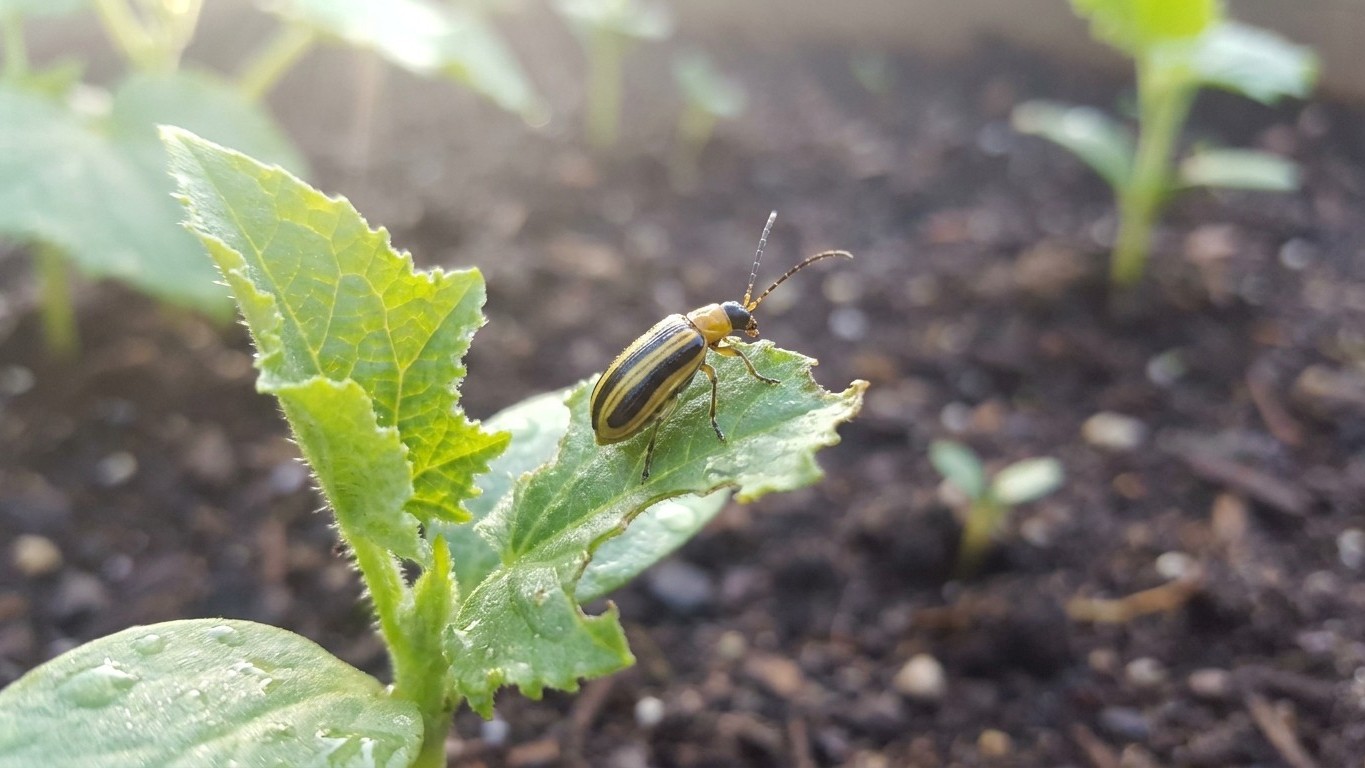

Striped cucumber beetles start showing up in Indiana gardens as soon as soil temperatures climb into the mid-60s, usually between late April and mid-May depending on how far south you are in the state. That first wave targets seedlings and transplants right as they emerge, which is exactly when the damage does the most harm. Stopping them means combining timing, physical barriers, and targeted treatment rather than relying on a single fix.
When Striped Cucumber Beetles Show Up in Indiana

These beetles overwinter as adults, tucked into leaf litter, grass clumps, and the edges of woodlots near last year’s garden beds. They don’t fly far when the weather turns cold. Instead, they hunker down and wait. Once soil temperatures hold steady above 65°F, they crawl out and start hunting for the first tender cucurbit leaves they can find.
Southern Indiana counties, think Evansville, Jasper, or Vincennes, tend to see beetle activity a week or two earlier than the northern tier around South Bend or Fort Wayne. That gap matters if you’re timing a planting date around avoiding the worst pressure. Statewide, most gardeners report the first sightings sometime in the first half of May, right alongside cucumber and squash seedlings breaking through the soil.
Indiana typically sees two generations per season. The overwintering adults lay eggs at the base of cucurbit plants in late May and June. Those eggs hatch into larvae that feed on roots underground for a few weeks, then pupate in the soil and emerge as a second wave of adults in July and into August. This second generation is often the one that catches gardeners off guard, showing up just as vines are setting fruit and looking healthy.
Identifying the Beetle and Its Damage
The adult is small, about a fifth of an inch long, yellow with three bold black stripes running down its back and a black head. It’s easy to confuse with the Spotted cucumber beetle, which is similarly sized but covered in black dots instead of stripes. Both feed on cucurbits, but the striped version is the more aggressive early-season threat to seedlings in Indiana gardens.
Feeding damage on young plants looks like ragged holes in the cotyledons and first true leaves, sometimes chewed down to the stem. A handful of beetles can kill a seedling outright within a couple of days, especially if cold, wet weather is already slowing the plant’s growth. On older plants, the beetles move to flowers and the undersides of leaves, leaving less dramatic but still noticeable scarring.
The bigger threat isn’t the chewing. It’s what the beetle carries in its gut. Striped cucumber beetles can transmit Erwinia tracheiphila, the bacterium responsible for cucurbit bacterial wilt. Cucumbers and muskmelons are highly susceptible. A plant can look perfectly fine one week and be collapsed and wilted the next, with no way to save it once the bacteria clog the vascular system. Squash, pumpkins, and watermelon show more tolerance, though they aren’t immune.
Wilt symptoms start with a single leaf or vine drooping during the heat of the day, even with adequate soil moisture. Within a week or two, the whole plant can be down. If you cut a wilted stem and squeeze out a milky sap that strings when you touch it with a knife, that’s a strong indicator of bacterial wilt rather than simple drought stress.
What Actually Stops Striped Cucumber Beetles
No single method wipes out this pest completely. The gardeners who keep damage low usually stack two or three tactics together, starting before the beetles even arrive.
Timing and physical barriers
Floating row covers are the single most effective tool for protecting seedlings during that critical early window. Laid over the bed at transplanting and sealed at the edges with soil or stakes, they physically block adult beetles from reaching the plants. The catch: covers have to come off once flowers open, since cucurbits need bees and other pollinators to set fruit. That timing gap, roughly three to five weeks depending on the variety, is when most feeding damage happens if the cover comes off too early or too late.
Delaying planting by a week or two past the earliest safe date can also help gardeners in central and northern Indiana dodge the peak of the overwintering adult emergence. It’s a small window, but cucurbit seedlings that go in after the first beetle surge has settled tend to establish faster root systems and shrug off feeding pressure better than those planted right into the emergence peak.
Trap crops and monitoring
Blue Hubbard squash is unusually attractive to striped cucumber beetles compared to cucumbers and melons. Planting a few Blue Hubbard plants around the perimeter of a cucurbit bed, a week or two ahead of the main crop, pulls beetles toward those sacrifice plants instead of the crop you actually want to harvest. Once beetles concentrate on the trap plants, they can be treated or removed without spraying the entire garden.
Yellow sticky traps placed at plant height give an early warning sign that beetles are active before damage becomes obvious. Checking traps twice a week during the first three weeks after planting helps catch a population spike before it turns into wilted seedlings. A rough threshold worth knowing: one beetle per plant at the seedling stage is generally enough to justify some form of intervention on highly susceptible crops like cucumber and muskmelon, since even light feeding at that stage carries disease risk.
When insecticides make sense
For gardeners dealing with heavy pressure, targeted insecticide use still has a role, particularly right at transplanting when row covers aren’t yet in place or have to come off for pollination. Products containing spinosad or pyrethrins are commonly used on home garden cucurbits and break down relatively fast, which limits harm to pollinators if applied in the early morning or evening when bees aren’t actively foraging.
Kaolin clay, sprayed as a fine white film over leaves and stems, works differently. It doesn’t kill beetles outright but makes the plant surface unappealing for feeding and egg-laying. Some Indiana growers use it as a lower-impact option during the first few weeks after seedlings go in, reapplying after rain washes it off.
Whatever product gets used, spraying blooms during active pollinator visits does more harm than good. Cucurbits depend heavily on bee visits to produce fruit, so timing any spray for early morning before flowers fully open, or evening after bees have moved on, protects the pollination process while still knocking back beetle numbers.
Reducing Pressure Year to Year
Crop rotation helps more than most gardeners expect. Moving cucurbits to a different part of the yard each season, even just twenty or thirty feet away, forces overwintering adults to search harder for their preferred host plants come spring. It won’t eliminate beetles, but it thins out the population that would otherwise emerge right next to last year’s infested bed.
Cleaning up plant debris in fall matters just as much. Leaving cucumber and squash vines in place through winter gives adult beetles a ready-made shelter close to next year’s planting site. Tilling under or removing spent vines by late October, before the ground freezes, cuts down on nearby overwintering habitat.
Some cucurbit varieties show partial resistance to bacterial wilt even when beetle feeding still occurs. Certain squash and pumpkin cultivars tolerate the disease far better than most cucumber varieties, which is worth factoring in for anyone who has lost cucumber crops to wilt in previous seasons and wants a more forgiving plant to work with while still managing beetle numbers through covers and monitoring.
One detail that surprises a lot of home gardeners: adult beetles that survive the season without transmitting disease can still live long enough to overwinter and start the cycle again the following spring, meaning a beetle population that seems to fade out in September isn’t gone. It’s just settling in nearby for the winter, close enough to find next year’s seedlings within days of waking up.
Related guides
- Striped cucumber beetle in Michigan: When It Shows Up and What Stops It
- Striped cucumber beetle in Ohio: When It Shows Up and What Stops It
- Striped cucumber beetle in Iowa: When It Shows Up and What Stops It
- Striped cucumber beetle in Kansas: When It Shows Up and What Stops It