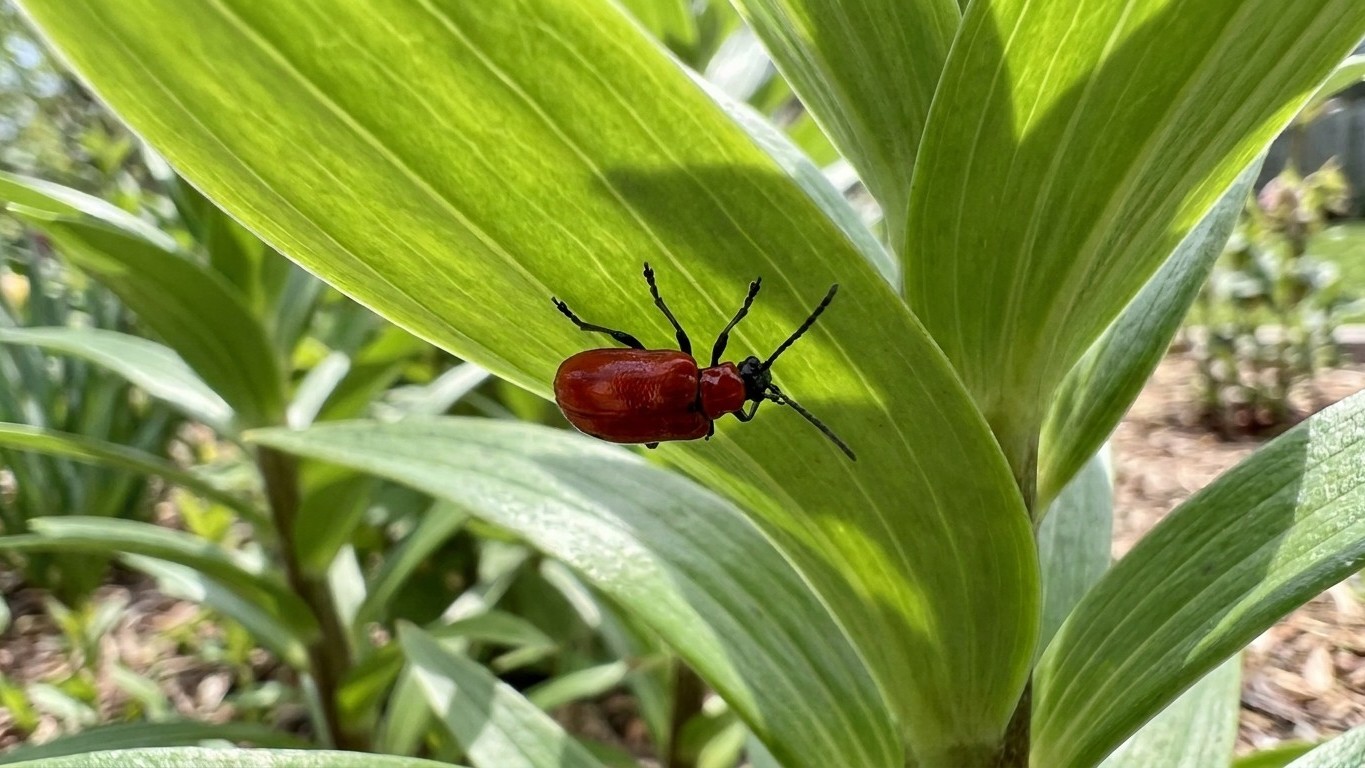

Lily leaf beetle shows up in Iowa gardens starting in mid-to-late April, right as true lily shoots push through the soil, and it sticks around through fall as new adults settle in for winter. The pest has been creeping westward across the Midwest for two decades, and Iowa now sits inside that expanding range rather than outside it. Hand-picking, careful monitoring of leaf undersides, and targeted insecticide use are what actually slow it down. Waiting until the plant looks skeletonized is too late for that season’s bloom.
When Lily Leaf Beetle Arrives in Iowa Gardens

This insect (Lilioceris lilii) isn’t native to North America. It arrived in Montreal in the 1940s, likely on imported bulbs, and spent decades working its way south and west through New England before jumping into the Great Lakes region. Wisconsin, Illinois, Michigan, and Minnesota all have established populations at this point, and Iowa borders three of those states. Gardeners in the northern and eastern counties, closer to that established range, tend to encounter the beetle before those in southern or western Iowa.
Iowa State University Extension and Outreach entomologists track reports of this pest as part of broader invasive insect monitoring, and sightings have become more frequent over the past several growing seasons. There’s no statewide quarantine or regulatory program targeting it the way there is for something like emerald ash borer, largely because lily leaf beetle spreads on its own through flight and hitchhikes easily on nursery stock and bulb shipments. A gardener who buys lily bulbs from an out-of-state supplier, or receives a plant division from a friend in Minneapolis, could introduce the beetle to a yard that’s never seen one.
Spotting the Pest Before It Spots Your Lilies
Adult lily leaf beetles are hard to miss once you know what to look for: bright scarlet-red wing covers, a jet-black head, black legs, and a black underside. They run about 3/8 inch long, roughly the size of a lady beetle but more elongated and glossy. When disturbed, they don’t fly off immediately. Instead they drop to the ground and flip onto their backs, exposing that black belly, which blends into shadow and soil far better than the red shell does. That trick fools a lot of gardeners into thinking the beetle vanished.
Eggs are the next clue. Females lay them in tidy rows on the underside of lily leaves, usually near the midrib, and the eggs are small, orange-red, and easy to mistake for something harmless if you’re not checking leaves regularly. A single female can lay several hundred eggs over a season, spread across multiple plants.
Larvae are the part most people find genuinely unpleasant. They’re soft-bodied, orange or greenish-yellow, and they cover themselves in their own excrement as they feed. That slimy dark coating acts as a defense against birds and other predators, and it also makes the larvae look more like bird droppings than an insect at a glance. Once you know that camouflage trick, you’ll spot it fast on infested foliage.
The Beetle’s Life Cycle, Season by Season
Adults overwinter in leaf litter, mulch, and garden debris, often not directly on the lily plants themselves but somewhere nearby in the yard, sometimes even under debris from unrelated shrubs or perennial beds. As soil temperatures rise in spring, they emerge and fly or crawl to the nearest lily foliage, where they feed briefly before mating.
Egg-laying typically runs from late April through June in Iowa’s climate, matching the period when lily shoots are tender and rapidly growing. Eggs hatch within one to two weeks, and the larvae feed voraciously for roughly three to four weeks, moving from leaves to buds and even into developing flowers when populations are heavy. After that feeding period, larvae drop to the soil to pupate, usually in the top few inches of dirt right around the base of the host plant.
New adults emerge from the soil in mid-to-late summer, often July into August, and these fresh beetles feed for several more weeks before seeking overwintering sites as temperatures drop. Iowa generally sees one generation per year, though a warm, extended fall can occasionally push a partial second wave of activity.
What It Eats, and What It Leaves Alone
The name is specific for a reason. Lily leaf beetle targets true lilies, meaning plants in the genus Lilium, such as Asiatic, Oriental, Trumpet, and Turk’s cap types, along with fritillaria (Fritillaria species) like checkered lily and crown imperial. Both adults and larvae feed on leaves, stems, buds, and flowers, and a heavy infestation can strip a plant down to bare stalks within a couple of weeks.
Daylilies (Hemerocallis) are a different plant family entirely and are not a preferred host, despite sharing “lily” in the common name. This mix-up sends a lot of gardeners searching for beetles on the wrong plants. Canna lilies, calla lilies, and lily-of-the-valley are also unrelated botanically and generally left alone. If the damage is showing up on daylily foliage, something else is responsible, likely slugs, deer, or a different beetle species entirely.
Repeated, unmanaged infestations don’t just ruin one season’s blooms. Because larvae feed heavily on foliage that the bulb needs to photosynthesize and store energy for next year, several consecutive bad seasons can weaken and eventually kill the bulb outright. That’s the real long-term risk for anyone growing prized Oriental or Asiatic lily collections.
Stopping Lily Leaf Beetle: Methods That Work
Hand-picking and monitoring
Early morning checks, when beetles are sluggish from cooler temperatures and less likely to drop and disappear, give the best odds of catching adults before they lay eggs. Checking the undersides of leaves every few days from late April through June lets a gardener crush egg rows before they hatch, which is far more effective than trying to control larvae once they’ve spread across the plant. Larvae can be picked off by hand too, though the excrement coating makes this a job best done with gloves.
Clearing garden debris and old plant material away from lily beds in fall reduces overwintering shelter, though it won’t eliminate the pest since adults can fly in from elsewhere in the yard or from a neighbor’s property. Isolation alone rarely solves the problem in a suburban setting where lots sit close together.
When insecticides make sense
For gardeners dealing with heavier populations, insecticidal options exist that target the beetle without wiping out every insect in the bed. Spinosad-based products and neem oil are commonly used on ornamentals and tend to be effective against larvae when applied directly to infested foliage. Pyrethrin sprays can knock down adult populations but break down quickly in sunlight, so timing and reapplication matter.
Systemic insecticides containing neonicotinoids such as imidacloprid offer longer control by making the entire plant toxic to feeding insects, but they carry real concerns for pollinators, since lily flowers do attract bees. Anyone considering a systemic product should apply it well before bloom and avoid soil-drench applications on plants actively flowering. The EPA’s pollinator protection guidance covers general timing and application practices that reduce risk to bees when using these chemicals around flowering plants.
Biological control research in the Northeast has released parasitoid wasps (Tetrastichus setiferum) that attack lily leaf beetle larvae, and those populations have established in parts of New England. That program hasn’t extended into Iowa or the broader Midwest yet, so for now, physical removal paired with targeted spot-treatment remains the practical approach for home gardeners here.
One detail worth remembering heading into next spring: the beetle’s overwintering habit means this year’s untreated adults are already planning next April’s damage. A thorough fall cleanup around lily beds, even a modest one, changes how many beetles show up before the first leaf unfurls.