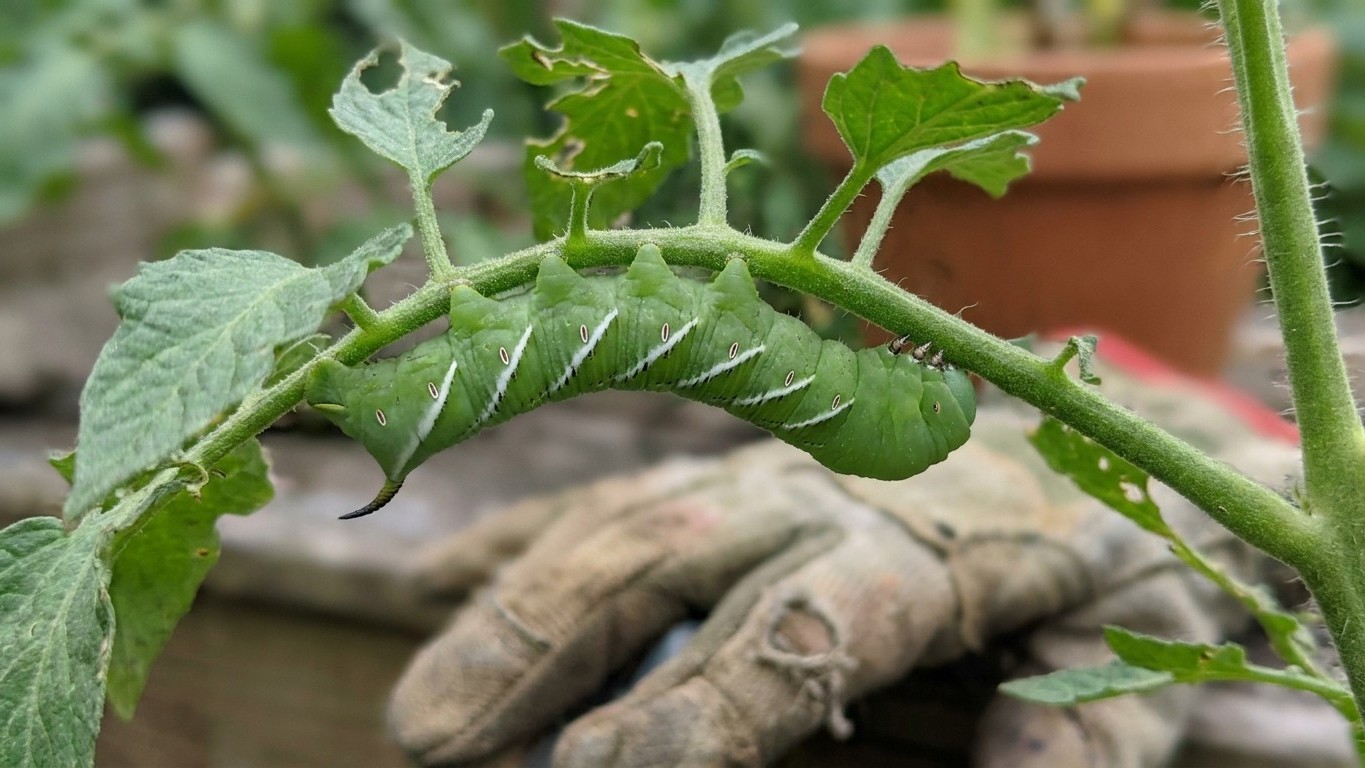

Tomato hornworms typically appear in Pennsylvania gardens from late June through August, with damage peaking in mid-summer as the caterpillars reach their full 3 to 4 inch length. The most reliable stops are handpicking, introducing or protecting parasitic wasps, and applying Bacillus thuringiensis (Bt) while the larvae are still small. Fall tilling also disrupts the pupae overwintering in the soil, cutting down next year’s population before it starts.
Identifying the Tomato Hornworm (and Its Look-Alike)

Pennsylvania gardeners actually deal with two nearly identical caterpillars: the tomato hornworm (Manduca quinquemaculata) and the tobacco hornworm (Manduca sexta). Both are fat, green, and startlingly large, but the markings tell them apart. The tomato hornworm has eight V-shaped white stripes running down each side and a black horn near its tail. The tobacco hornworm’s stripes run diagonally and straight, and its horn is red. Neither distinction matters much for control, since both feed the same way and respond to the same treatments, but it’s a fun fact to drop if you’re comparing notes with a neighbor.
What throws people off every year is how a caterpillar this size can hide so well. The green coloring matches tomato foliage almost exactly, and the hornworm tends to rest along a stem with its body pressed flat against the leaf’s underside. Most gardeners find them not by spotting the worm itself, but by spotting what it leaves behind: stripped stems where leaves used to be, dark green or black droppings (called frass) scattered on the leaves below, and sometimes chew marks on the green fruit itself.
When Hornworms Show Up in Pennsylvania
Pennsylvania’s climate typically supports one full generation of tomato hornworms per year, with a partial second generation possible in warmer regions of the state during long growing seasons. The adult moths, known as five-spotted hawk moths or sphinx moths, emerge from overwintering pupae in late spring, usually May into early June, and start laying eggs on the undersides of tomato leaves shortly after. Those eggs hatch within a week, and the resulting larvae feed steadily for three to four weeks before pupating again.
This means the visible feeding damage from the first generation tends to show up in late June and run through July. In southeastern Pennsylvania, where summers run longer and warmer, a second wave can emerge in August, giving gardeners near Philadelphia or Lancaster a second round to watch for just as the first tomatoes are ripening. Growers in the higher elevations of the Alleghenies or the northern tier counties usually see a shorter window, with most of the damage compressed into July.
Weather within a given season shifts these dates too. A cool, wet spring delays moth emergence and pushes the whole cycle back by one to two weeks. A hot, dry spring speeds things up. That’s why checking plants by calendar date alone isn’t as reliable as checking them by growth stage. Once tomato plants are flowering and setting fruit, that’s the signal to start looking under leaves regardless of what the calendar says.
Why the Life Cycle Matters for Timing Control
Hornworm pupae spend the winter buried three to six inches deep in garden soil, right where the previous year’s tomato plants grew. This detail matters because it means the population feeding on your tomatoes this August largely came from pupae sitting in that same bed all winter, not from moths flying in from somewhere else. Gardeners who till or turn that soil in the fall expose the pupae to freezing temperatures and hungry birds, which measurably reduces the number of moths that survive to lay eggs the following spring.
The flip side is that if you skip fall cleanup and leave the soil undisturbed, you’re essentially running a hornworm nursery through the winter. Rotating tomato plantings to a different part of the yard each year adds another layer of protection, since it forces newly emerged moths to travel farther to find host plants, and some simply don’t make it.
What Actually Stops Tomato Hornworms
Control works best when it’s layered rather than relying on a single method. Handpicking remains the fastest fix for an active infestation, since a single hornworm can strip a mature tomato plant of its leaves in a matter of days. Checking plants every two to three days during peak season, running a hand along the stems and flipping leaves to check the undersides, catches most of them before serious damage sets in. Dropping them into soapy water finishes the job.
Biological control does a lot of the work for gardeners who know what to look for. Braconid wasps, tiny parasitic insects common throughout Pennsylvania, lay their eggs directly into hornworm larvae. The wasp larvae then develop on the outside of the hornworm’s body, appearing as small white oval cases that look almost like grains of rice stuck to its back. A hornworm covered in these cocoons is already dying and is actively helping control the next generation, since the wasps that emerge will go on to parasitize more hornworms nearby. The instinct to squash it is understandable, but leaving a parasitized hornworm in place does more good than removing it.
For heavier infestations, Bacillus thuringiensis var. kurstaki, sold under several brand names as a biological insecticide, works specifically on caterpillars without harming bees, birds, or beneficial insects. It’s most effective applied while larvae are still small, generally under an inch and a half long, since older hornworms need to eat more of the treated leaf tissue before the bacteria takes effect. Spraying in the evening, when the product has time to settle before sun exposure breaks it down, improves results.
Broad-spectrum insecticides will kill hornworms too, but they also wipe out the braconid wasps and other predators that would otherwise keep populations in check on their own. That tradeoff tends to make infestations worse in following seasons, since gardeners lose the natural control system right when they need it. Reserving stronger chemical options for genuinely severe outbreaks, rather than reaching for them at the first sighting, keeps the biological controls intact.
Prevention Steps for Next Season
A handful of habits reduce hornworm pressure before it starts:
- Till or turn garden soil in fall to expose overwintering pupae to cold and predators
- Rotate tomato, pepper, and eggplant beds to a new spot each year
- Plant dill, basil, or marigolds nearby to attract parasitic wasps and other predatory insects
- Inspect plants weekly starting in late June, focusing on stem tips and leaf undersides
- Leave any hornworm with white cocoons on its back in place to finish the parasitism cycle
One detail that surprises a lot of first-time tomato growers: the adult moths that produce these caterpillars are strong enough fliers to travel more than a mile searching for host plants, and they’re most active at dusk, which is exactly why so few gardeners ever actually see the moth itself, only the damage its offspring leave behind weeks later.
Related guides
- Tomato hornworm in New Jersey: When It Shows Up and What Stops It
- Tomato hornworm in Delaware: When It Shows Up and What Stops It
- Tomato hornworm in Utah: When It Shows Up and What Stops It
- Tomato hornworm in Virginia: When It Shows Up and What Stops It
- Onion maggot in Pennsylvania
- Spotted lanternfly in Pennsylvania
- Colorado potato beetle in Pennsylvania