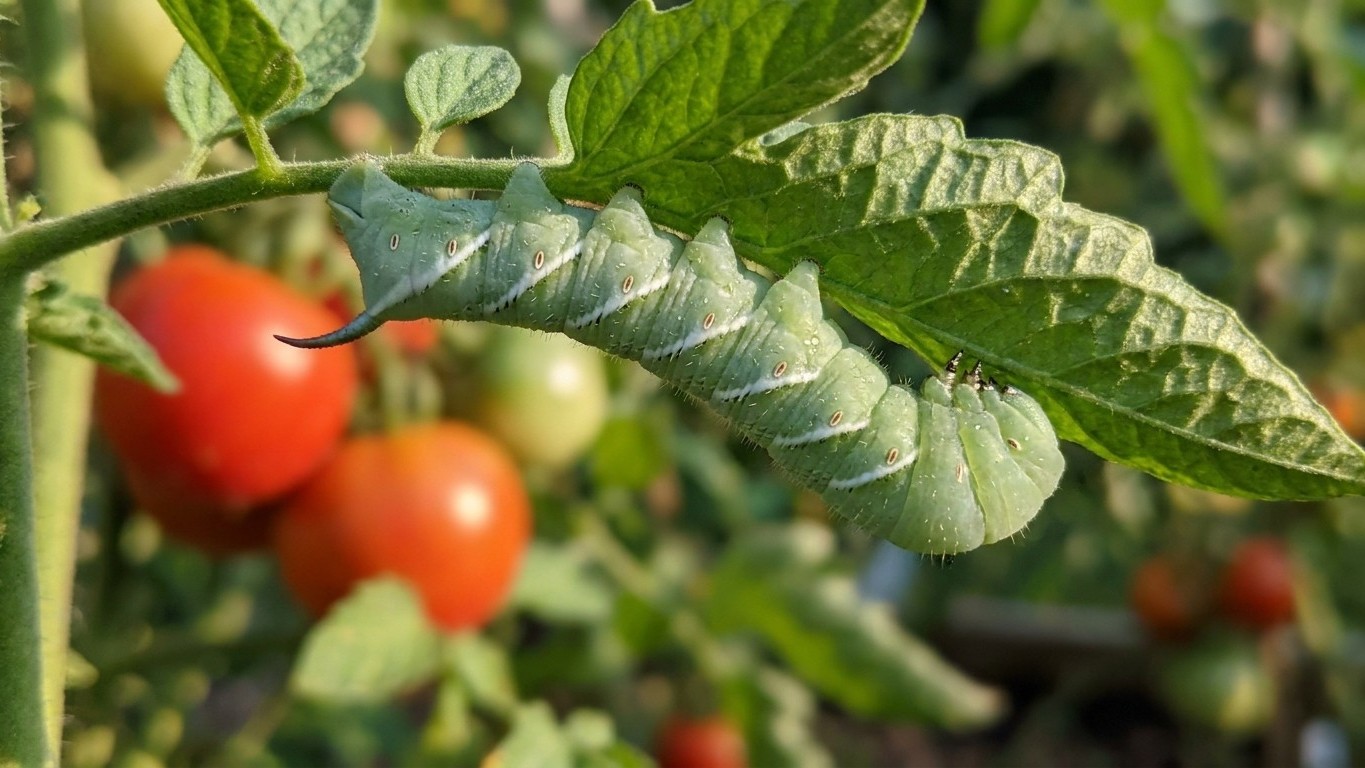

Tomato hornworms show up in Utah gardens from mid-June through September, with the heaviest damage typically hitting in July and August once the caterpillars reach their full four-inch size. Stopping them comes down to three reliable tactics: hand-picking at dusk, applying Bacillus thuringiensis (Bt) while worms are small, and tilling garden soil in fall to destroy overwintering pupae before they can emerge next spring.
That’s the short version. But Utah’s mix of high desert valleys, mountain-shadowed benches, and the warmer Dixie corridor around St. George means timing and pressure vary a lot depending on where your garden sits. A tomato patch in Cache Valley behaves nothing like one in Washington County, and knowing which pattern applies to you changes how you scout and when you act.
When Tomato Hornworms Actually Arrive in Utah

The tomato hornworm (Manduca quinquemaculata) spends winter as a hard brown pupa buried three to six inches down in garden soil. Once soil temperatures climb into the 60s, usually late May along the Wasatch Front, the pupa transforms into a sphinx moth, sometimes called a hummingbird moth for the way it hovers at petunias and moonflowers at dusk. That moth mates and lays pale green eggs on the undersides of tomato, pepper, eggplant, or potato leaves within a week or two.
Eggs hatch in four to five days. The caterpillar that emerges is barely a quarter-inch long and easy to miss, but it grows fast, molting through five stages over about a month. By the time gardeners notice stripped stems and pellet-sized black droppings on the leaves below, the worm has often already reached two or three inches. Full grown, at four to five inches with white diagonal stripes and a curved horn on the tail end, a single hornworm can strip a young tomato plant of foliage in 48 hours.
Elevation drives the calendar more than almost anything else in Utah. In the Salt Lake Valley and Provo bench, gardeners usually see the first worms in late June, with a second wave possible in August if the season runs warm and long. Higher ground, Cache Valley, Park City, or anywhere above 5,500 feet, tends to get a single generation, often not visible until mid-July, because the shorter frost-free window doesn’t leave time for a second brood to mature. Down in St. George and the rest of Washington County, where the growing season stretches from March into October, two full generations are common, and the second one, hatching in August, can be the more destructive of the two simply because plants are already stressed by summer heat.
The Tobacco Hornworm Look-Alike
Utah gardens occasionally host the tobacco hornworm (Manduca sexta) too, though it’s far less common than in the Southeast. The quickest way to tell them apart: the tomato hornworm has a black horn and white V-shaped markings, while the tobacco hornworm has a red horn and diagonal white stripes without the V. Both feed on the same plants and respond to the same controls, so misidentifying one for the other doesn’t change your strategy much.
What Actually Stops Tomato Hornworms
No single method wipes out a hornworm population by itself. What works is layering a few tactics across the season, starting before you even see a worm.
Hand-Picking Still Wins
For most backyard gardens, walking the rows at dusk with a flashlight remains the most effective control. Hornworms are surprisingly hard to spot in daylight, their green coloring blends perfectly with tomato foliage, but their droppings give them away. Look on the ground and on leaves below any chewed section, then trace upward. Once found, drop them into soapy water or, if you’re not squeamish, cut them in half with pruning shears. Some Utah gardeners relocate them to a spot with fewer valuable plants, but since the moths can fly over a mile to lay eggs, that rarely solves anything long-term.
Bt Sprays, Timed Right
Bacillus thuringiensis, sold under several brand names as a biological caterpillar control, works by disrupting the digestive system of feeding larvae. It’s harmless to bees, birds, and people, but it only kills caterpillars that are actively eating treated leaves, and it breaks down within a week of application, faster in the intense UV of Utah’s high-desert sun. That means timing matters more than the product itself. Spraying when worms are in their first two growth stages, generally within the first ten days after eggs hatch, gets far better results than waiting until you spot a four-inch caterpillar that’s already eaten half your plant. By that size, Bt still works but takes longer, and the damage is already done.
Let the Parasitic Wasps Do Some of the Work
If you ever find a hornworm covered in what looks like small white grains of rice standing on end, leave it alone. Those are the cocoons of a braconid wasp, a natural parasite that lays eggs inside the caterpillar. The wasp larvae feed internally, then emerge to pupate on the worm’s back, and the hornworm dies shortly after. Killing that caterpillar kills dozens of wasps that would otherwise go on to parasitize more hornworms in your yard. Utah State University Extension entomologists point to braconid wasps as one of the more dependable natural checks on hornworm populations in home gardens, and avoiding broad-spectrum insecticides helps keep these wasps around.
Fall Tilling Breaks the Cycle
Because hornworms overwinter as pupae in the top six inches of soil, turning that soil in October or November after harvest exposes pupae to freezing temperatures and to birds, which will happily pick them off a freshly tilled bed. This single step, done once at the end of the season, reduces the number of moths emerging the following spring more than almost any spray applied during summer. Gardeners who till in fall consistently report fewer hornworms the next year, according to extension research on hornworm life cycles.
Companion Planting and Prevention
Marigolds, borage, and dill get mentioned often as hornworm deterrents, but the evidence for repelling the moths directly is thin. What these plants do reliably is attract parasitic wasps and other beneficial insects by supplying nectar sources, which indirectly reduces hornworm survival. Basil and other strongly scented herbs planted near tomatoes may mask the chemical signals moths use to locate host plants, though results vary from one garden to the next and shouldn’t replace scouting.
Crop rotation matters more than most gardeners realize. Planting tomatoes, peppers, and eggplant in the same bed year after year lets pupae that survive winter emerge directly under next year’s host plants. Rotating nightshade family crops to a different section of the garden each year forces emerging moths to fly farther to find food, giving predators more chances to intercept them along the way.
Regional Notes for Utah Gardeners
Along the Wasatch Front, where most of the state’s population gardens, expect scouting to matter most from the Fourth of July through Labor Day. That six-to-eight week stretch covers egg-laying, hatching, and the voracious final feeding stages before pupae drop to the soil.
In southern Utah’s warmer zones, the season runs longer on both ends. Gardeners there should start checking plants as early as late May and keep watching into September, since the second generation often catches people off guard after they’ve relaxed following the first wave.
At higher elevations, including much of Cache and Summit counties, a single generation means the window is shorter but no less intense. Missing the two-week period when caterpillars are small enough for Bt to work well often means hand-picking becomes the only practical option for the rest of the season.
One quirk specific to Utah’s dry climate: because humidity stays low across most of the state, fungal diseases that sometimes suppress hornworm populations in wetter regions are less common here. That makes the parasitic wasps and manual controls carry more of the load than they might in, say, the Midwest or Southeast, where natural fungal die-offs occasionally crash hornworm numbers on their own.
Related guides
- Tomato hornworm in Idaho: When It Shows Up and What Stops It
- Tomato hornworm in Wyoming: When It Shows Up and What Stops It
- Tomato hornworm in Virginia: When It Shows Up and What Stops It
- Tomato hornworm in Arizona: When It Shows Up and What Stops It
- Flea beetles in Utah
- Imported cabbageworm in Utah
- Leafminers in Utah
- Tomato hornworm in New Jersey: When It Shows Up and What Stops It