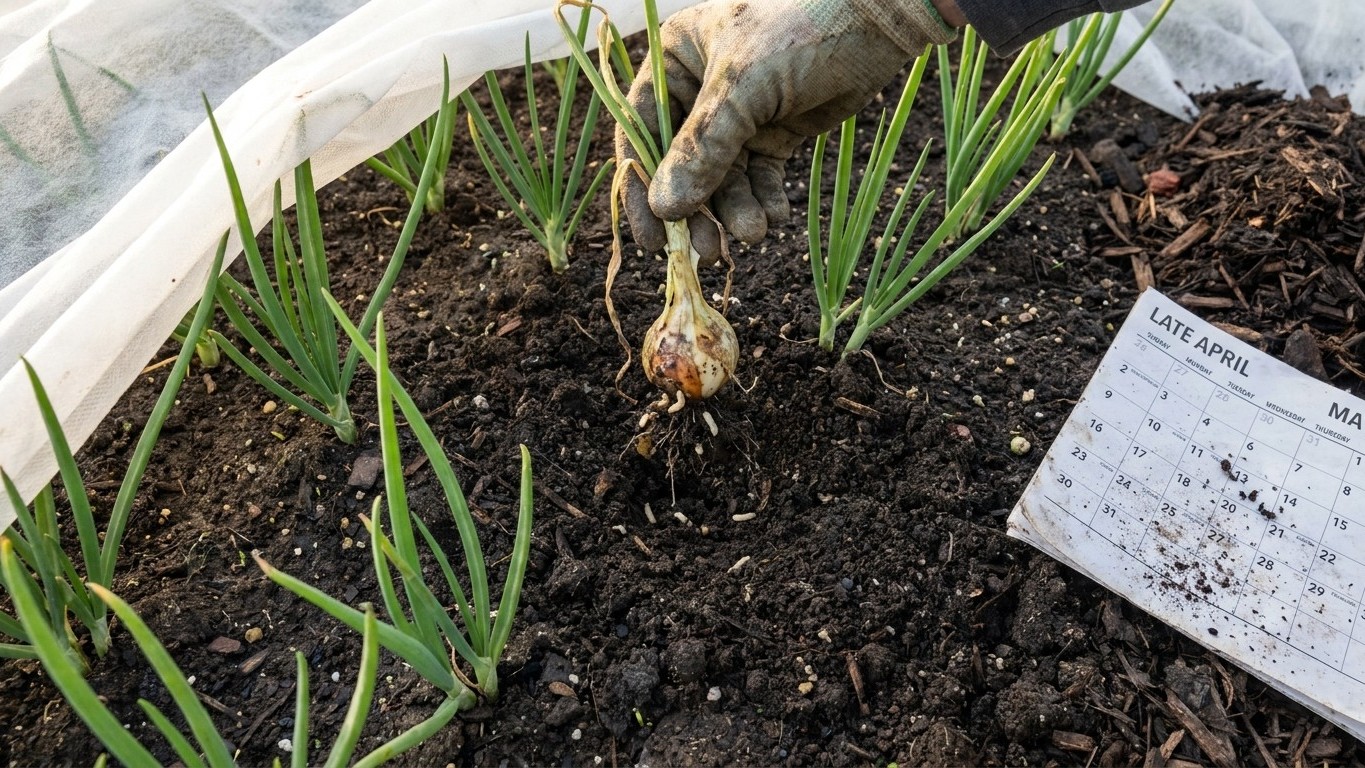

Onion maggot shows up in Pennsylvania soil each spring once temperatures push past roughly 40°F for a sustained stretch, usually between mid-April and early May depending on region. The fastest way to stop it isn’t a single spray but a stacked defense: crop rotation, floating row covers at planting, and removing cull onions before winter. Miss any one of those three, and the pest finds a way back in.
This isn’t a hypothetical threat for backyard gardeners in the Keystone State. Pennsylvania State University’s entomology program has tracked onion maggot (Delia antiqua) as a recurring problem for both commercial growers in Lancaster County and home gardeners in the Lehigh Valley for decades. The insect doesn’t care whether you’re growing a quarter-acre of scallions for a farmers market or six onion sets in a raised bed. Once it’s in your soil, it stays.
What Onion Maggot Actually Is

The adult is a gray fly, about a quarter-inch long, easy to mistake for a small housefly if you’re not looking closely. It’s the larval stage that does the damage. Females lay eggs at the base of onion plants or in cracks near the bulb, and within a week the eggs hatch into small white maggots that tunnel straight into the bulb tissue.
Seedlings and transplants take the worst hit. A young onion plant attacked by even a handful of maggots will often wilt and die within days, the whole plant pulling out of the ground with a mushy, rotted base. Mature bulbs can survive an attack, but they end up riddled with tunnels and prone to secondary rot, which means they won’t store past a few weeks even if they look fine at harvest.
Onion maggot belongs to the same fly family as cabbage maggot and seedcorn maggot, and gardeners who’ve dealt with one of those pests will recognize the pattern. All three overwinter as pupae in the soil, all three emerge in a temperature-driven window, and all three respond to nearly identical control strategies.
When Onion Maggot Shows Up Across Pennsylvania
Timing shifts noticeably depending on where in the state you garden. Pennsylvania spans USDA hardiness zones 5b through 7b, and that range translates into a real gap in pest emergence dates.
Southeastern Pennsylvania (Philadelphia, Lancaster, Chester County)
This region warms up fastest. First-generation adult flies typically emerge in mid-to-late April, right around the time forsythia finishes blooming and lilacs start to bud. Growers here often see peak egg-laying activity in the first two weeks of May, which lines up almost exactly with when spring-planted onion sets and transplants are still tender and vulnerable.
Central Pennsylvania (Harrisburg, State College, the Susquehanna Valley)
Emergence lags about one to two weeks behind the southeast corner of the state. Late April into early May is the window to watch, with a second generation of flies typically appearing in July.
Northwestern Pennsylvania and the Erie region
Lake Erie’s moderating effect complicates things. Cooler spring soil temperatures near the lake can push first emergence into early May, but the lake also extends the growing season into fall, meaning some growers see a third generation of flies show up in September, feeding on late-planted onions and leeks.
Three generations per year is typical statewide in a normal season, with the first being the most destructive because it coincides with the most fragile stage of the crop. The second and third generations tend to target bulbs that are already sizing up, which is less catastrophic but still shortens storage life.
What Actually Stops Onion Maggot
No single tactic handles this pest reliably on its own. The insect’s biology, eggs laid at soil level, larvae protected inside plant tissue, pupae overwintering underground, means it dodges a lot of standard interventions. Effective control comes from layering several methods.
Crop Rotation Breaks the Cycle
Onion maggot pupae overwinter in the same soil where the previous season’s onions grew. Planting onions, leeks, garlic, or shallots in that same spot the following year hands the emerging flies an easy target right where they already are. A three-year rotation away from allium crops in that bed is the single most effective long-term fix, and it costs nothing but a little planning.
Home gardeners with small plots sometimes skip rotation because space is tight. That’s understandable, but it’s also the reason so many backyard onion patches see worse damage year after year instead of better.
Row Covers Block Egg-Laying
Lightweight floating row cover, the same spun-bond fabric used to protect early tomatoes from frost, works as a physical barrier against adult flies. Laid over onion beds immediately after planting and sealed at the edges with soil or landscape staples, it prevents females from ever reaching the plants to lay eggs.
The catch is timing. Covers need to go on before the first flight of adults, which in southeastern Pennsylvania means having them in place by mid-April. Covers also need to come off if you’re growing onions that require pollination for seed production, though for standard bulb or scallion crops that’s not a concern since onions grown for eating don’t need pollinators.
Sanitation Removes the Overwintering Site
Cull onions, the small, damaged, or leftover bulbs discarded at harvest, are a magnet for egg-laying flies if left in the garden or tossed on a compost pile near the growing area. Clearing all onion debris out of the bed at season’s end, and disposing of any bulbs showing tunnel damage rather than composting them nearby, cuts down the local population significantly.
Weeds in the allium family (wild garlic and wild onion, both common in Pennsylvania pastures and lawns) can also host the pest. Keeping those cleared from around a vegetable garden removes another reservoir.
Timing the Planting Date
Delaying onion transplanting by even a week or two, so seedlings go into the ground after the first big flight of adult flies has passed, reduces exposure during the most vulnerable stage. This requires watching local emergence data rather than working strictly off the calendar, since a warm March can shift the whole timeline earlier.
Some Pennsylvania growers split the difference by starting a portion of their onion crop very early under cover (protected from the first flight) and holding back a second planting until late May, once the first-generation flies have finished laying and died off.
Beneficial Nematodes and Biological Options
Certain species of entomopathogenic nematodes, applied to soil as a drench, can attack onion maggot larvae and pupae before they reach the adult stage. These are sold at garden centers as a soil treatment and need consistent soil moisture and the right temperature range to work, so they’re most effective as part of an early-season program rather than a rescue treatment once damage is visible.
Ground beetles and other soil-dwelling predators also feed on onion maggot pupae naturally. Reducing tillage in onion beds and avoiding broad-spectrum insecticide use preserves these predator populations, which matters more over multiple seasons than any single application would.
Insecticide Options, Used Sparingly
Chemical controls exist but work best as a supplement to the cultural practices above, not a replacement. Because larvae live inside plant tissue almost immediately after hatching, insecticides need to target adult flies or newly hatched larvae at the soil surface, which means timing the application to match local emergence data. Products containing spinosad are commonly labeled for onion maggot in home garden use and carry a lower toxicity profile for beneficial insects than older broad-spectrum options. Always check current labeling, since registrations and use rates change, and a product legal in one state isn’t automatically approved for the same crop in another.
The Environmental Protection Agency’s integrated pest management framework, which prioritizes monitoring and cultural controls before chemical intervention, applies directly here. Details on that approach are available through the EPA’s IPM principles page.
Spotting Damage Before It Spreads
Wilting seedlings that pull out of the ground with soft, discolored bases are the clearest early sign. Cutting open a suspect bulb and finding white, legless maggots up to a third of an inch long confirms the diagnosis, distinguishing it from other causes of onion decline like fungal rot or thrips damage, which show different symptoms (thrips leave silvery scarring on leaves, and fungal rots typically start from the neck down rather than the root up).
Yellow sticky traps placed at ground level near onion rows can catch adult flies before eggs are laid, giving a rough gauge of when local populations are active. Checking traps twice a week starting in early April gives Pennsylvania gardeners a practical, low-cost way to time row cover installation or any planned insecticide application to actual conditions in their yard rather than a generic calendar date.
Storage onions that made it through the season without visible damage can still harbor a small number of larvae near the neck. Bulbs meant for winter storage benefit from a quick inspection at curing time, since a handful of infested onions left in a storage bin will accelerate rot in the neighboring, healthy bulbs.