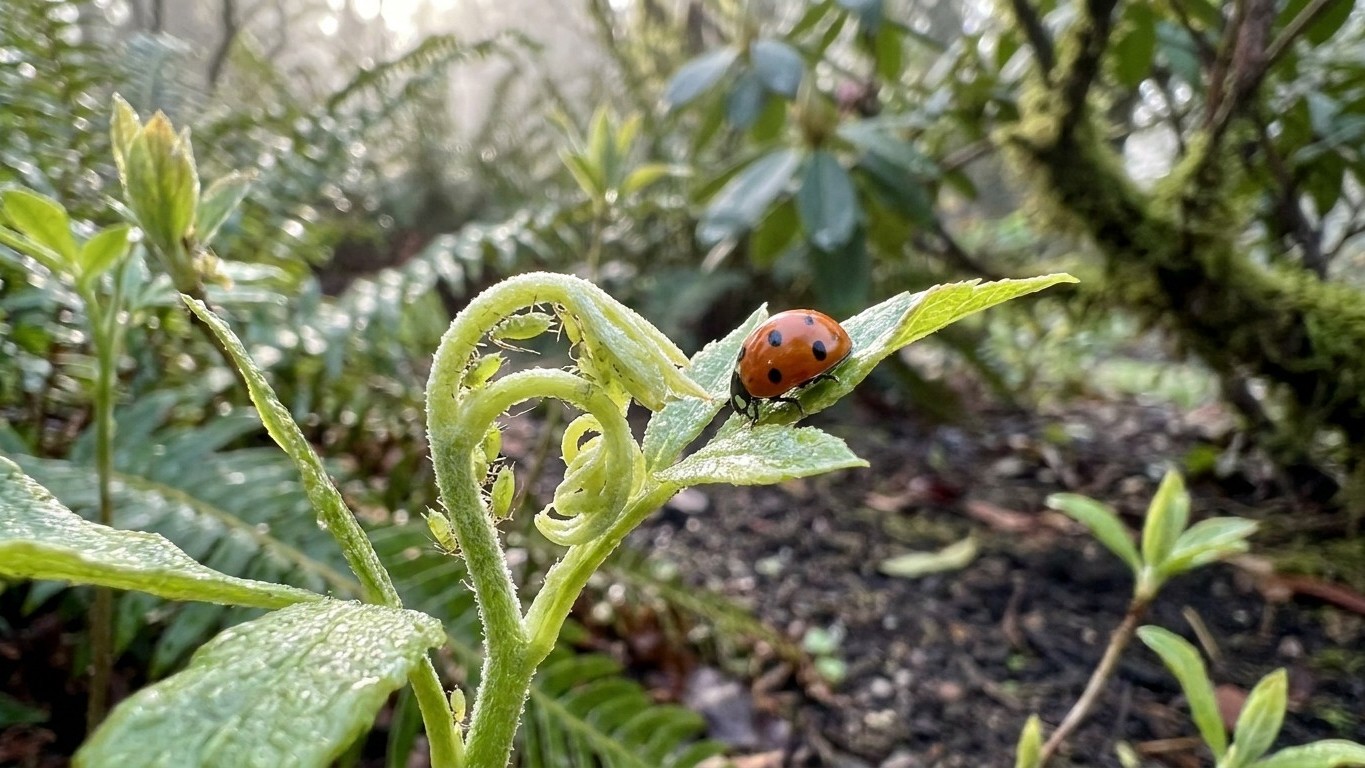

Aphids start showing up in Washington gardens as soon as daytime temperatures hold steady in the 50s, which usually means mid-March in Seattle and Tacoma, and closer to mid-April east of the Cascades. Once they arrive, soap sprays, strong water blasts, and a healthy population of lady beetles do more to stop them than most store-bought pesticides. The real trick is catching them in the first two weeks, before a single wingless female turns into a colony of hundreds.
When Aphids Show Up in Washington

Washington’s split personality, wet and mild on one side of the Cascades, dry and hot on the other, means aphid season doesn’t run on the same calendar statewide. In Puget Sound cities like Seattle, Bellevue, and Olympia, the marine air keeps temperatures moderate enough that some aphid species never fully disappear. Green peach aphids and rose aphids can be found feeding on overwintering weeds and evergreen shrubs even in January during a mild stretch, though populations stay low until new spring growth gives them something soft and sugary to eat.
East of the mountains, in Spokane, Yakima, and the Tri-Cities, winters are colder and summers run hotter and drier. Aphids there tend to hold off until April, then explode fast once irrigation water and warm days line up. Because eastern Washington grows a huge share of the nation’s apples, hops, and cherries, aphid outbreaks on the ag side get tracked closely by growers, and that regional data mirrors what happens in backyard gardens too: a warm, dry June is almost always followed by a spike in aphid numbers on roses, vegetables, and young fruit trees.
Spring Flush and Fall Rebound
Most Washington gardeners see two waves. The first hits in May and June, when new leaves and stems are tender and aphid reproduction rates peak (a single female can produce a dozen or more offspring a day under good conditions, and those offspring can start reproducing within a week). The second wave often shows up in September, especially in western Washington where a mild fall stretches the growing season. That second flush tends to target late vegetables, roses putting out one more bloom cycle, and any tree fruit still holding leaves.
Common Aphid Species in Washington Yards
Not every aphid behaves the same way, and knowing which one you’ve got changes the timeline for control.
- Green peach aphid: pale green to yellow, found on vegetables, peppers, and ornamentals statewide; one of the most common species in home gardens
- Rose aphid: pink to green, clusters tightly on new rose buds and stems every spring
- Woolly apple aphid: bluish-gray with a cottony white coating, targets apple trees and is a recurring problem in both backyard orchards and commercial operations in the Yakima Valley and Wenatchee area
- Spirea aphid: common on spirea and other flowering shrubs, especially in western Washington landscapes
- Potato and melon aphids: show up on vegetable gardens, particularly cucurbits and nightshades, through summer
Woolly apple aphid deserves a special note for Washington homeowners with fruit trees. Its waxy coating makes it resistant to a lot of contact sprays, and it likes to hide in bark crevices and root zones, not just on leaves. That’s part of why it’s a bigger management headache than the soft-bodied species that dominate flower beds.
How to Spot an Infestation Before It Spreads
Curled or puckered new leaves are usually the first visible sign, showing up before you ever see the insects themselves. Flip the leaf over and look at the underside of the stem tip. A cluster of small, soft-bodied insects, often clumped together rather than scattered, is the giveaway. Color varies by species and even by the individual insect’s diet, so don’t rule out aphids just because they’re not green.
Sticky residue on leaves, patio furniture, or the hood of a car parked under a tree is honeydew, the sugary waste aphids excrete as they feed. Where honeydew builds up, a black, sooty mold often grows on top of it. That mold doesn’t directly damage the plant but it blocks sunlight from reaching the leaf surface, which can add stress on top of what the aphids are already causing. Ants marching up and down a stem in unusually high numbers are another tell, since several ant species farm aphids for their honeydew and will actually defend the colony from predators.
Cast-off aphid skins, pale and papery, collecting on leaf surfaces mean a colony has been established long enough to molt through a generation or two. At that point, waiting another week for “just to see if it gets worse” usually means it will.
What Actually Stops Aphids in Washington Conditions
The good news is that aphids are one of the easier pests to manage without reaching for harsh chemicals, largely because Washington’s climate supports a strong lineup of natural predators. Lady beetles, lacewing larvae, and syrphid fly larvae (the larvae look like small, translucent worms and are often mistaken for pests themselves) can each eat dozens of aphids a day. Parasitic wasps, so small they’re barely visible, lay eggs inside aphids and can knock down a colony within a couple of weeks once established. Avoiding broad-spectrum insecticides preserves these predators, which is often the single biggest factor in whether an aphid problem resolves on its own or keeps coming back all summer.
Direct Control Methods That Work
For active infestations, a firm spray of water from the garden hose knocks a large share of aphids off the plant, and most don’t climb back up. Repeating this every few days for a week or two, especially in the morning so leaves dry before evening, keeps numbers low enough for predators to catch up. Insecticidal soap and horticultural oil are effective against soft-bodied aphids when applied directly to the colony, covering the undersides of leaves where they cluster. Both break down quickly and have minimal impact on beneficial insects compared to synthetic pesticides, but they only work on contact, so thorough coverage matters more than the product itself.
Pruning out heavily infested shoot tips and disposing of them (not composting them nearby) removes a large percentage of a colony in one move, particularly useful for roses and young fruit trees where new growth concentrates the pests in one spot. For woolly apple aphid, dormant oil applications in late winter, before buds break, target overwintering colonies in bark crevices and cut down on the population before spring growth even starts.
The Fertilizer Connection
One factor that trips up a lot of Washington gardeners is nitrogen. Aphids are drawn to soft, nitrogen-rich new growth, so heavy fertilizing, especially fast-release lawn or garden fertilizers applied in spring, can make a plant more attractive to them right when populations are building. Slow-release or organic fertilizers, applied at lower rates, produce sturdier growth that aphids find less appealing. This matters most for roses and vegetable starts, which get the bulk of spring fertilizer applications in most home gardens.
Severe, persistent infestations, particularly woolly apple aphid on established trees or aphid populations that keep rebounding despite soap and predator activity, sometimes call for a systemic insecticide applied by a licensed pest control professional. That’s a last step, not a first one, and it’s worth checking with a local aphid identification guide or extension office to confirm the species before choosing a product, since systemic treatments vary in effectiveness depending on which aphid you’re dealing with.
Regional Timing Cheat Sheet
Western Washington gardeners (Seattle, Tacoma, Olympia, Bellingham) should watch closely from late March through June, then again in September if fall stays mild. Eastern Washington gardeners (Spokane, Yakima, Wenatchee, Tri-Cities) should expect the main pressure from mid-April through July, with the fastest population growth tracking the hottest, driest stretches of early summer. In both regions, checking new growth weekly during those windows catches colonies while a garden hose and a bottle of insecticidal soap are still enough to handle it.
One detail that surprises a lot of homeowners: aphids reproduce asexually for most of the growing season, meaning every aphid you see in July is likely a clone of the one that arrived in April. That’s part of why colonies can rebound so fast after a single missed treatment, and why consistency over a couple of weeks matters more than any single spray.
Related guides
- Aphids in Oregon: When It Shows Up and What Stops It
- Aphids in Idaho: When It Shows Up and What Stops It
- Aphids in Wisconsin: When It Shows Up and What Stops It
- Aphids in Wyoming: When It Shows Up and What Stops It
- Corn earworm in Washington
- Armyworms in Washington
- Western spotted cucumber beetle in Washington
- Aphids in British Columbia: When It Shows Up and What Stops It
- Aphids in Hawaii: When It Shows Up and What Stops It