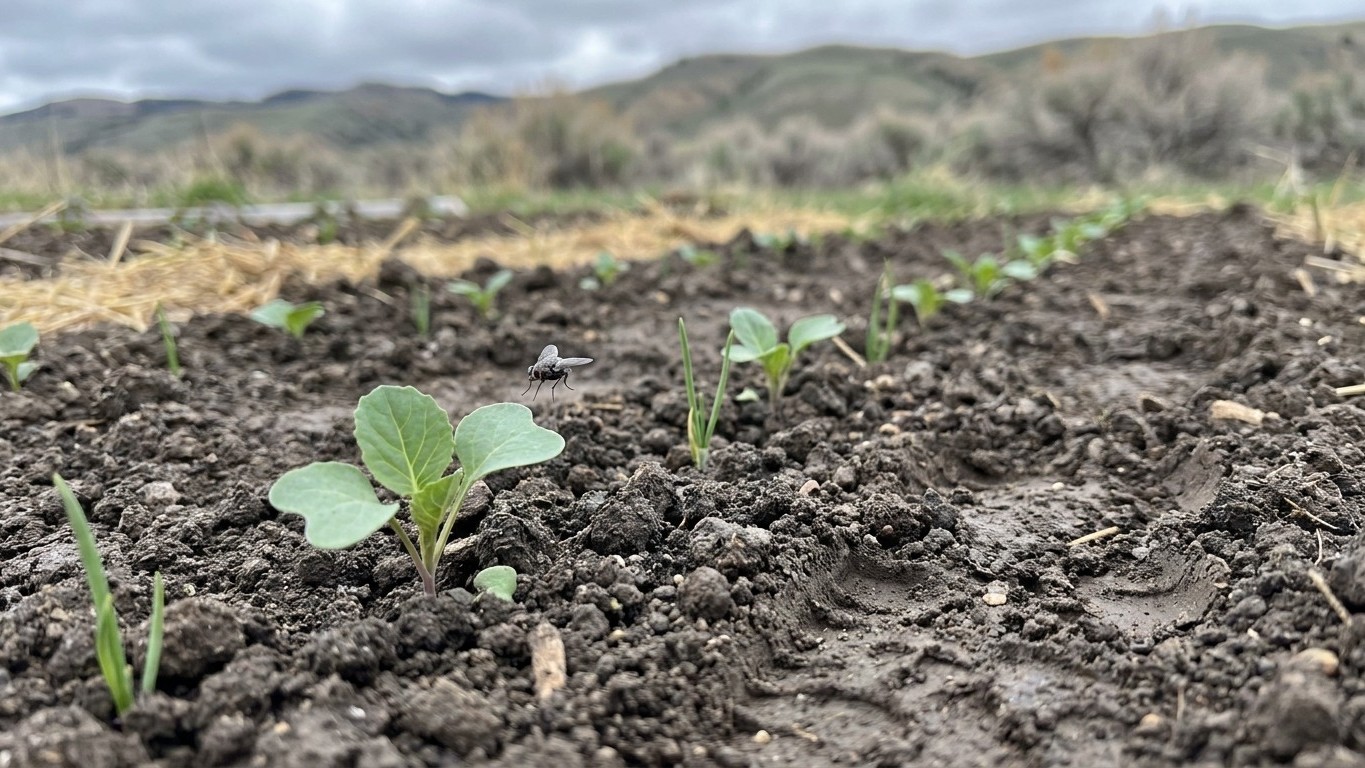

Root maggots start hitting Wyoming gardens as soon as soil temperatures climb into the mid-40s Fahrenheit, usually late April in Cheyenne and Torrington, and closer to mid-May in higher elevation spots like Jackson or Pinedale. The flies that lay the eggs are drawn to freshly turned soil and the smell of brassica or onion roots, so the fix isn’t one product but a mix of timing, physical barriers, and soil management that matches Wyoming’s short, cool growing season.
Which root maggot actually shows up in Wyoming

Three species cause almost all the trouble across the state: the cabbage maggot (Delia radicum), the onion maggot (Delia antiqua), and the seed corn maggot (Delia platura). Cabbage maggots go after broccoli, cauliflower, radishes, and turnips. Onion maggots target onions, garlic, and leeks. Seed corn maggots are the opportunists, feeding on germinating seeds and seedlings of beans, corn, and peas before they even break the surface.
All three are small gray flies, roughly the size of a house fly but slimmer, that look almost identical to the untrained eye. What gives them away is behavior: they hover low over bare or recently disturbed soil, laying eggs right at the base of stems. The larvae that hatch are what do the damage, tunneling into roots and stems for two to three weeks before pupating in the soil.
Why Wyoming’s climate shapes which species dominates
Cold spring soil favors cabbage and onion maggots because their flight activity is triggered by soil temperature, not calendar date. In a state where snow can linger into April in the Bighorn Basin or the high plains around Laramie, that first generation often gets delayed compared to states like Colorado or Nebraska. Seed corn maggots, on the other hand, thrive in cool, wet, high-organic-matter soil, which makes them a bigger problem in years with a wet spring followed by a slow warm-up, a pattern that showed up repeatedly across the eastern part of the state in recent seasons.
When root maggots show up across Wyoming
Timing isn’t uniform statewide, and that matters more in Wyoming than in flatter, more climate-consistent states. Elevation swings of 3,000 feet or more between regions push emergence dates around by two to four weeks.
- Cheyenne and the southeast plains (5,000-6,100 feet): First adult flight typically late April through early May, with a second generation in late June or July.
- Casper and central Wyoming (5,100-5,500 feet): Similar to Cheyenne but shifted about a week later due to more variable spring frosts.
- Sheridan and the Bighorn Basin (3,700-4,500 feet): Warms faster in spring, so flies can appear by mid to late April in mild years.
- Jackson Hole and the western mountain valleys (6,200 feet and up): Soil often stays below the maggot activity threshold until mid to late May, sometimes June after a heavy snow year.
A rough but useful rule: root maggot flies become active once soil temperature at a 2-inch depth holds steady above 45°F for several days running. Gardeners who track a soil thermometer instead of the calendar time their planting and row cover decisions far more accurately than those going by “last frost date” alone.
What damage from root maggots looks like
Above ground, symptoms are easy to mistake for something else, transplant shock, drought stress, or even herbicide drift. Seedlings wilt during the heat of the day even with adequate water. Leaves on brassicas turn a dull purple-red tint, a sign the plant isn’t pulling up nutrients because its root system has been chewed through. Onion tops yellow and flop over one at a time, spreading down the row as adjacent bulbs get infested.
Pull an affected plant and the damage is unmistakable: roots riddled with narrow tunnels, sometimes packed with small, legless white larvae under a quarter inch long. Onion bulbs often show soft, rotting patches where maggots fed, and that rot frequently invites secondary bacterial soft rot, which can wipe out a stored onion crop within weeks even after harvest looked fine.
Seed corn maggot damage shows up even earlier: seeds that never sprout, or seedlings that emerge weak and die within days, hollowed out from the inside before they ever had a chance.
What actually stops root maggots in a Wyoming garden
No single tactic works alone here. The state’s cold, drawn-out springs both help and hurt: they slow maggot development, but they also mean vulnerable seedlings sit in the danger window longer than they would in a state with a faster warm-up.
Timing planting around soil temperature
Delaying transplants of broccoli, cabbage, and cauliflower by even two weeks, until soil consistently reads above 50°F, lets the first fly generation pass its egg-laying window before the most vulnerable young roots are in the ground. For onions, direct-seeding slightly later than tradition dictates in high-risk counties (like Goshen or Platte, both known for heavier maggot pressure) cuts losses noticeably compared to early April sets.
Row covers and physical exclusion
Floating row cover, sealed tightly at the soil edges with soil or landscape staples, blocks adult flies from ever reaching the plant to lay eggs. This is the single most reliable non-chemical method for home gardeners. The cover has to go on at transplant or seeding time, before flies find the crop, and stay sealed through the first generation’s flight period, generally four to six weeks depending on region. Gaps as small as a half inch let flies in, so checking the cover edges after wind events matters.
Soil management and crop rotation
Root maggot pupae overwinter in soil at a depth of two to six inches, right where they fed the previous fall. Rotating brassicas and onions to a different bed each year, ideally three years removed from the last planting, breaks that cycle because emerging flies can’t find a host crop nearby. Tilling in early spring, before the flies emerge, exposes overwintering pupae to birds and cold, which reduces the surviving population before the season even starts.
Adding fresh, undecomposed manure or compost close to planting time is a known driver of seed corn maggot problems specifically, since the flies are attracted to decomposing organic matter. Wyoming extension guidance consistently points to working manure in the previous fall, giving it months to break down, rather than the week before spring planting.
Biological and chemical options
Beneficial nematodes applied to the soil around the root zone can reduce larval populations, though results in cold Wyoming soils are inconsistent since nematode activity drops off below 55°F, meaning applications timed for late May through June tend to perform better than April treatments. Diatomaceous earth worked into the top inch of soil around stems offers modest protection against newly hatched larvae trying to burrow down, though it needs reapplication after rain or irrigation.
For home gardeners facing repeat, severe infestations, an insecticide labeled for root maggot control and applied as a soil drench at transplanting can be justified, but timing it to soil temperature and fly emergence, not a fixed calendar date, is what separates an effective application from a wasted one. The EPA’s guidance on safer pest control practices recommends exhausting cultural and physical controls first, since repeated insecticide use in the same beds tends to accelerate resistance in fly populations over a few seasons.
Storage and post-harvest protection for onions
Even a crop that looked clean at harvest can hide low-level maggot damage that turns into rot in storage. Curing onions properly, dry and well-ventilated for two to three weeks before storage, and inspecting each bulb for soft spots before boxing them up, catches most of the damage before it spreads. Wyoming’s dry climate east of the Continental Divide actually works in growers’ favor here: low humidity during curing slows the bacterial rot that follows maggot tunneling, something growers in wetter states don’t get for free.
One detail that surprises a lot of new gardeners: a light infestation that barely shows above ground in September can still cost 20 to 30 percent of stored onions by January, simply because the tunnels maggots left behind become entry points for rot organisms weeks after the insects themselves are gone.