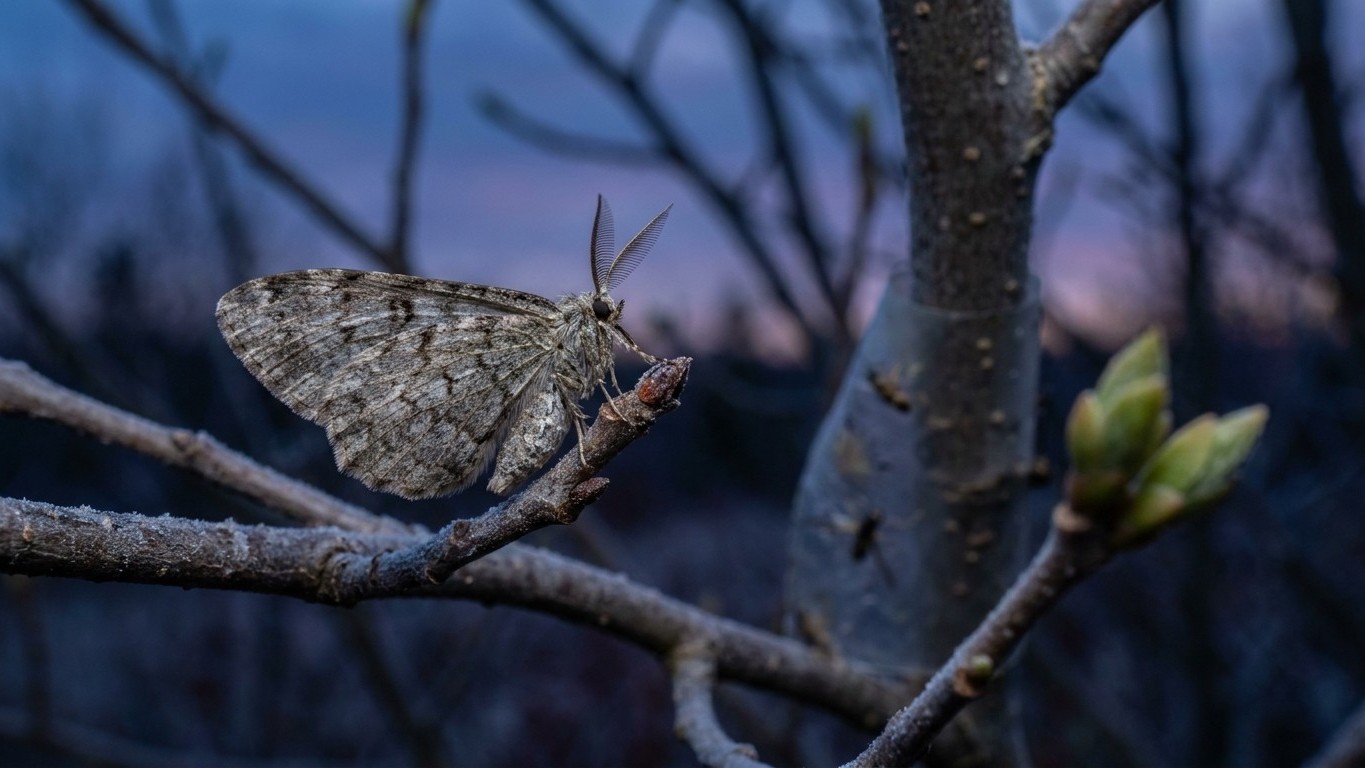

Winter moth larvae start chewing through hardwood buds in Newfoundland and Labrador from mid-April through early June, right as leaves are unfurling. Adult moths, on the other hand, show up much later in the year, flying and mating from mid-November into December, often on mild nights when snow hasn’t yet settled in for good. The most reliable control right now is a parasitic fly called Cyzenis albicans, released in affected areas to knock down populations over several years, combined with sticky tree bands and careful monitoring by property owners in hard-hit zones like the Avalon Peninsula.
Where Winter Moth Has Taken Hold in the Province

Winter moth (Operophtera brumata) isn’t native to North America. It arrived from Europe decades ago, first showing up in Nova Scotia in the 1930s, then spreading along the coast into New England and eventually up into Atlantic Canada. Newfoundland’s population is concentrated mainly around St. John’s and the surrounding Avalon Peninsula, where mild coastal winters and a dense mix of hardwood trees give the insect exactly the conditions it needs to thrive.
Urban and suburban neighborhoods with mature oak, maple, and birch trees have seen the heaviest defoliation. Homeowners with backyard blueberry patches, a Newfoundland staple, have also reported feeding damage, since winter moth larvae aren’t picky about which spring foliage they attack first.
The Life Cycle: When It Shows Up and Why Timing Matters
Understanding winter moth means understanding two very different seasons, because the adult and larval stages behave almost like separate problems.
Fall Flight: Males Fly, Females Crawl
Adult winter moths emerge from the soil in late fall, typically November through December, on nights when temperatures climb above freezing. Male moths are the ones you’ll spot fluttering around porch lights and streetlamps, drawn in by any available glow. Females are a different story entirely. Their wings are reduced to small, useless stubs, so instead of flying, they crawl up the trunks of nearby trees to release pheromones and attract a mate. After mating, each female lays several hundred eggs in bark crevices, under loose bark scales, or in leaf litter at the base of the tree. Those eggs then sit through the winter, tough enough to survive Newfoundland’s freeze-thaw cycles.
Spring Hatch: The Real Damage Window
Eggs hatch in early spring, timed almost precisely with bud break on host trees, sometime between mid-April and early May depending on how mild the season runs. Newly hatched larvae are tiny and pale green, and they immediately burrow into swelling buds before leaves fully open. This is the stage that does the visible damage: as caterpillars grow through May and into early June, they skeletonize leaves, leaving behind a lacy, tattered canopy that can make a healthy oak look scorched by midsummer. Once larvae finish feeding, usually by early June, they drop to the ground on silk threads and burrow into the soil to pupate, waiting there until fall to emerge as adults and start the cycle again.
What Damage Actually Looks Like
Winter moth defoliation is easy to mistake for other stresses, storm damage, drought, or even a late frost, but there are a few tells. Leaves often show ragged holes concentrated near the veins, sometimes leaving only a skeleton of leaf tissue behind. On oaks and maples, entire branches can look bare by late May, then push out a second, smaller set of leaves later in summer as the tree tries to recover. That second flush costs the tree stored energy, and repeated years of heavy feeding can weaken even mature trees, making them more vulnerable to drought stress or secondary insect and disease problems.
Blueberry growers in the region have reported a different kind of loss: reduced fruit set when larvae strip blossoms and young leaves before pollination can happen. For a home gardener with a handful of bushes, that might mean a smaller harvest one summer. For commercial operations, even modest defoliation across several acres adds up fast.
What Stops It: Biological Control and Practical Steps
Chemical spraying isn’t the main strategy against winter moth in Newfoundland and Labrador, partly because timing sprays precisely enough to hit newly hatched larvae is difficult for most homeowners, and partly because a more targeted, longer-lasting option already exists.
The Parasitic Fly Solution
Cyzenis albicans is a small parasitic fly that lays its eggs on leaves winter moth caterpillars are actively feeding on. Once a caterpillar eats a leaf carrying fly eggs, the fly larva develops inside the caterpillar and eventually kills it before it can pupate. This same fly was released successfully in Nova Scotia decades ago and later in parts of the northeastern United States, where it brought winter moth populations down from damaging levels to background noise within roughly a decade. Provincial forestry programs have introduced the fly in select Newfoundland locations, and monitoring those release sites over multiple years is how researchers track whether the fly has established itself well enough to keep populations in check long term.
Biological control like this works slowly. It’s not a fix that shows results in one season, it’s a multi-year process where fly populations build up gradually while feeding on the moth’s caterpillars. That’s the tradeoff: it’s not fast, but it doesn’t require repeated intervention once it’s working.
What Homeowners Can Do
For individual trees, a few low-tech methods still make a real difference:
- Sticky bands wrapped around trunks in late October or early November can trap wingless females as they crawl up to lay eggs, cutting down on the next spring’s hatch.
- Dormant oil sprays applied to bark in early spring, before bud break, can smother overwintering eggs hidden in bark crevices.
- Removing leaf litter and loose bark around high-value trees in fall reduces the number of hiding spots for egg-laying females.
- Monitoring bud break closely each April lets you catch larval feeding early, before damage spreads through the whole canopy.
None of these steps eliminate winter moth on their own. They’re meant to reduce pressure on individual trees while regional biological control does the heavier lifting over time.
Reporting Sightings and Staying Ahead of Spread
Because winter moth is still considered an invasive species working its way through new territory in the province, tracking where it shows up matters almost as much as controlling it once it’s established. Provincial forestry and agriculture offices rely on reports from residents, particularly sightings of adult moths swarming lights in November and December, or unusual leaf damage patterns in spring, to map how far the insect has spread beyond the Avalon Peninsula. If you notice heavy skeletonizing on oak, maple, or birch leaves in your yard, or clusters of small brown moths around outdoor lighting on mild late-fall nights, that’s worth flagging to a local extension office or provincial forestry contact rather than assuming it’s just another leaf-eating insect passing through.
One detail that trips people up: winter moth males look almost identical to a handful of other small brown geometrid moths that fly in fall, so confirming an identification usually means checking for the females crawling on bark nearby, since no other common local moth shares that flightless trait quite so distinctly.