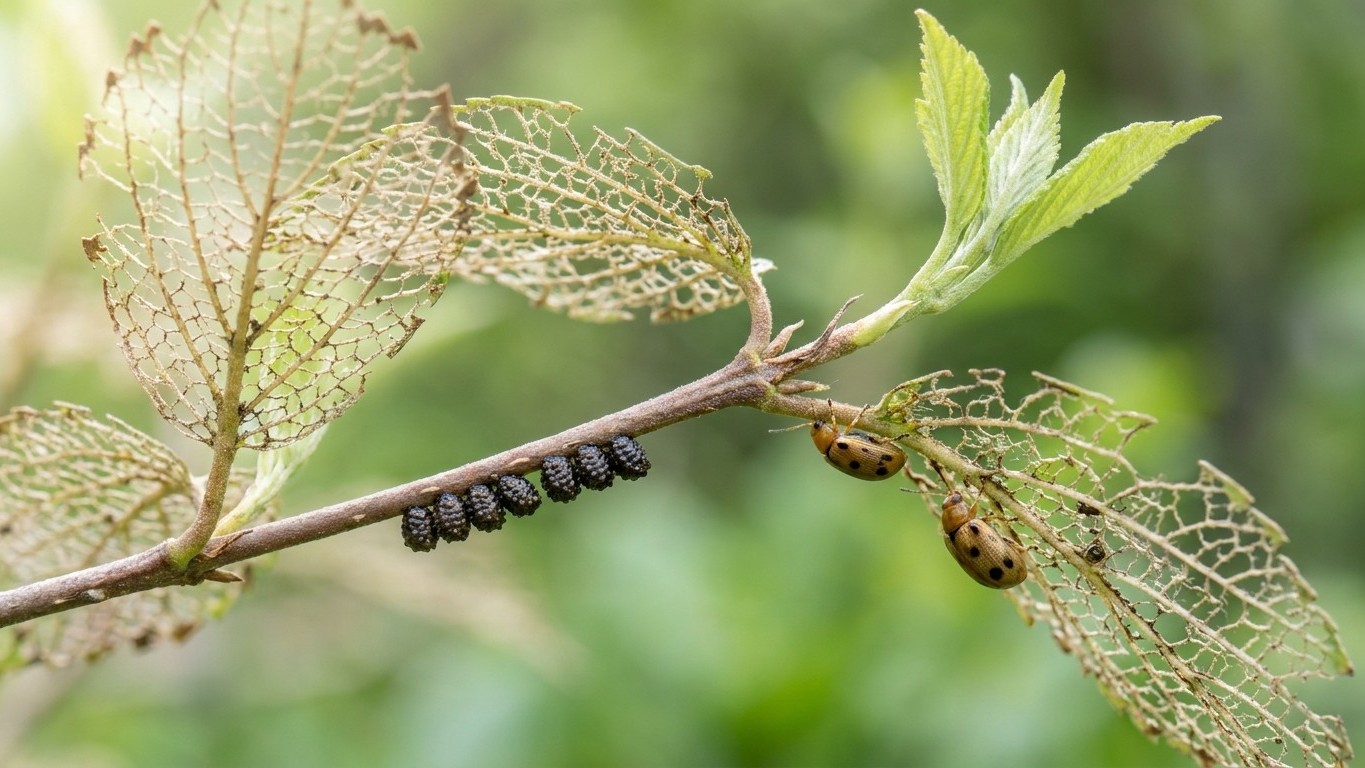

Viburnum leaf beetle shows up in Rhode Island twice a year on a predictable schedule: larvae strip leaves in late spring, adults finish the job in midsummer, and eggs get laid in the fall for next year’s round. Stopping it means working against that calendar, not after the damage is already done. Winter pruning to remove egg sites, timed treatments against young larvae, and swapping in resistant viburnum varieties are what actually keep this pest from killing a shrub outright.
This isn’t a native problem. Pyrrhalta viburni came from Europe, turned up in Ontario in the late 1940s, and didn’t reach the northeastern United States until the mid-1990s. Rhode Island has had it for roughly two decades now, and it’s spread through most of the state’s landscaped yards, hedgerows, and wooded edges where viburnum grows wild or was planted as an ornamental screen.
The Beetle’s Calendar in Rhode Island

Everything starts with eggs that spent the winter tucked inside twigs. Adult females chew small pits into the underside of pencil-thin viburnum stems, drop a handful of eggs into each one, then cap the hole with a mix of chewed bark and excrement. The result looks like a tidy row of dark bumps running along the twig, usually on growth from that same season. A single female can lay several hundred eggs across dozens of these capsules before the season ends.
Those eggs sit through the cold months and hatch in late April to early May, right around when viburnum leaves are unfolding. The timing isn’t a coincidence. Larvae need soft, expanding foliage to feed on, and they get right to work skeletonizing leaves, chewing away the tissue between veins until what’s left looks like lace or window screen. Feeding runs for six to eight weeks, with the larvae molting through several growth stages and getting more destructive as they get bigger.
By late May or June, mature larvae drop to the soil and pupate just below the surface. Roughly two to three weeks later, adults emerge; typically mid-June into July across Rhode Island, depending on how warm the spring was. These beetles are smaller and less conspicuous than the larvae, brownish and about a quarter-inch long, but they keep feeding on the same shrubs, this time chewing irregular holes through mature leaf tissue rather than skeletonizing it. Adults stick around for about eight weeks, mate, and the females start laying eggs again from late summer into October, closing the loop.
Rhode Island only sees one generation per year. That’s actually useful information for control: there’s no rush of a second wave of larvae showing up in August the way there is with some other leaf-feeding pests. Miss the spring window and you’re waiting until next year for another shot at the larval stage, but you also don’t have to keep monitoring all season long.
Which Viburnums Get Hit Hardest
Not every viburnum in a Rhode Island yard is equally at risk, and that matters when deciding where to spend time watching for damage. Arrowwood viburnum (Viburnum dentatum), a common native hedge plant, along with European and American cranberrybush viburnums (V. opulus and V. trilobum), rank among the most heavily damaged species. These are also some of the most widely planted viburnums in New England landscaping, which is part of why the beetle has spread so effectively through the state’s suburbs.
On the other end, Koreanspice viburnum, doublefile viburnum, leatherleaf viburnum, and Siebold viburnum show much lower feeding damage, likely because their leaf chemistry or texture is less appealing to the larvae. That doesn’t mean total immunity; a heavily infested yard can still see some feeding on resistant types. But the difference in damage severity is well documented enough that it’s worth factoring into new plantings, especially in a state where this pest is now permanently established.
A shrub that’s been hit hard for two or three consecutive years starts showing more than cosmetic damage. Repeated total defoliation drains the plant’s energy reserves, weakens flower and fruit production, and can eventually kill branches or the entire shrub. That’s the real threat here, not a few chewed leaves in July, but a viburnum that never gets the chance to fully leaf out because larvae stripped it before summer even started.
What Actually Stops It
Control works best when it’s split across three windows: winter for eggs, spring for larvae, and ongoing for plant selection. Skipping the first two and hoping a single summer spray fixes everything rarely works, because by the time adults are visibly feeding, a lot of the season’s damage is already locked in.
Winter Pruning: Cutting Out Next Year’s Problem
From November through early April, before new growth starts, inspect viburnum twigs for those telltale rows of egg-laying pits. They show up as small, dark, slightly raised bumps running in a line along the underside of thin stems, usually on wood grown the previous summer. Any branch showing this pattern should get pruned out and destroyed, either by burning where local ordinances allow it or bagging it for trash pickup rather than tossing it in a brush pile.
This single step, done consistently every winter, can cut the following spring’s larval population dramatically. It’s tedious work on a large shrub, and it won’t catch every egg mass, especially on plants with dense branching. But for homeowners managing just one or two viburnums rather than a whole hedgerow, it’s the highest-value control step available and it costs nothing but time.
Spring Treatment: Catching Larvae Early
Once leaves start unfolding in late April, start checking the undersides for tiny, dark, spotted larvae clustered together, usually before the skeletonizing damage is obvious to the naked eye. Catching them at this early instar stage matters because they’re much easier to kill when small and still feeding in groups rather than scattered and larger.
Insecticidal soap and horticultural oil both work against young larvae when sprayed directly on contact, and they carry lower risk to pollinators and beneficial insects compared to broader insecticides. Products containing spinosad are another option that specifically targets chewing insects like beetle larvae while doing less collateral damage to the surrounding ecosystem. Whatever the product, timing the application to when larvae are still small, roughly the first two to three weeks after hatching, gets far better results than spraying mature larvae or waiting until adults appear in summer.
Systemic insecticides such as imidacloprid, applied as a soil drench, offer another route, but they come with a tradeoff worth taking seriously. Because they move through the plant’s vascular system and into flowers, they can affect pollinators visiting viburnum blooms. Applying a systemic well before flowering, or skipping it on plants that are important nectar sources in the yard, reduces that risk. For a pest that only produces one generation annually in Rhode Island, many homeowners find that consistent winter pruning plus a targeted spring soap or oil application handles the problem without reaching for systemics at all.
Biological Control Has Limits
Ladybugs, lacewing larvae, and some ground beetles will feed on viburnum leaf beetle eggs and larvae given the chance, and encouraging general garden biodiversity doesn’t hurt. But no dedicated biological control program has been established for this pest in the Northeast, and natural predation alone hasn’t been enough to keep populations in check anywhere the beetle has spread. Treat beneficial insects as a small assist, not a standalone strategy.
Long-Term Planning for Rhode Island Yards
For anyone planting new viburnums or replacing storm-damaged ones, choosing resistant species upfront avoids years of pruning and spraying down the road. Doublefile and Koreanspice viburnums offer the same kind of spring bloom and fall interest that arrowwood or cranberrybush types provide, just with far less beetle damage to manage. Mixing resistant and susceptible species in the same yard also reduces the odds that a single infestation wipes out every viburnum on the property at once.
Established arrowwood or cranberrybush viburnums that have sentimental or landscape value don’t need to be ripped out just because the beetle is present statewide now. A shrub that gets consistent winter pruning and one well-timed spring treatment each year can hold its own indefinitely, even in a yard where the beetle has been active for a decade. The bigger risk comes from ignoring both windows for two or three years running, letting egg-laying pits accumulate on more and more branches until the whole plant is carrying next year’s infestation in its own wood.