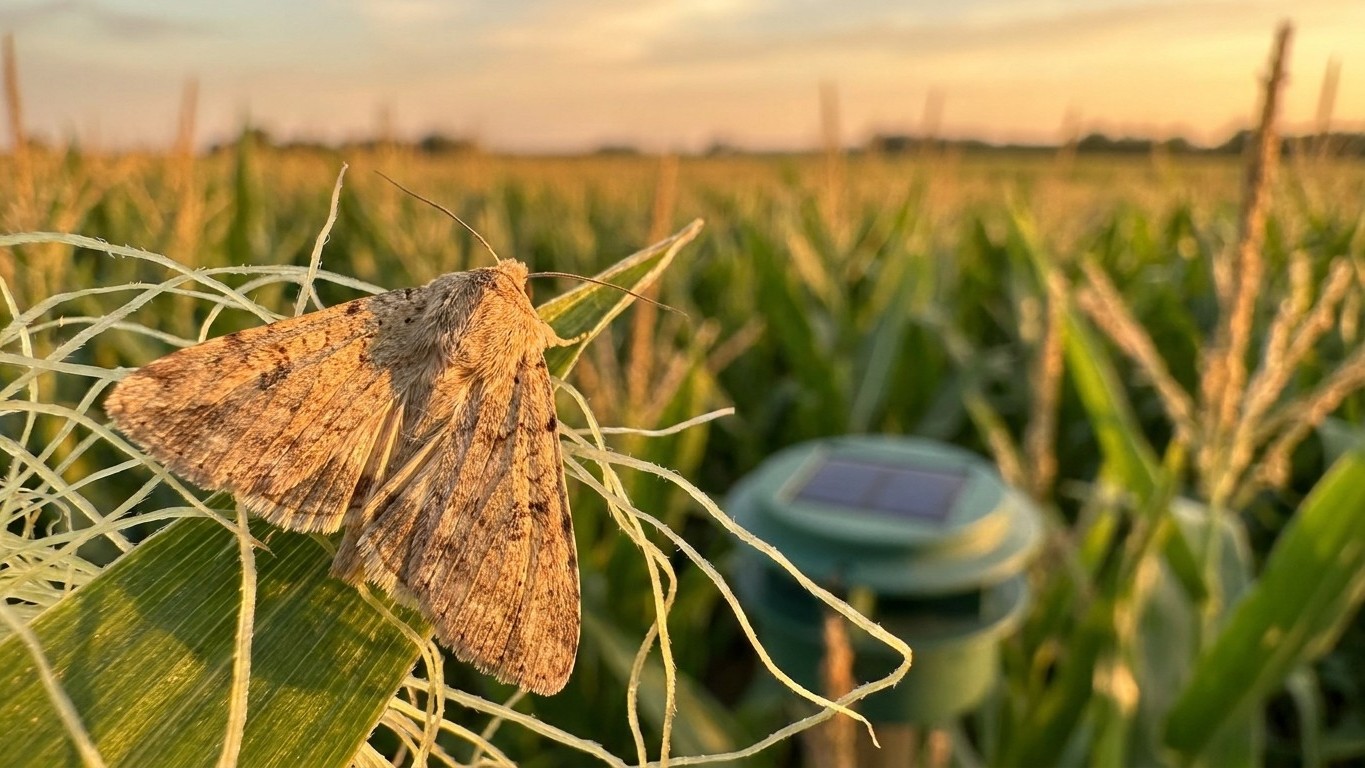

Corn earworm shows up in Manitoba during the warmest stretch of summer, typically from mid-July through August, riding wind currents from the northern United States rather than emerging from local overwintering populations. The moths can’t survive Manitoba winters, so every infestation each year starts fresh, carried in on storm systems and southerly airflow. Control depends on watching pheromone trap counts, timing sprays around silking, and choosing hybrids with tighter husk coverage.
Why Corn Earworm Can’t Overwinter in Manitoba

Corn earworm, known scientifically as Helicoverpa zea, is a tropical and subtropical insect at heart. Its pupae need soil that stays above freezing through the cold months, something Manitoba’s frost depth makes impossible. In Texas, Oklahoma, and the Gulf Coast states, the pest cycles through multiple generations year-round. Manitoba gets none of that built-in population. Every moth found in a Manitoba cornfield or backyard tomato patch flew in from somewhere else.
That migration pattern matters for timing. Moths ride low-level jet streams, often moving hundreds of miles overnight when warm, moist air masses push north from the Corn Belt. Manitoba Agriculture and provincial crop pest monitoring networks track these arrivals using pheromone-baited traps set up across agricultural regions, mostly in the Red River Valley and other corn-growing pockets in the province’s south. Trap counts spike after specific weather events, not on a fixed calendar date, which is why some years bring early pressure in late June and others stay quiet until August.
Because the insect can’t establish a resident population, Manitoba growers deal with a single wave (sometimes two, if conditions stay favorable) rather than the three or four generations that plague states like Georgia or Kansas. That’s a real advantage. It means the management window is shorter and more predictable once trap data starts climbing.
What Corn Earworm Damage Looks Like
The larvae are the destructive stage. Adult moths lay eggs on fresh corn silk, and the newly hatched caterpillars tunnel straight down into the ear tip, feeding on kernels as they go. In sweet corn, that means the top inch or two of the ear turns into a mess of frass and chewed kernels, usually hidden under the husk until you peel it back at harvest.
Home gardeners in Winnipeg and surrounding communities often notice it first on tomatoes, where the same species is called the tomato fruitworm. Larvae bore into green or ripening fruit, leaving a small entry hole that’s easy to miss until the fruit starts rotting from the inside. Pepper crops can get hit too, though corn and tomatoes take the brunt of it in most Manitoba gardens and market operations.
Larvae range in color from pale green to brown or nearly black, with alternating light and dark stripes running the length of the body. That color variation confuses a lot of first-time gardeners who assume they’re looking at two different pests. They’re not. Size and stripe pattern are more reliable identifiers than color alone, and a mature larva can reach close to an inch and a half before it drops to the soil to pupate.
Distinguishing It From European Corn Borer
Manitoba corn growers also deal with European corn borer, a pest that actually does overwinter in the province as diapausing larvae inside crop residue. The two insects get confused because both damage corn ears. The practical difference: corn earworm larvae feed almost exclusively at the ear tip and rarely tunnel into the stalk, while European corn borer bores into stalks and can cause plants to snap over in wind. If you’re seeing stalk breakage alongside ear damage, you’re likely dealing with corn borer, not earworm, or possibly both at once.
When Trap Counts Start Climbing
Manitoba’s provincial insect monitoring program (run through Manitoba Agriculture in cooperation with regional crop specialists) posts weekly trap catch updates during the growing season. Growers and serious gardeners who want real-time data rather than a general calendar guess should check those bulletins directly rather than relying on last year’s timing, since arrival shifts year to year based entirely on weather patterns hundreds of miles south.
A useful rule of thumb: once southern Minnesota and North Dakota trap counts start rising, Manitoba counts typically follow within one to two weeks, assuming wind direction cooperates. Growers near the U.S. border in the Pembina Valley region often see pressure slightly before areas further north like the Interlake or Parkland regions, simply because that’s the first ground the migrating moths cross.
What Actually Stops Corn Earworm in Manitoba
Control comes down to three approaches that work together rather than any single silver bullet: timing insecticide applications to egg-laying and early larval stages, choosing resistant plant traits, and using physical barriers where practical.
Timing Sprays Around Silking
Insecticide applications only work if they hit the larvae before they tunnel into the ear tip, because once inside, the husk protects them from most contact sprays. That means timing matters more than product choice. Sweet corn growers typically start monitoring at early silk emergence and apply treatments on a schedule tied to trap catch numbers, often every three to seven days during active moth flight, tightening the interval when catches run high and stretching it out when counts drop.
Home gardeners without access to commercial-grade monitoring can use a simpler visual check: inspect silks daily once they start showing, and treat at the first sign of fresh silk browning combined with visible moth activity in the garden at dusk, when adults are most active.
Resistant Hybrids and Husk Coverage
Plant genetics play a bigger role than most home gardeners realize. Corn varieties with longer, tighter husks that extend well past the ear tip give larvae a longer tunnel to dig through before reaching kernels, which reduces damage even without any spray program. Some sweet corn hybrids bred for husk tightness show noticeably less earworm damage in side-by-side plantings, a detail worth asking about at the garden center or seed catalog level before planting season.
Bt corn hybrids, which express a protein toxic to caterpillar pests, provide another layer of protection in field corn and some sweet corn varieties, though adoption and availability vary by region and by whether you’re growing for market or home use.
Biological and Cultural Controls
Natural predators help keep populations in check even during active migration years. Lacewings, minute pirate bugs, and several parasitic wasp species attack corn earworm eggs and young larvae, and avoiding broad-spectrum insecticide sprays for unrelated pests helps preserve those populations in the garden or field margin.
Crop rotation offers limited benefit against corn earworm specifically, since the pest doesn’t overwinter locally and reintroduces itself annually regardless of what was planted the previous year. Where rotation does help is against European corn borer and other pests that do overwinter in Manitoba soil and residue, so it remains a good general practice even if it’s not the tool that stops earworm specifically.
Mineral oil applied to the silk tip a few days after pollination is a longstanding home-garden trick that smothers newly hatched larvae before they tunnel deep. A few drops per ear, applied with a small squeeze bottle right where the silk meets the husk, can meaningfully cut damage in a backyard patch without any chemical spray at all.
What This Means for Manitoba Growers Compared to Other Provinces
Corn earworm pressure in Manitoba tends to run lighter and shorter than in Ontario or Quebec, where warmer summer temperatures and closer proximity to established U.S. populations mean earlier arrival and sometimes a second generation within the same season. Manitoba’s shorter, cooler growing season generally limits the pest to one significant flight, which is a practical reason why a single well-timed spray window or a resistant hybrid choice often does the job without the repeated intervention that Ontario growers sometimes need.
Manitoba’s climate normal data, tracked through Environment and Climate Change Canada, shows the province’s growing season running noticeably shorter than corn-growing regions further east and south, which naturally compresses the earworm’s window of opportunity even in years with heavy migration.